
In a nutshell
Marshall shrinks its larger Bromley 750 down to the Bromley 450 – more compact, lighter, but also quieter. Driver configuration and sound features have been cleverly trimmed without losing the brand’s core character. Sonically and visually, the Bromley 450 remains 100 percent Marshall: powerful, warm and with genuine party ambitions, just in a size that also fits into a living room.
Vorteile:
-
Long battery life
-
Good all-round sound
-
Analogue controls
-
Connector for a microphone, DJ mixer or instruments
-
Lossless audio via USB-C
-
Robust & IP55-rated
-
Light effects
Nachteile:
-
Carrying handle awkwardly positioned
-
Fairly limited app support
-
Muddled sound at high volumes
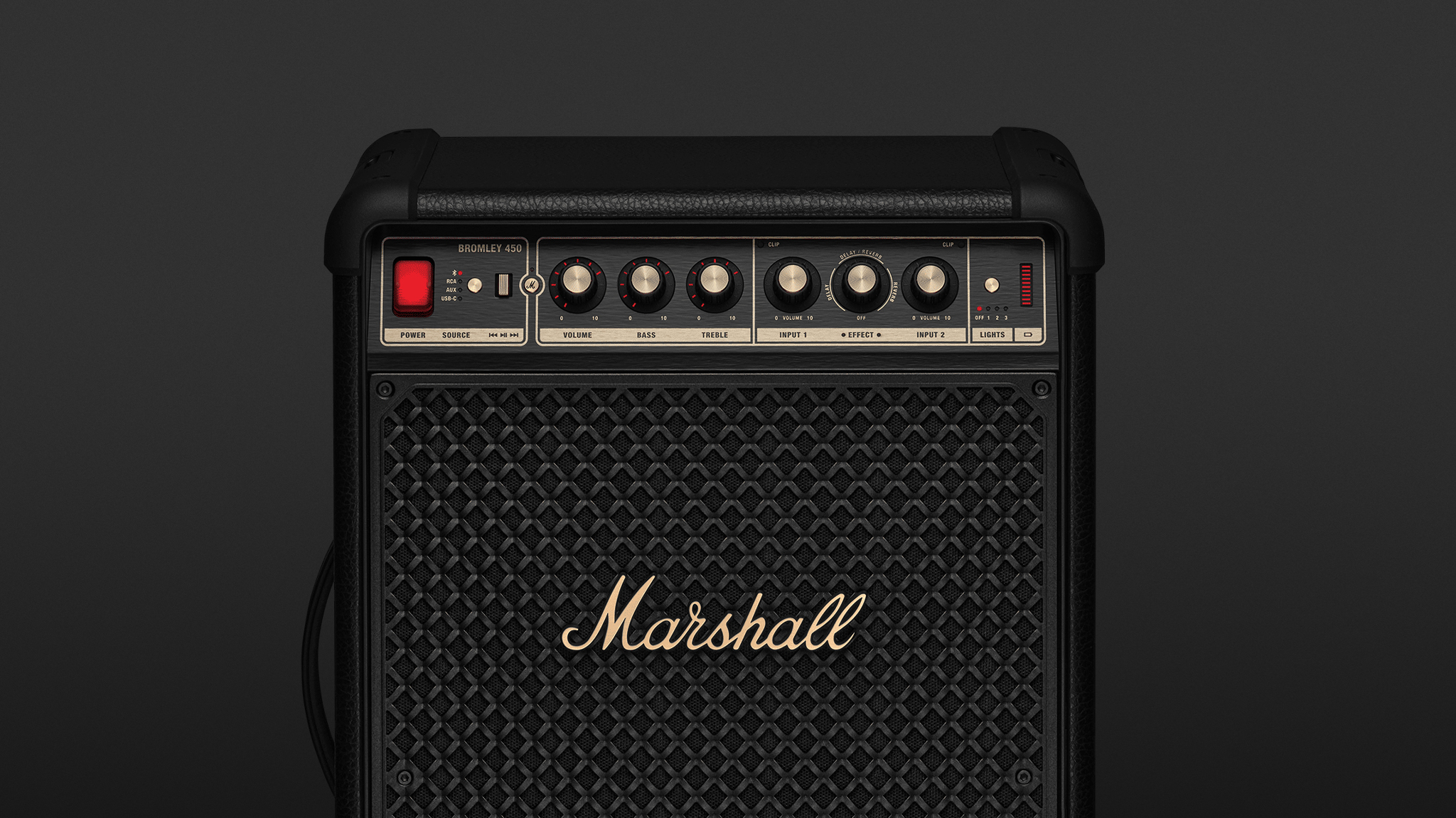
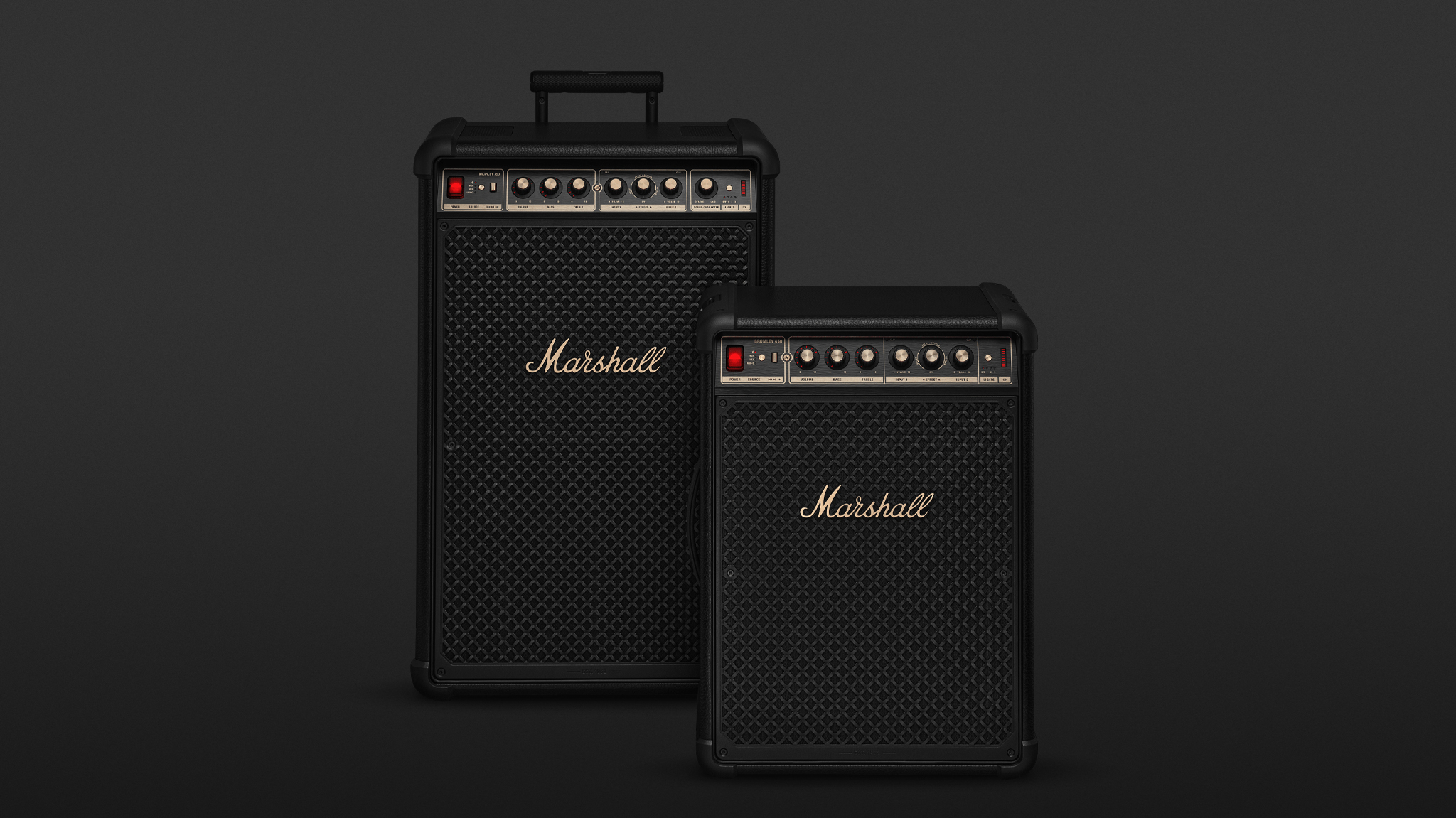
The Marshall Bromley 450 is the little brother of the Bromley 750. But has it inherited the same genes, power and feature set? We put it to the test and listen closely.
Marshall Bromley 450 – The Hardware
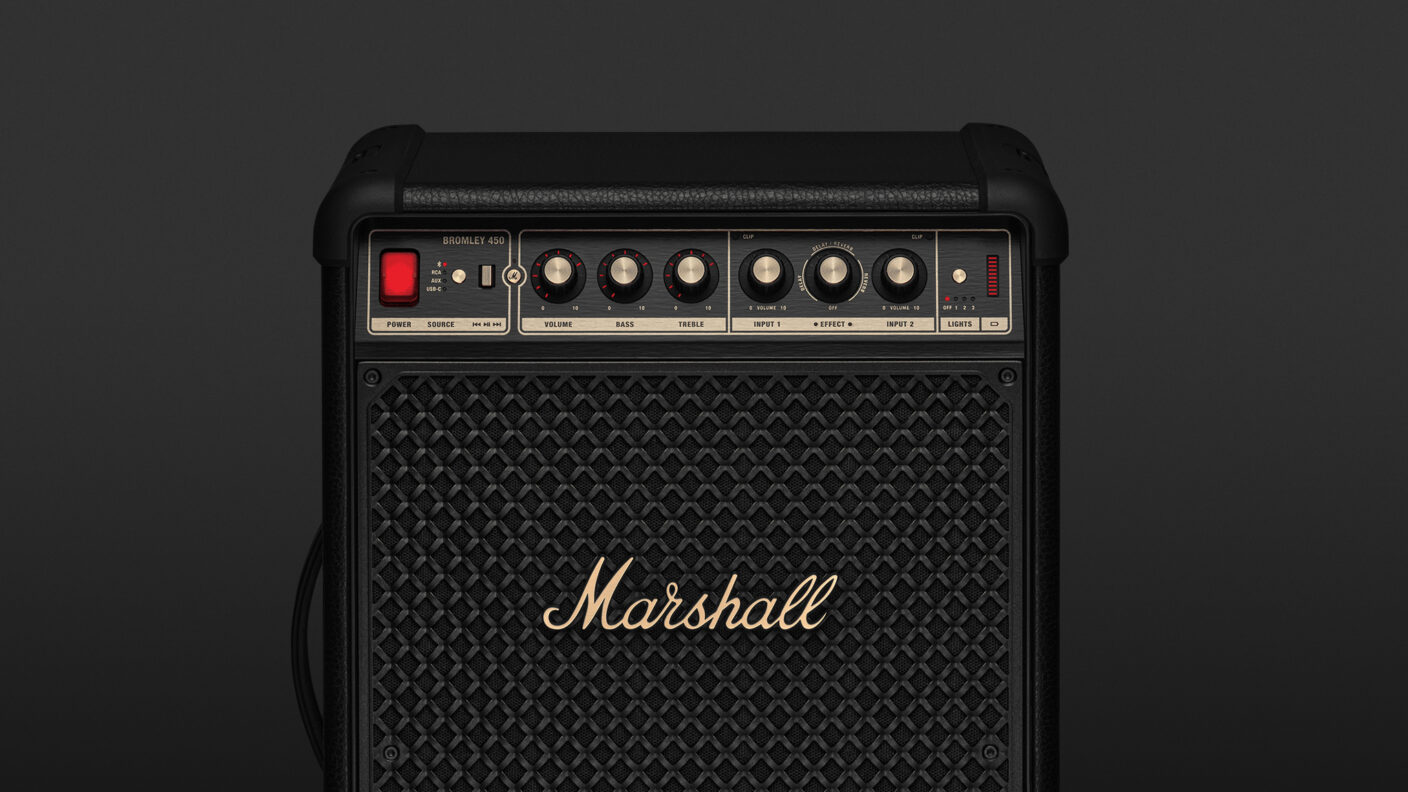
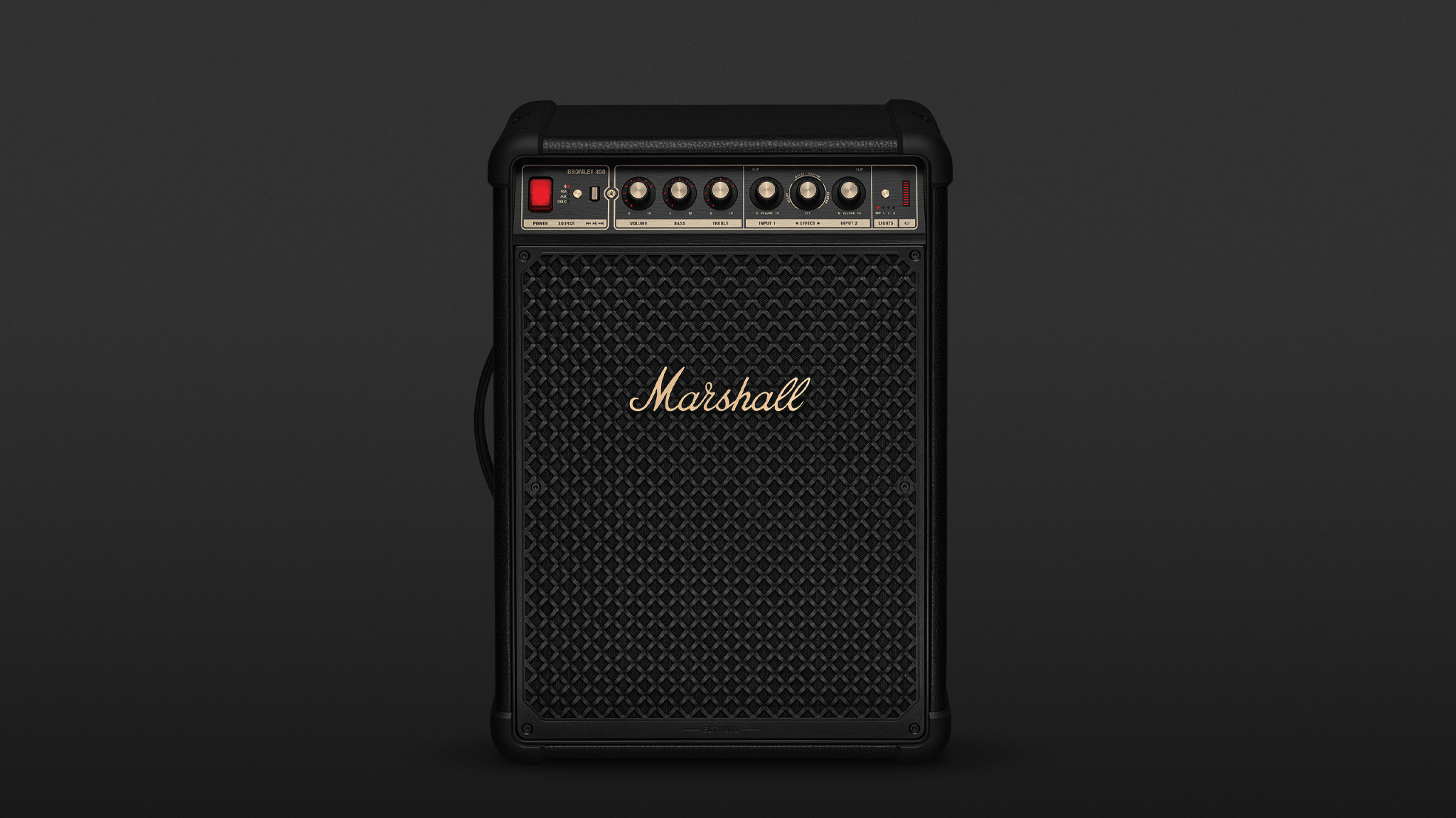
At first glance, the MarshallBromley 450 is simply a scaled-down 750: upright construction, the brand logo on the front grille, the metal-backed black control panel, plus the grippy rotary knobs and the distinctive power switch – it looks every bit like a genuine Marshall. The Tolex covering and plastic-reinforced edge protection round things off.
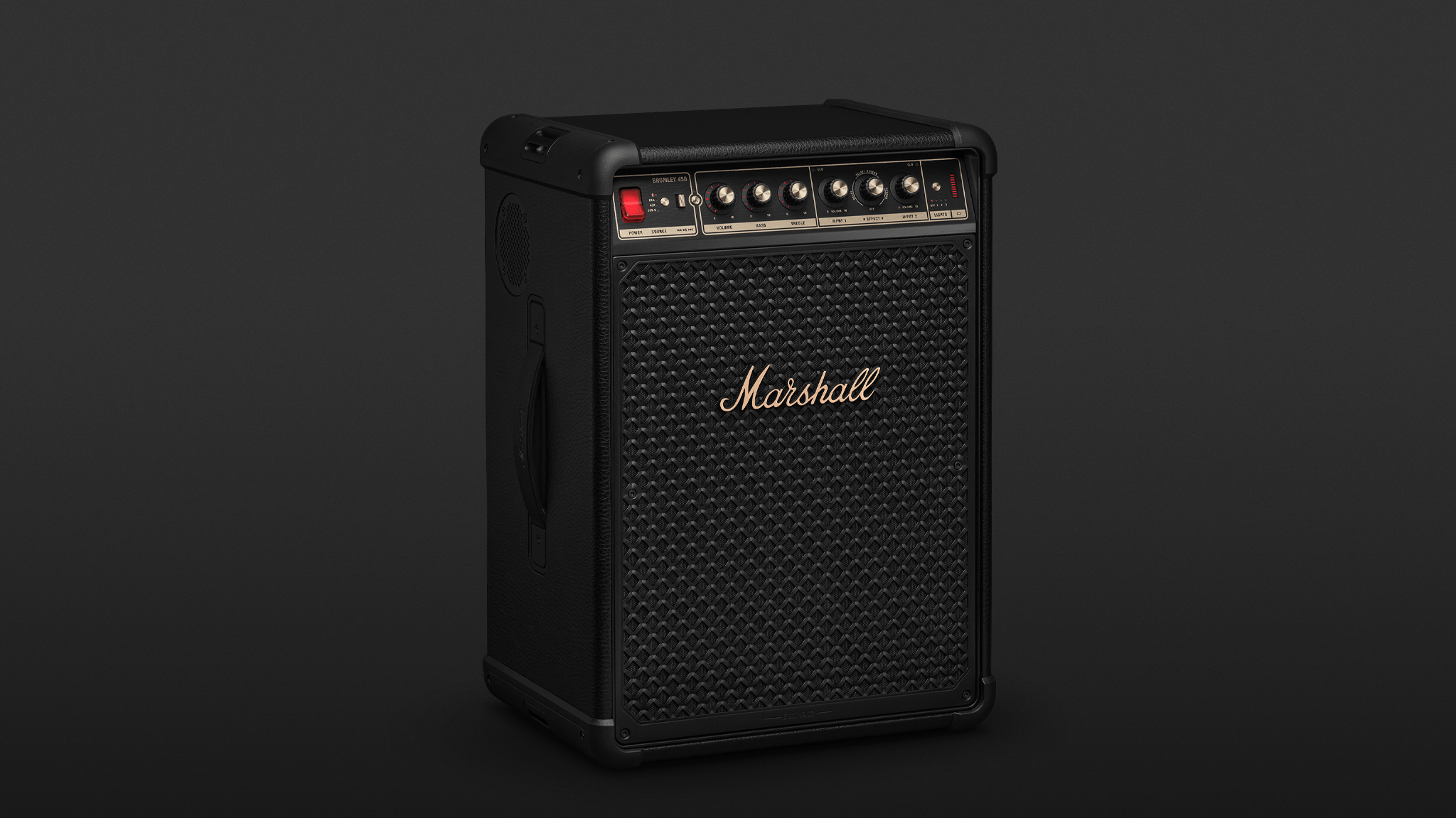
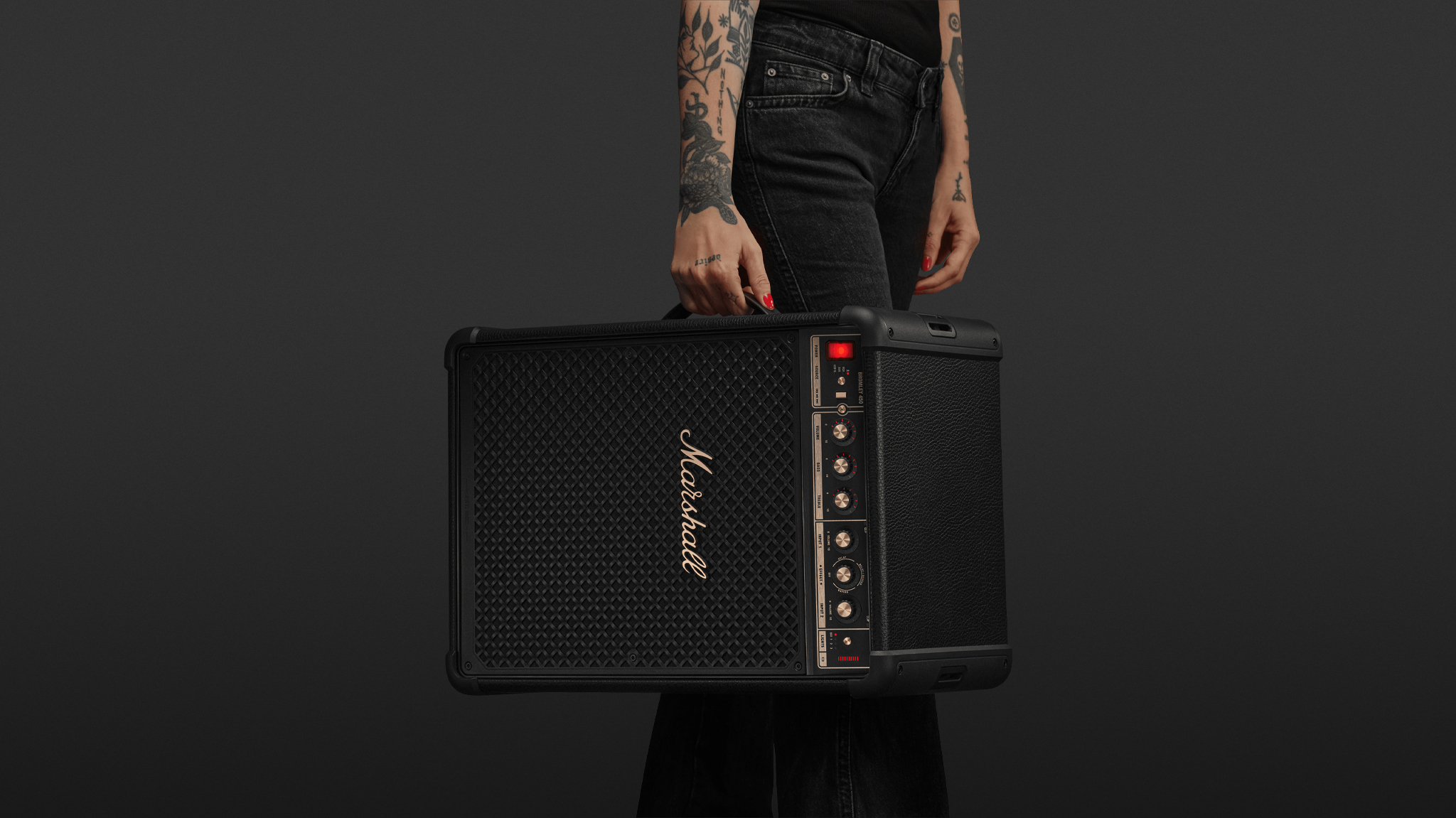
Compared to the 750, which features two carrying handles on the left and right borrowed from genuine PA construction, the Bromley 450 makes do with just one handle – understandable given a weight of just 12.3 kg. The side placement instead of the top, however, does not convince me: the speaker remains somewhat unwieldy, and with the handle on the side, it almost automatically tips onto its side or ends up lying flat. This is ideal for neither operation nor sound, since doing so covers one driver output and the panel does not automatically rotate along, as it would on a tablet.
Alternatively, a carrying strap – not included in the box – can be threaded through the dedicated strap loops to carry the speaker to its destination. The driver configuration, comprising two 6.5-inch woofers at 40 W each, four 2-inch full-range speakers at 6 W each, and two passive bass radiators, is genuinely solid for a unit of this size. Six Class D amplifiers power this arrangement, enabling what Marshall calls True Stereophonic 360° sound – delivering very good all-round audio.
The spec sheet lists two different power figures: the driver data results in a total output of 104 watts, while the Class D amplifiers driving these drivers are rated at a combined 300 watts. This is standard practice. Amplifiers are often designed with more power headroom than the drivers require at rated output, in order to guarantee sufficient dynamic range and reserve capacity.
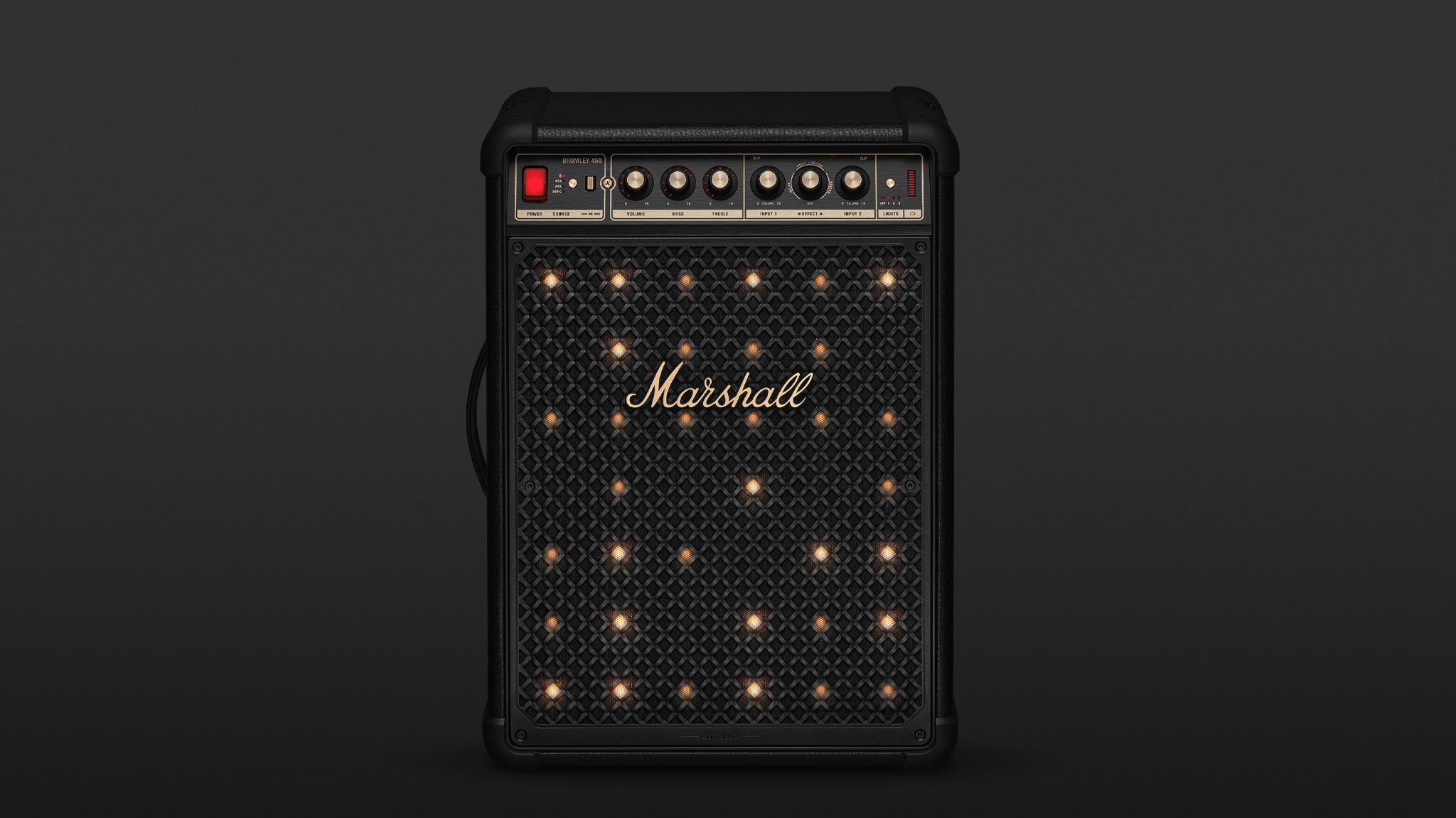
Specifically, a maximum sound pressure level of 100 dB and a frequency range of 40 to 20,000 Hz are listed. Added to this is the front-mounted light show, featuring 42 white LED points and three different playback modes designed to draw attention.
On the rear, behind a rubber cap, sits the replaceable battery, which offers a playtime of over 40 hours and can also charge a smartphone. There is a mains connection, and behind a second rubber cap are the connections: two 6.35 mm combo jacks (jack/XLR) for microphones or instruments, RCA jacks for compatible hardware, a 3.5 mm aux input for additional analogue sources, and an identically specified aux output for daisy-chaining additional speakers. Finally, there is a USB-C port, which alongside its charging function can also receive music signals via USB-C cable.
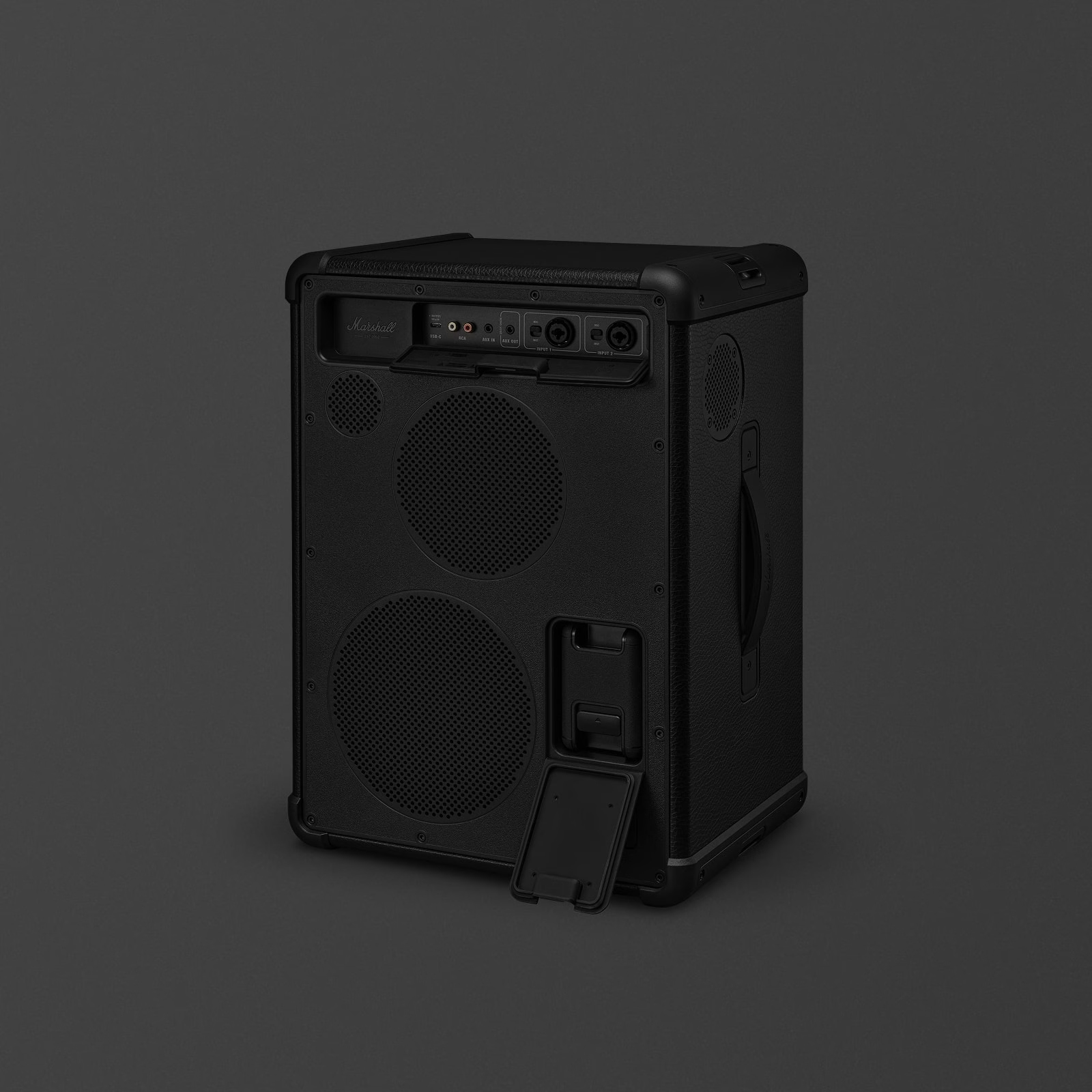
To allow enjoyment in the garden, at a festival or in the halfpipe, the speaker carries an IP55 rating. Dirt, splashing water and rain are not a problem, and overall the Bromley is built so solidly that it can comfortably double as a seat.
Functionality and Controls of the Marshall Bromley 450
Alongside the wired connections described above, the Marshall Bromley 450 is primarily fed via Bluetooth 5.3 for playback. The SBC, AAC and LC3 codecs are available. Multipoint is included, as is Auracast – though this can only be used to receive and play Auracast broadcasts. Stereo pairing with an identical speaker, or linking other speakers from the Marshall lineup into an ultimate sound wall, are not part of the package.
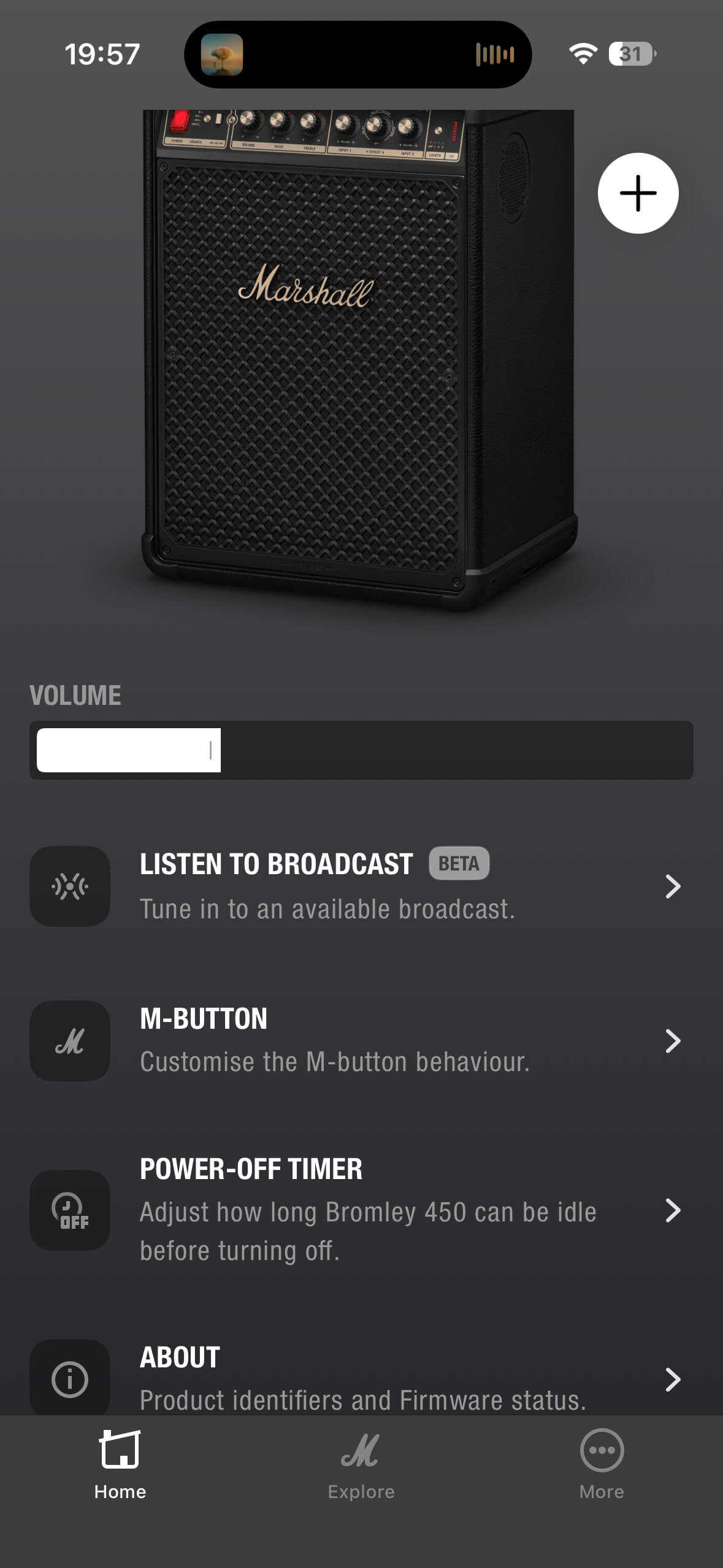
App integration is also included. Remote control capabilities, however, are limited to source selection, volume control, configuration of the freely assignable M button, searching for Auracast content and updates, and setting a shutdown timer.
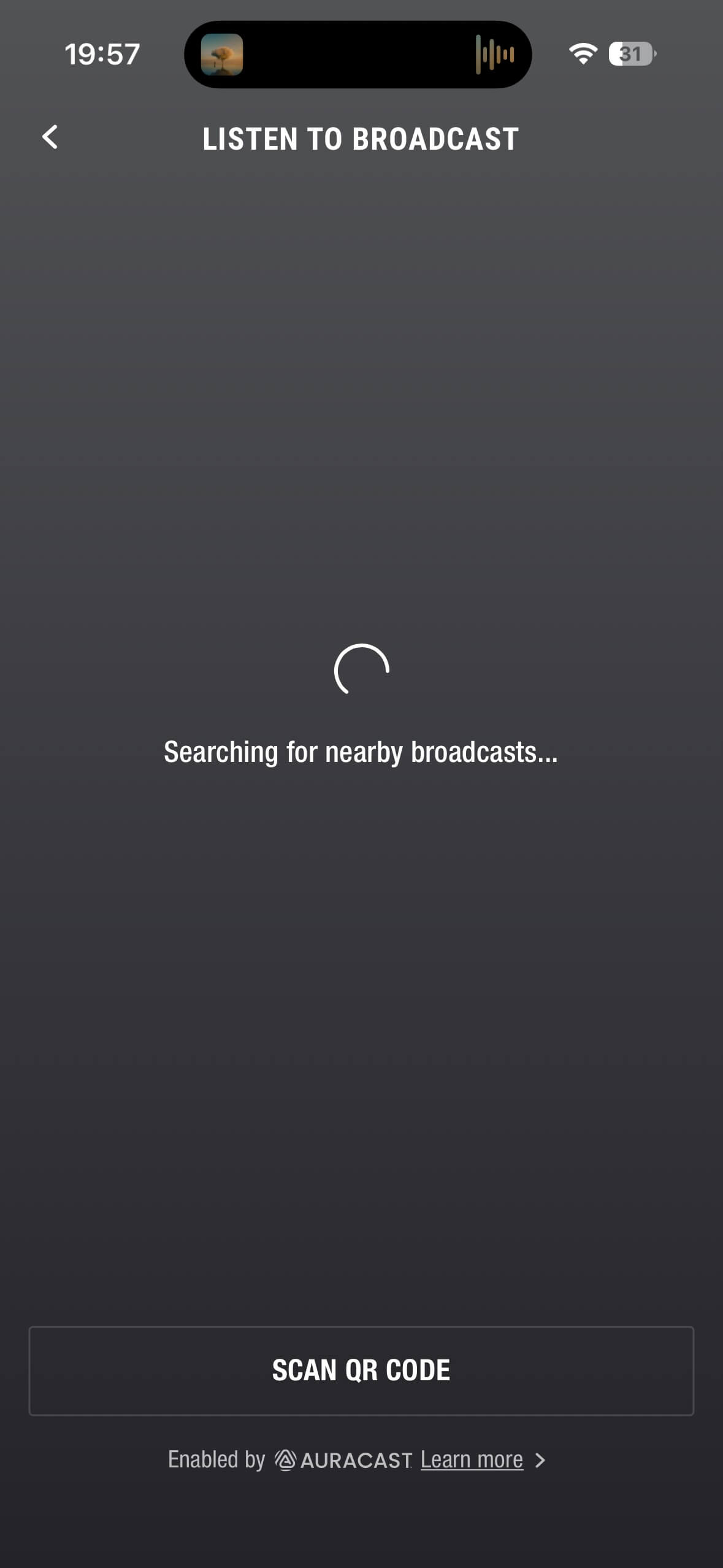
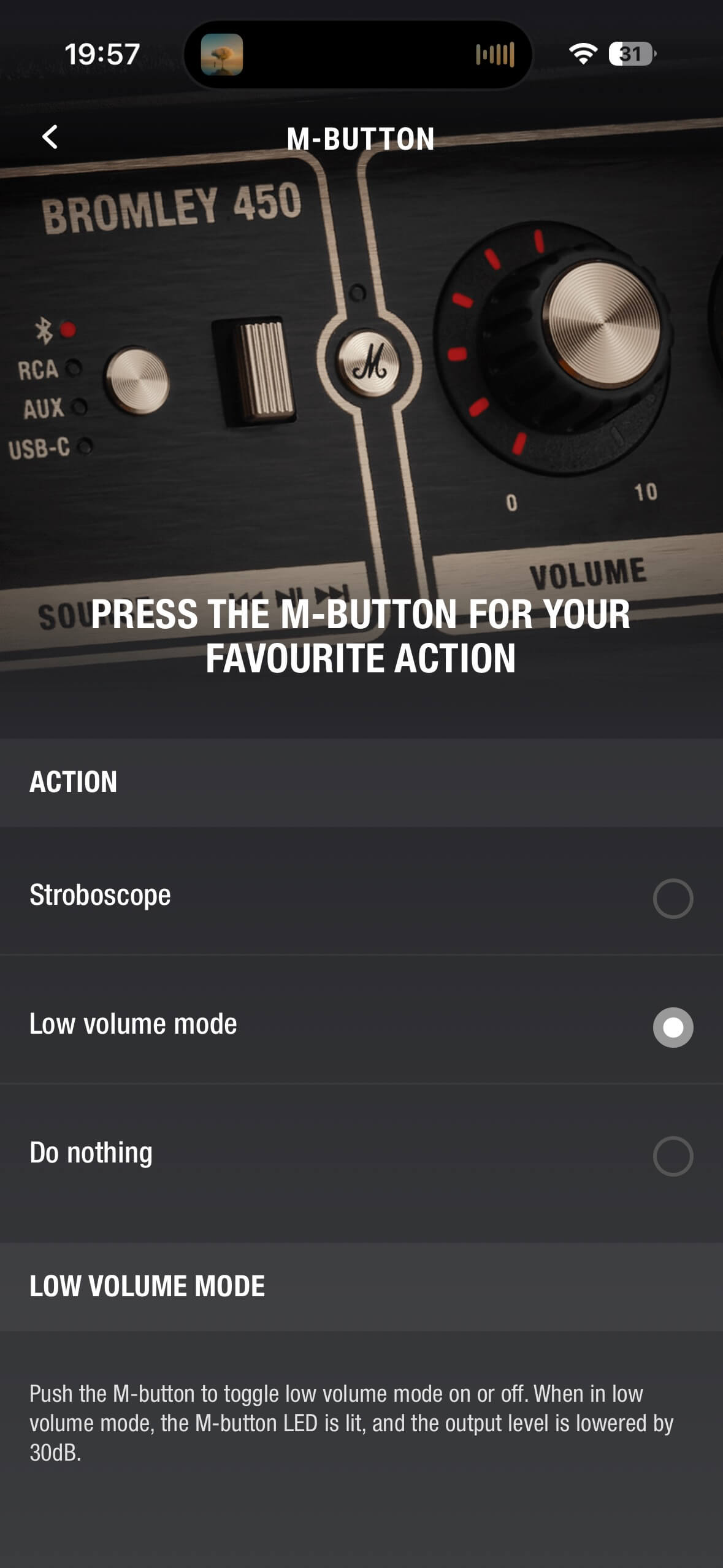
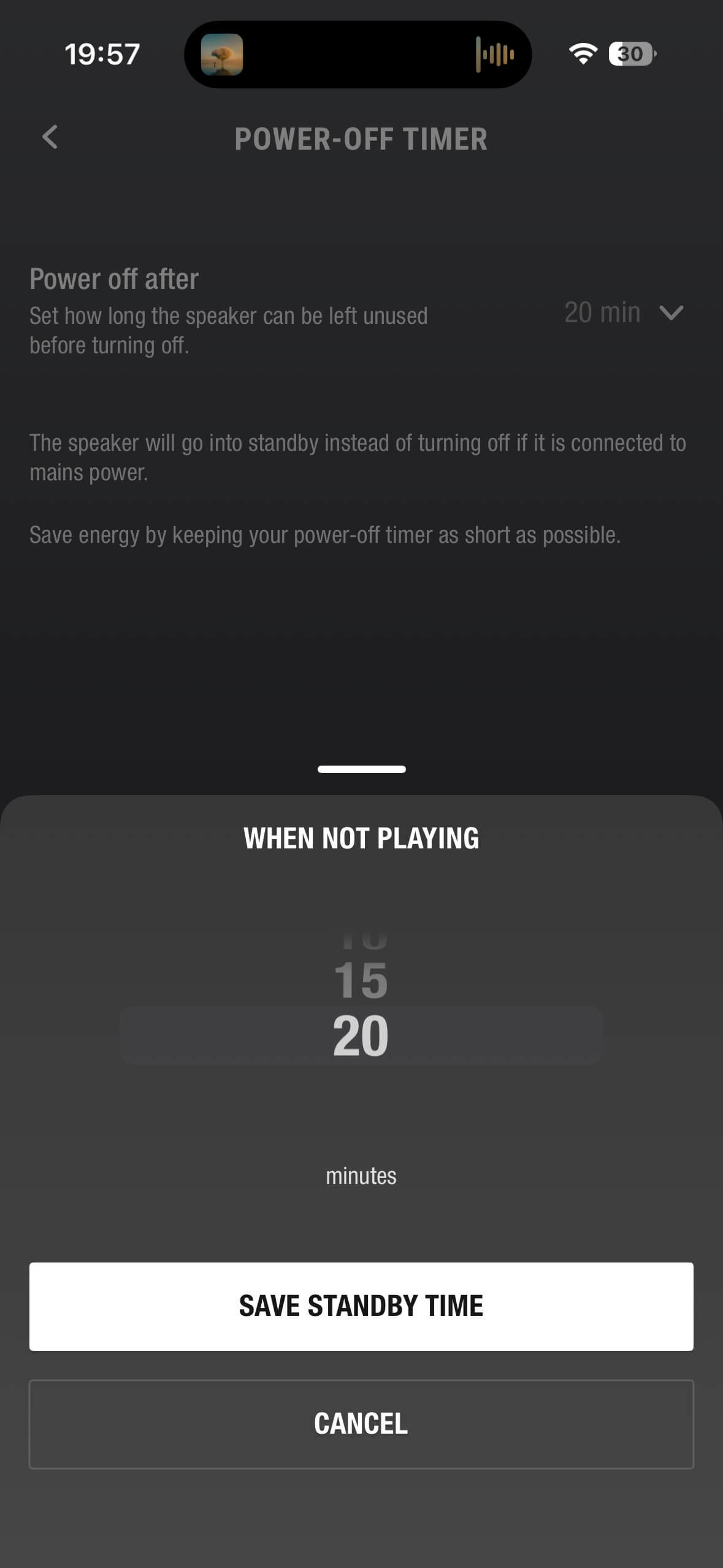
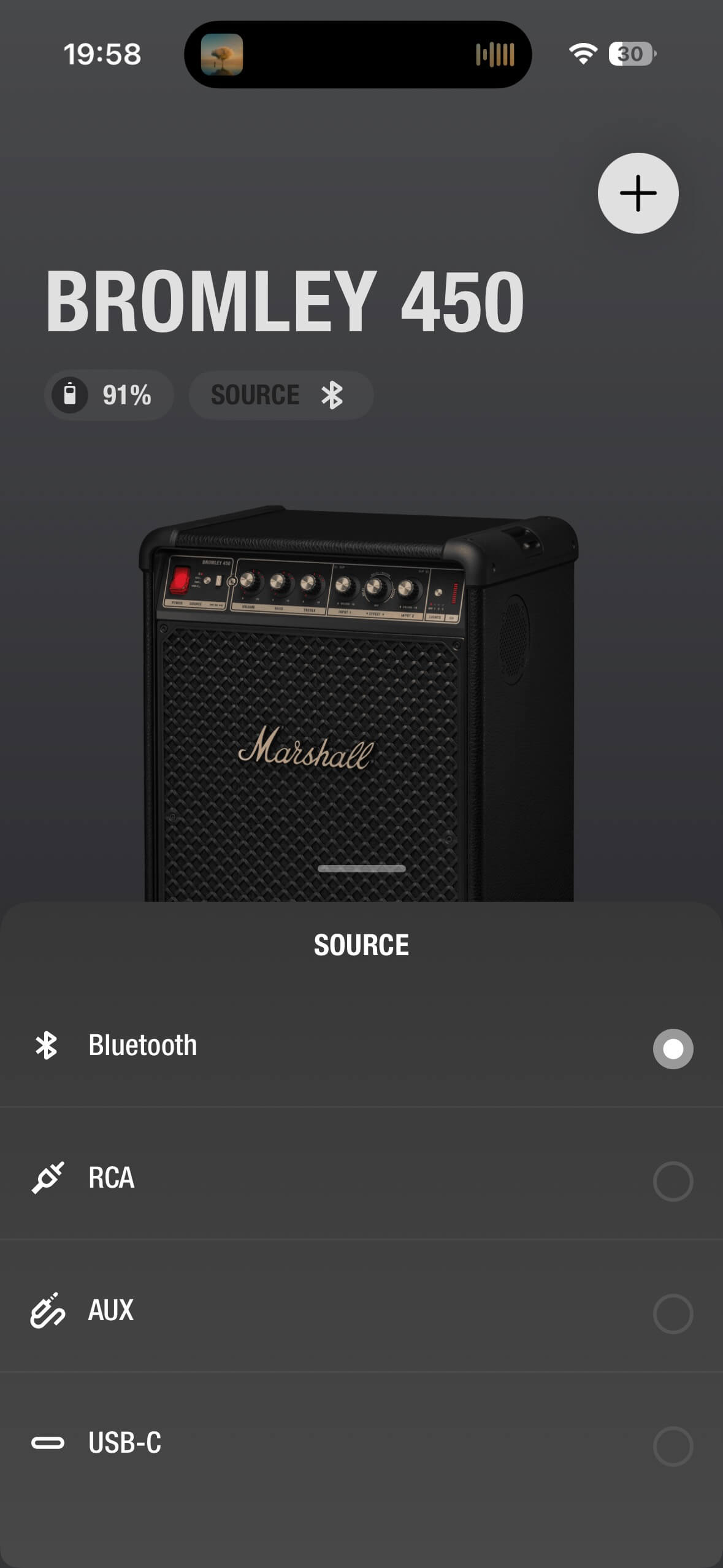
This also carries over the control philosophy of its bigger sibling: everything can be handled directly and without detours on the device itself – volume, bass, treble, light effects, as well as playback and track skip, plus microphone or instrument inputs complete with the Delay and Reverb sound effects.
The sound character dial, which on the larger Bromley effectively lets you adjust the balance between bass, mids and treble depending on volume, has fallen victim to cost-cutting here.
A quick service note: if you assign the “low volume mode” function to the M button, the volume is reduced to 30 dB. If you find this too quiet and adjust the volume back up, take care when switching the mode off again, as the speaker then jumps back to the volume previously selected in the quiet mode – resulting in a noticeable jump.
Powerful – the Sound of the Marshall Bromley 450
The Bromley 450 doesn’t set out to shake the party world to its core quite as dramatically as its larger role model. Its power simply isn’t sufficient for that, which is particularly noticeable in the bass region – still very powerful, but no longer as forceful and physically felt as before. This has its upsides too, as the mids and treble gain more room to breathe, with a slightly warm character that avoids harsh peaks or excessive brightness. This gives the sound image a real shine and lends the whole presentation a notably round, full character.
Typically for Marshall, this character lends real depth and honesty to acoustic, handmade music. Glen Hansard’s current live album sounds genuinely live and offers a real glimpse into Hall 1 of the Berlin Funkhaus, where the audience enthusiastically celebrates the band and singer. But pulsing, driving electronic beats also find a great-sounding home with the Bromley 450 – the pronounced all-round sound in particular gets you dancing anywhere in the room, for instance when Schiller invites you to dance to “Claire de Lune”.
The sound image narrows somewhat as the volume increases, and at maximum volume the bass recedes. It never gives up entirely, though. Overall, at full volume the Bromley 450 sounds noticeably less composed and controlled than on the way there – worth bearing in mind.
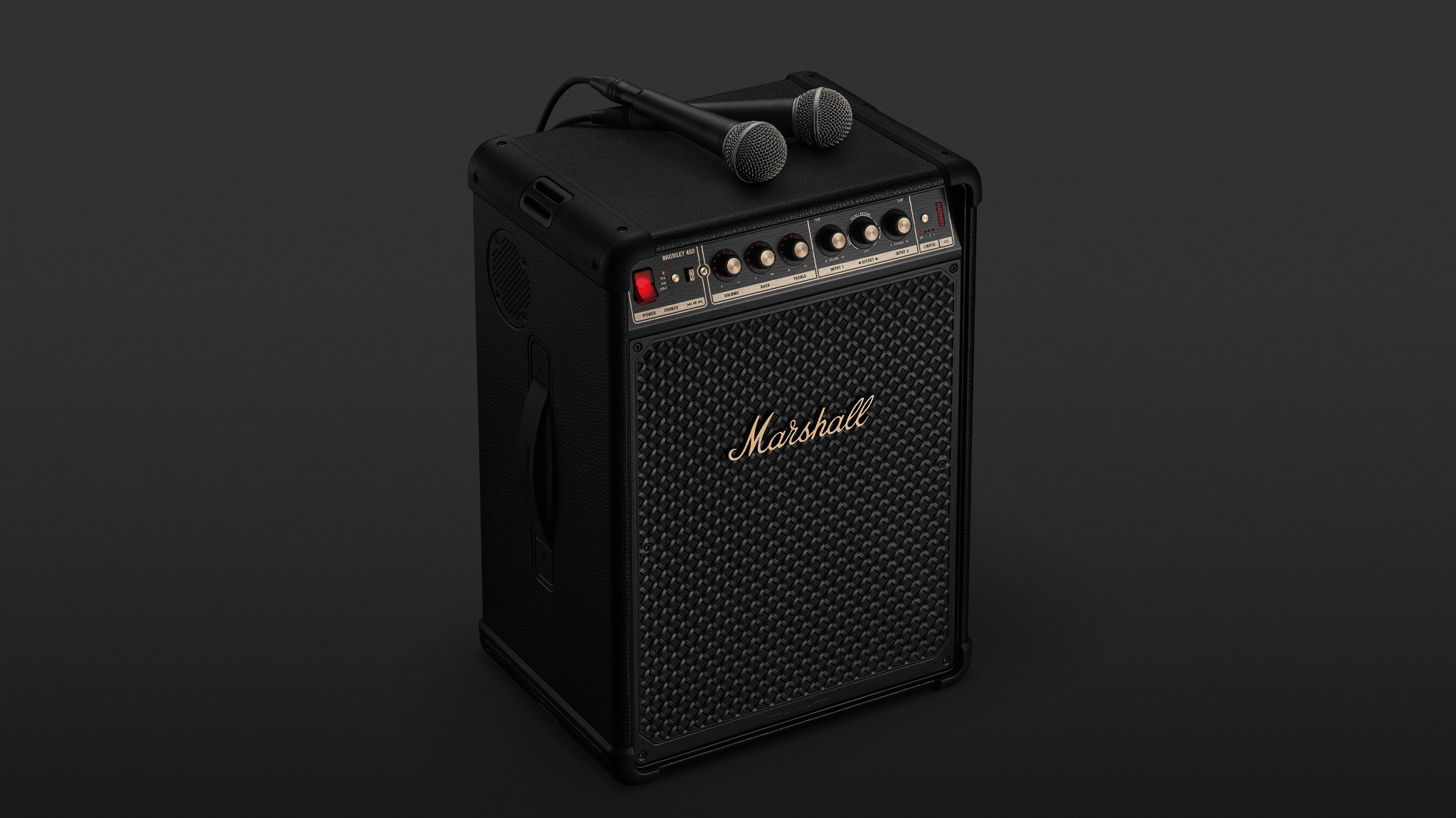
Above all, for solo performers with a microphone and guitar, the Marshall Bromley 450 proves to be an easily transportable companion for small stages or pedestrian zones. Thanks to the integrated stand mount on the underside, the speaker can be effortlessly placed on a speaker stand and raised above the heads of the audience. Strobe light on – party forever. Did someone say karaoke?
Verdict
The Marshall Bromley 450 is number two in mobile sound reinforcement, as number one remains the larger, louder and more powerful Bromley 750. But – and here comes a big but – the Bromley 450 is far easier to transport, more likely to be brought along, and still sounds powerful, bass-rich and warm – just less loud and suited to smaller venues. The genuinely good True Stereophonic 360° sound and the concentrated battery power of over 40 hours of playtime deserve particular praise.
In terms of look and feel, the Marshall Bromley 450 is just as authentic and iconic as its bigger sibling, and as far as the vibe goes: it’s all about the sound, and it’s Marshall.
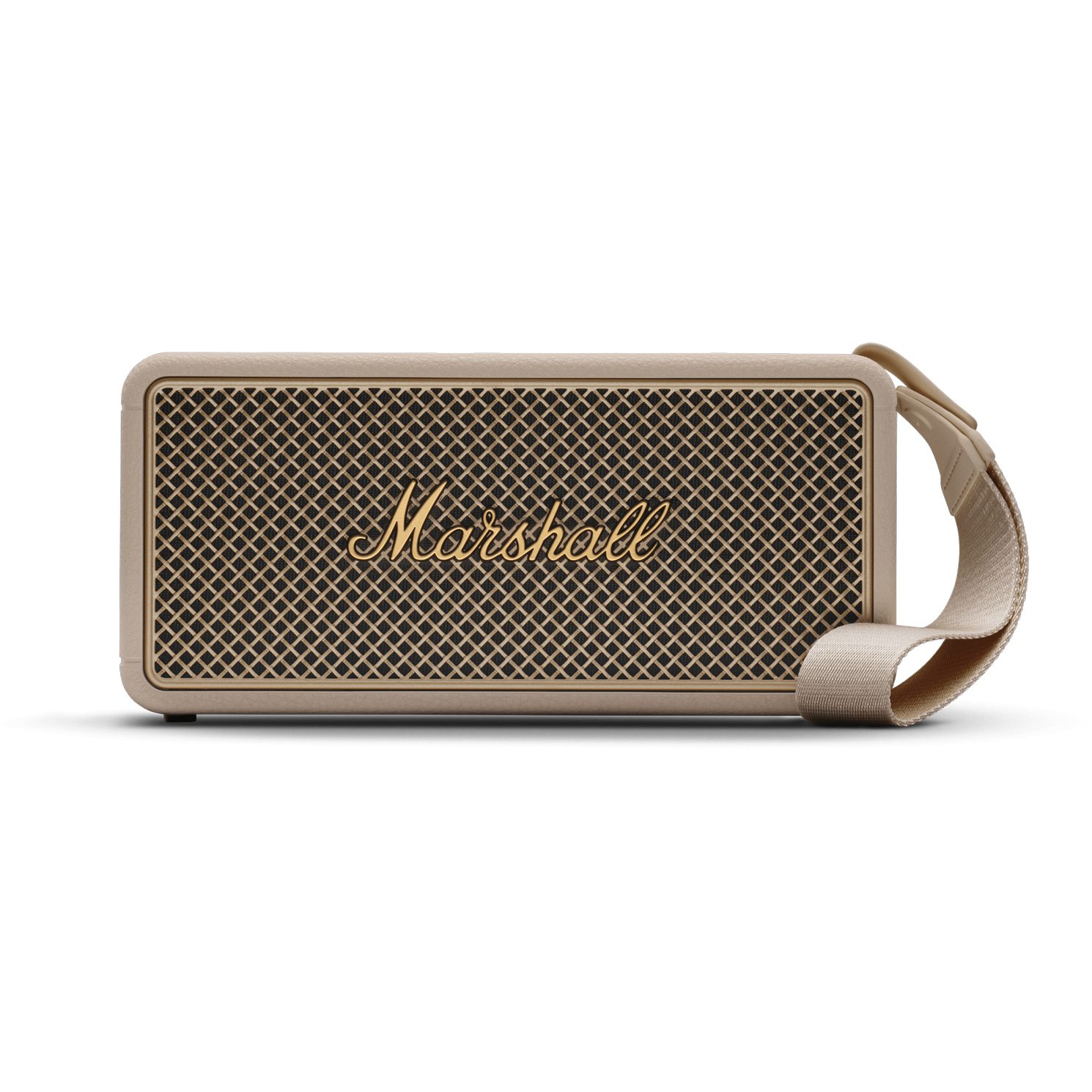
Marshall Middleton II
A powerful bass and rich sound, combined with True Stereophonic 360° sound, provide a solid boost in every direction – the outdoor-ready Marshall Middleton II.
Technical Specifications
| Specification | Value |
|---|---|
| Drivers | 2x 6.5-inch woofers (40 W each), 4x 2-inch full-range (6 W each), 2x passive radiators |
| Amplifiers | 6x Class D |
| Power output (drivers) | 104 W total |
| Power output (amplifiers) | 300 W total |
| Sound technology | True Stereophonic 360° |
| Max. sound pressure level | 100 dB |
| Frequency range | 40 – 20,000 Hz |
| Light show | 42 LED points, 3 modes |
| Bluetooth | 5.3 |
| Codecs | SBC, AAC, LC3 |
| Multipoint | Yes |
| Auracast | Yes (receive only) |
| Connections | 2x 6.35 mm combo (jack/XLR), RCA, 3.5 mm aux in/out, USB-C |
| Battery life | Over 40 hours |
| Water resistance | IP55 |
| Weight | 12.3 kg |
FAQ: Frequently Asked Questions About the Marshall Bromley 450
What is the difference between the Marshall Bromley 450 and the Bromley 750?
The Bromley 450 is more compact and lighter (12.3 kg versus around 24 kg) but offers less power, no sound character dial, and no stereo pairing with identical units. Sonically, the Bromley 450 still remains clearly recognisable as a Marshall.
Can multiple Marshall Bromley 450 units be paired together?
No. Stereo pairing with an identical speaker or linking with other Marshall speakers is not supported on the Bromley 450. Auracast is supported for receiving broadcasts only.
How long does the Marshall Bromley 450’s battery last?
The replaceable battery offers a manufacturer-rated playtime of over 40 hours and can additionally serve as a powerbank to charge a smartphone.
Is the Marshall Bromley 450 waterproof?
The speaker carries an IP55 rating, providing protection against dirt, splashing water and rain. Submersion or hosing it down is not supported, however.
Can microphones or instruments be connected to the Marshall Bromley 450?
Yes. Two 6.35 mm combo jacks (jack/XLR) allow microphones or instruments to be connected, including built-in effects such as delay and reverb – ideal for karaoke or impromptu performances.
Conclusion
Advantages / Disadvantages:
Advantages:
-
Long battery life
-
Good all-round sound
-
Analogue controls
-
Connector for a microphone, DJ mixer or instruments
-
Lossless audio via USB-C
-
Robust & IP55-rated
-
Light effects
Disadvantages:
-
Carrying handle awkwardly positioned
-
Fairly limited app support
-
Muddled sound at high volumes
Topics:
bluetoothShare Post:


About the author:

From
Sven Opitz
Redakteur
Sven Opitz, born in 1971, is a film maker with his own company. For some reason he has a penchant for headphones, the cause may well be deep in a past where a pretty headphone with yellow foam hung next to his father's UHER Variocord tape recorder. Now at kopfhoerer.de and headphonecheck.com, he connects his childhood with his ears.