
In a nutshell
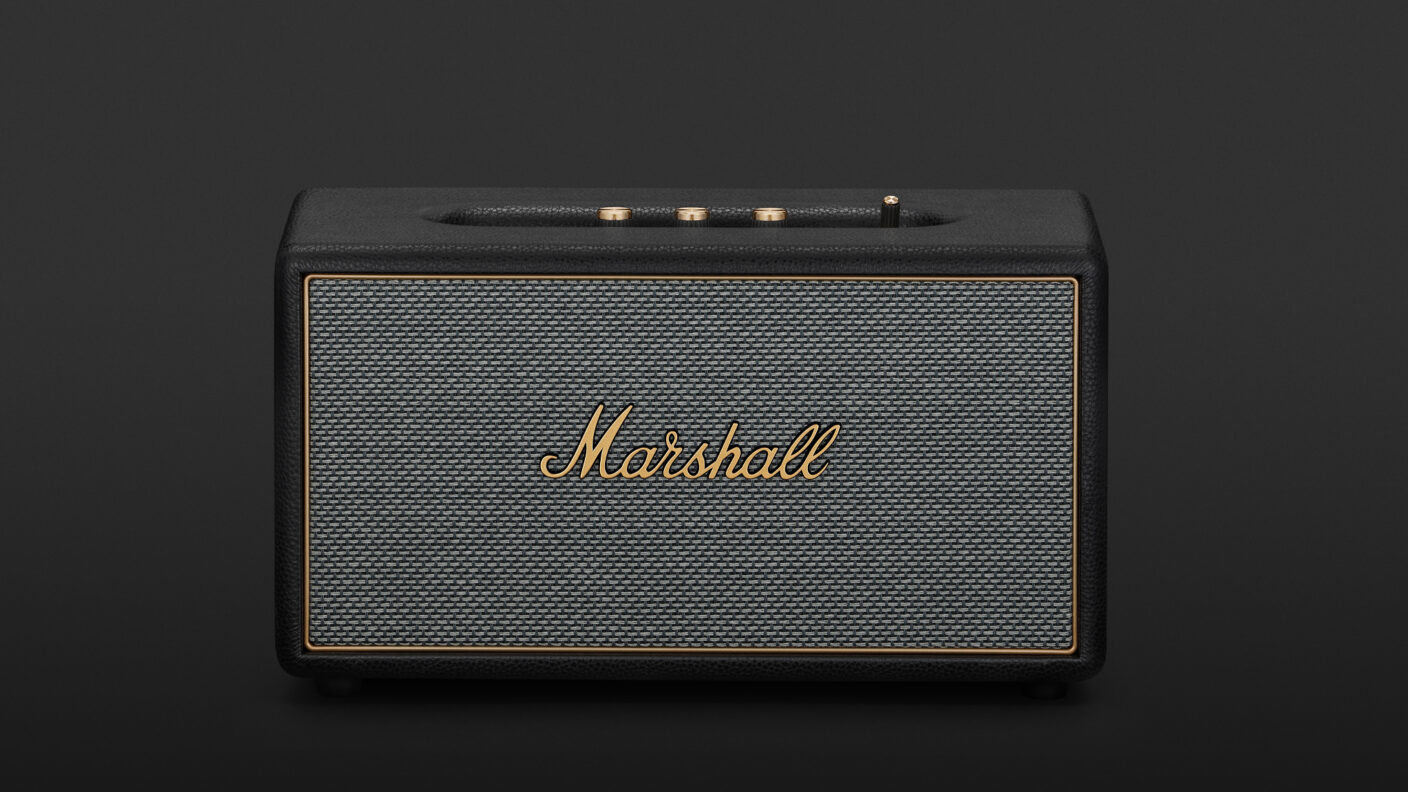
With the Marshall Stanmore IV, the British amp legend renews its mid-sized home speaker and makes it consistently better: LDAC codec, an M button, an RCA input, Auracast, thicker bass, Dynamic Loudness, more power. And the best part: no price increase over the Stanmore III. The fourth generation is available in two colors: Black and Cream.
Advantages:
-
Dense, rich sound
-
Build quality and feel
-
Good usability
-
RCA input
-
Dynamic Loudness
-
Same price as its predecessor
Disadvantages:
-
No digital input
-
Auracast features require additional hardware
-
Sound at very high volume
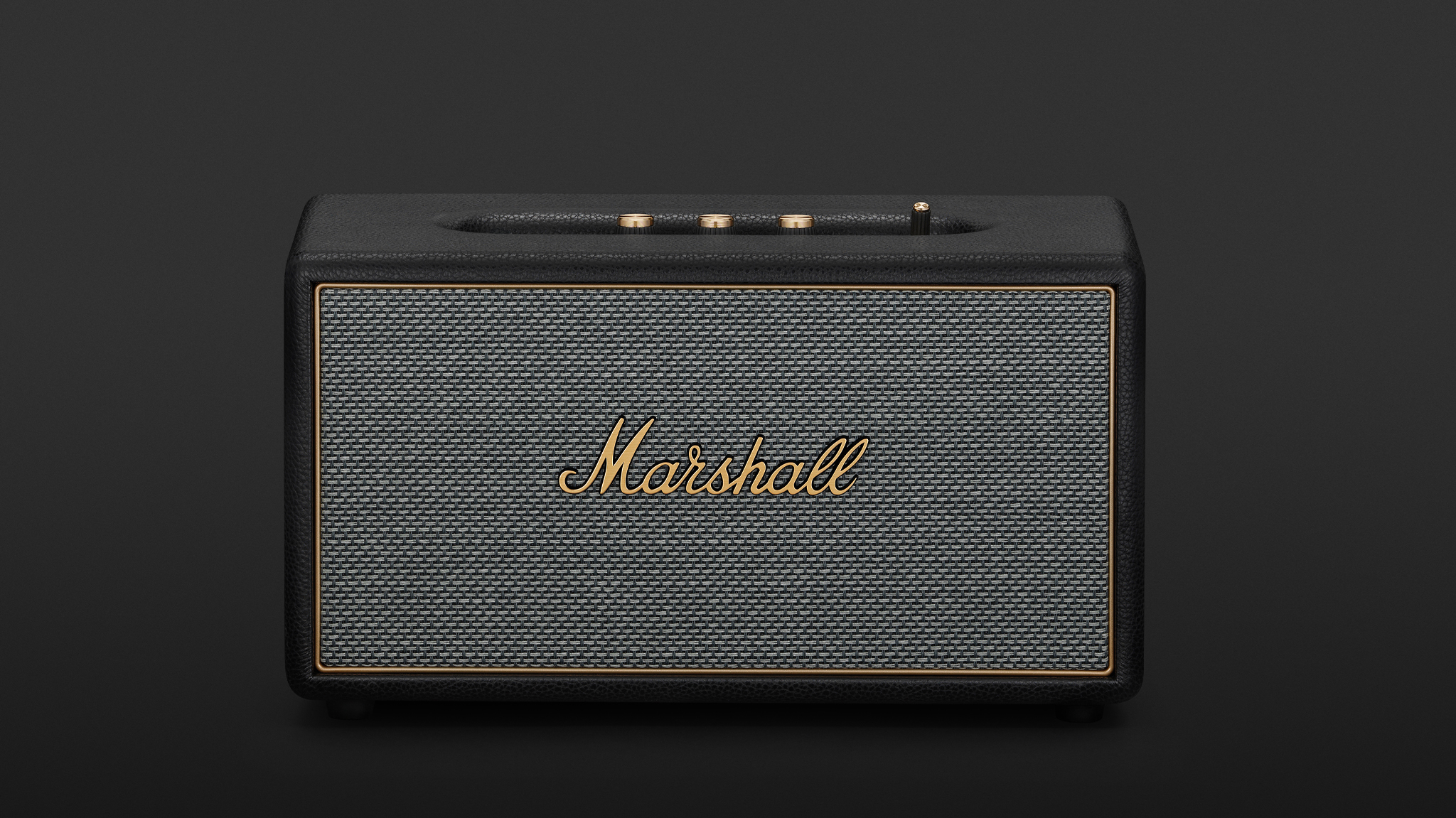
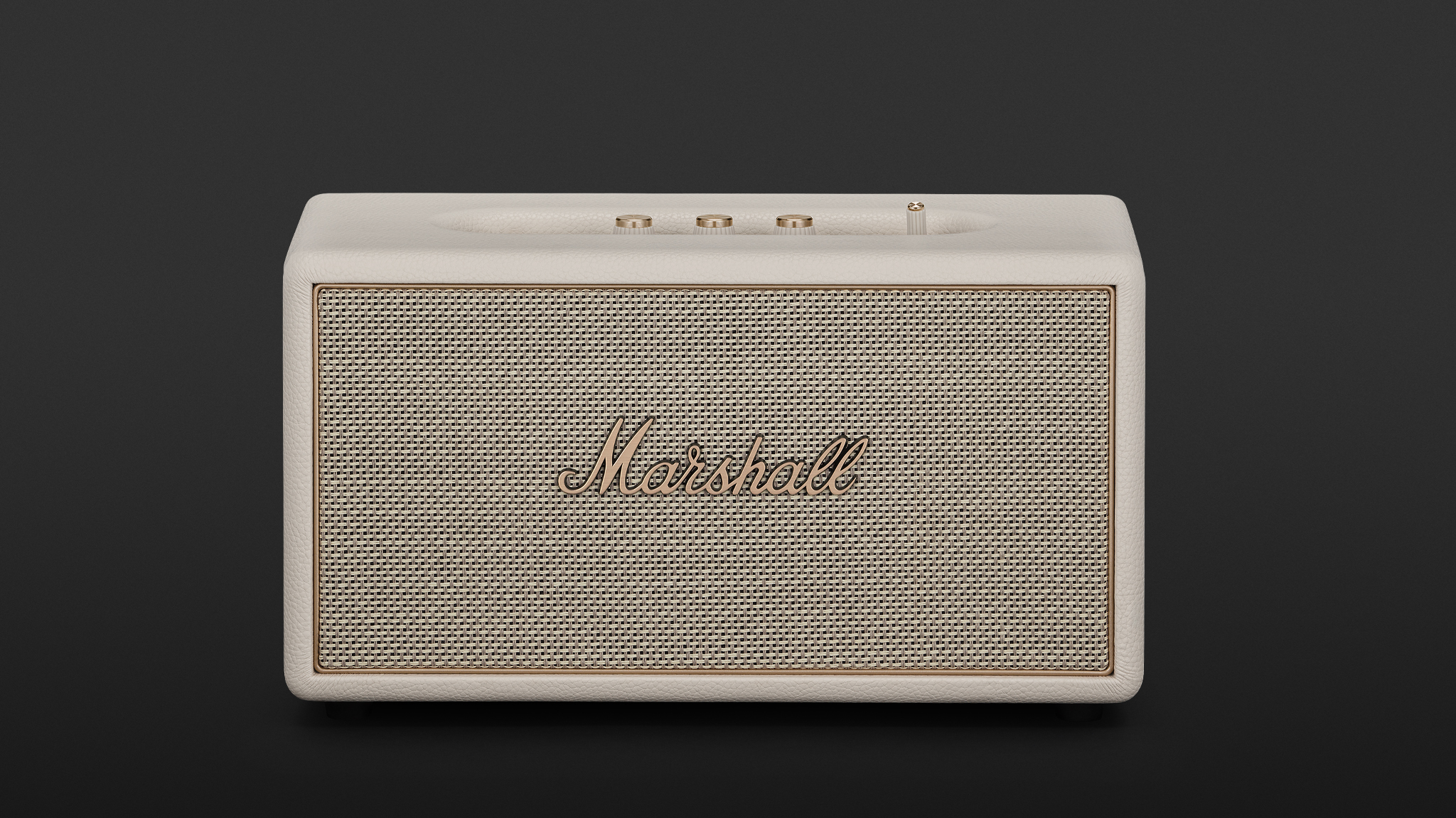
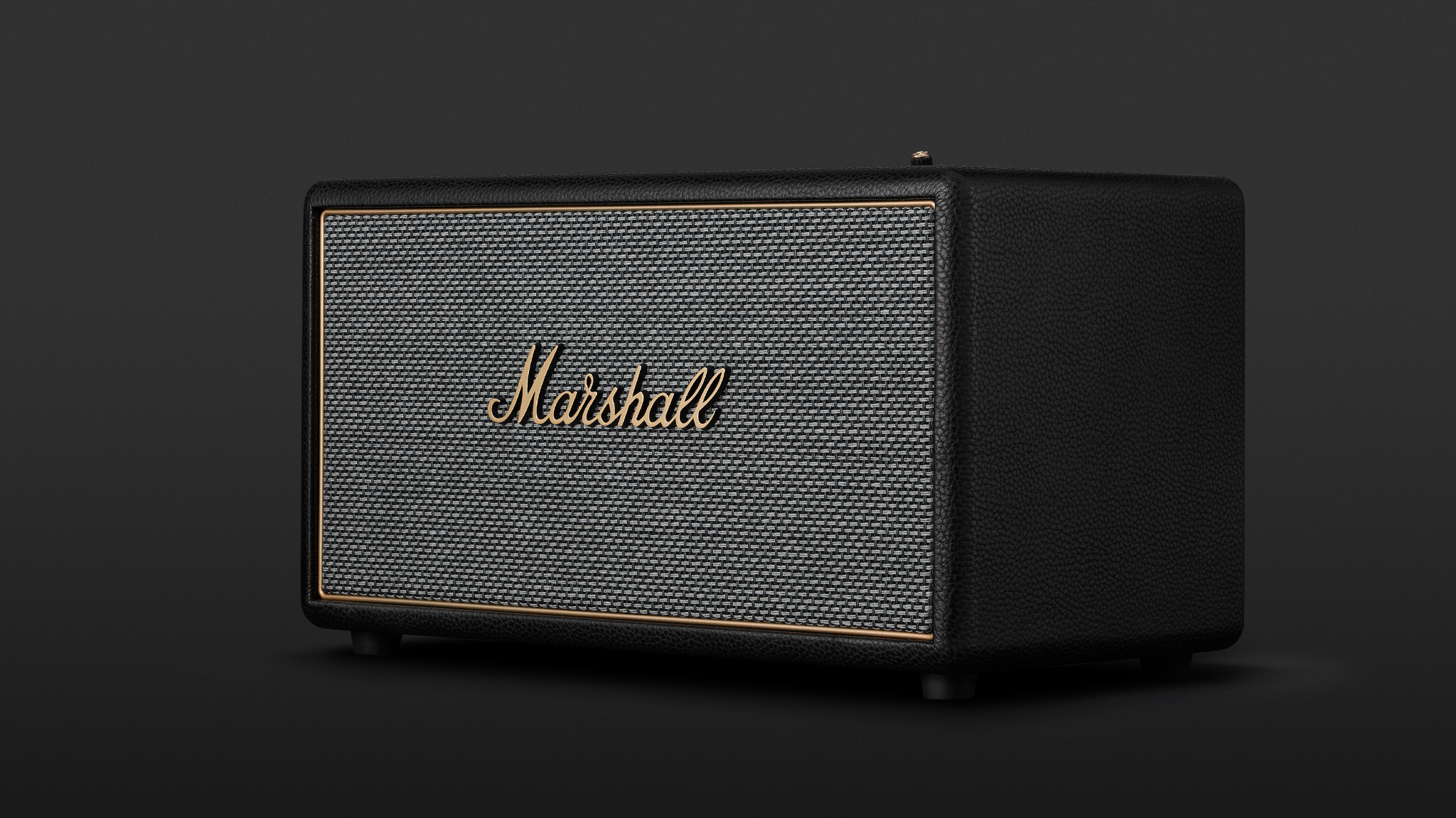
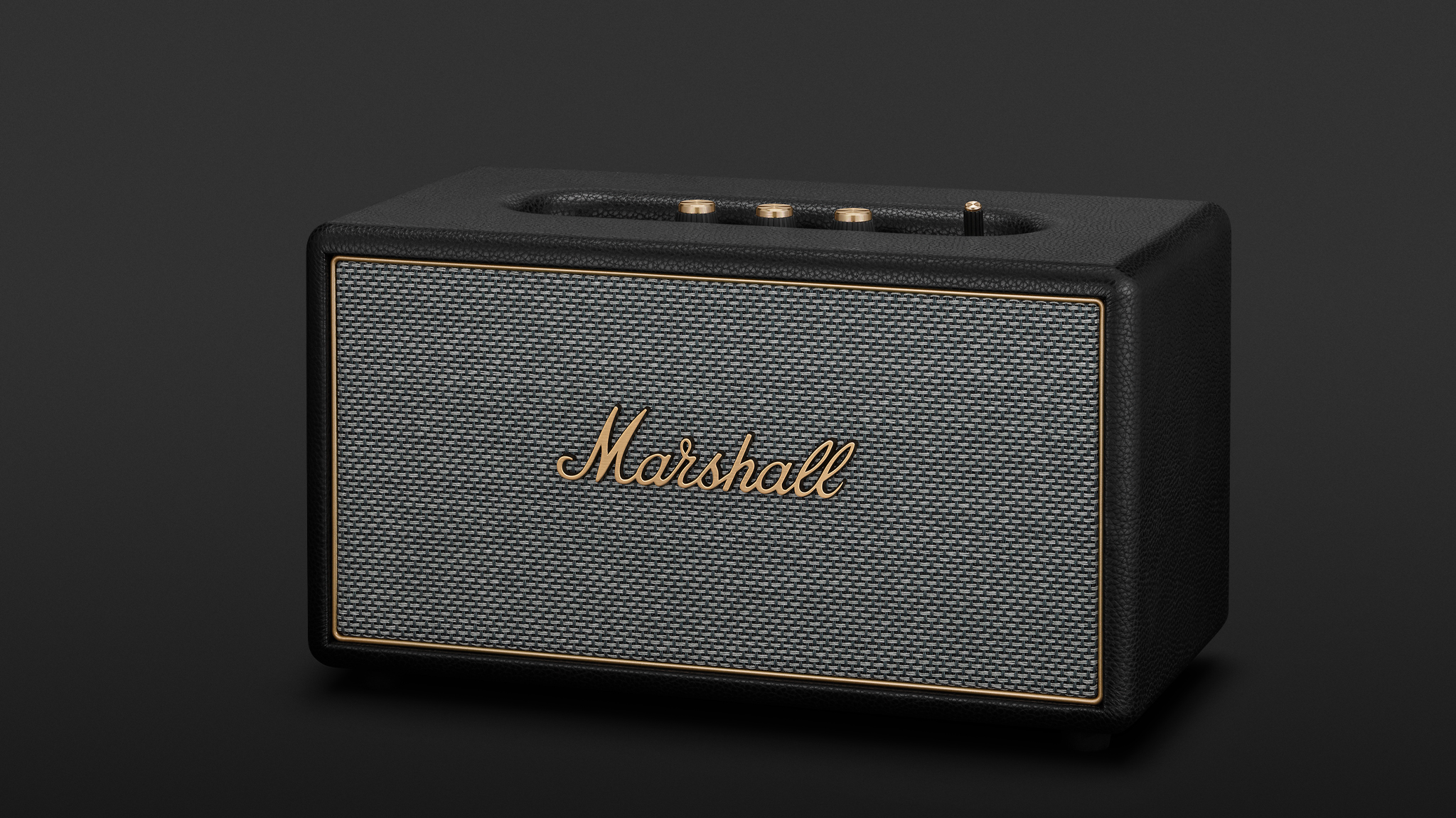
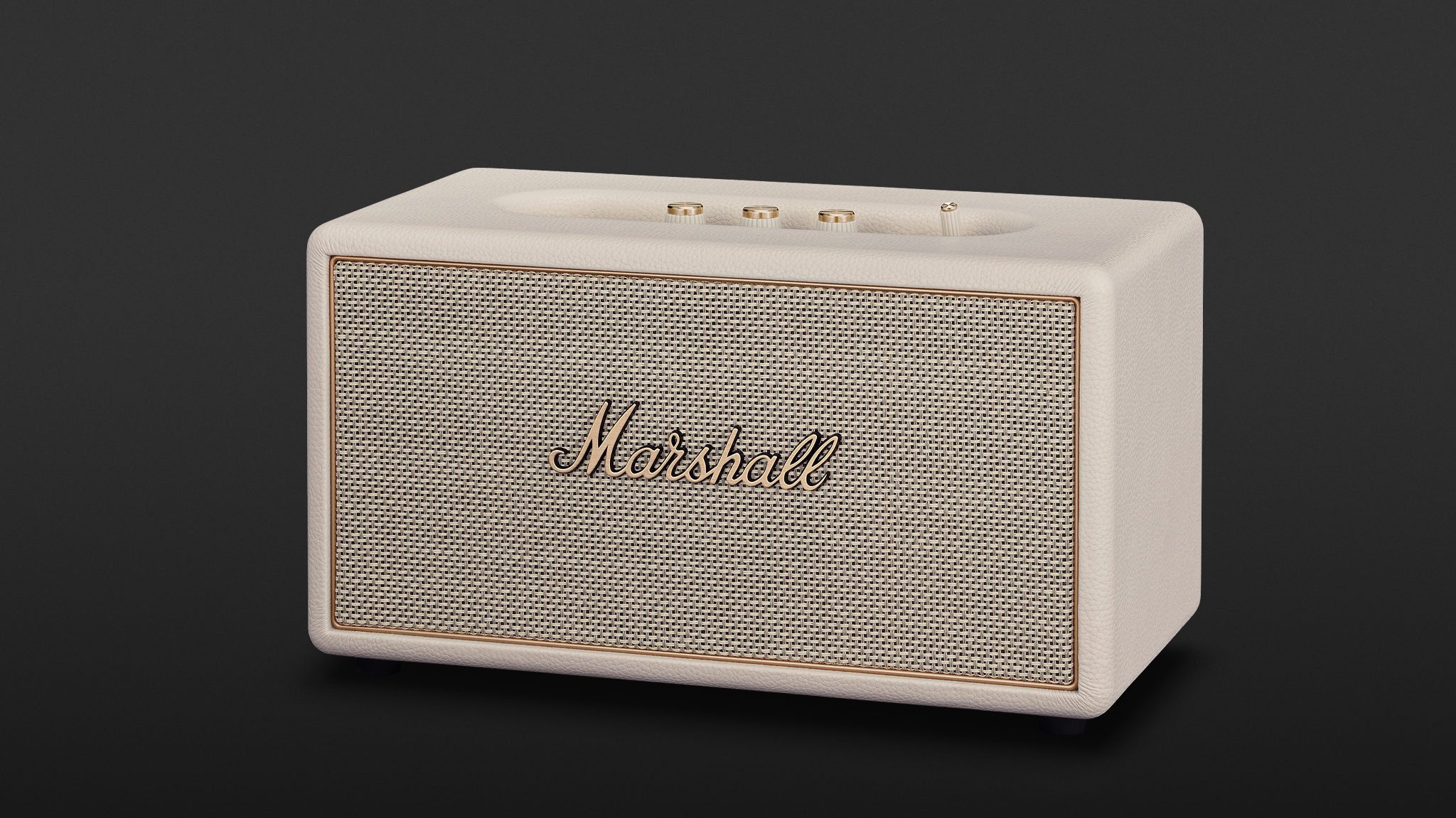
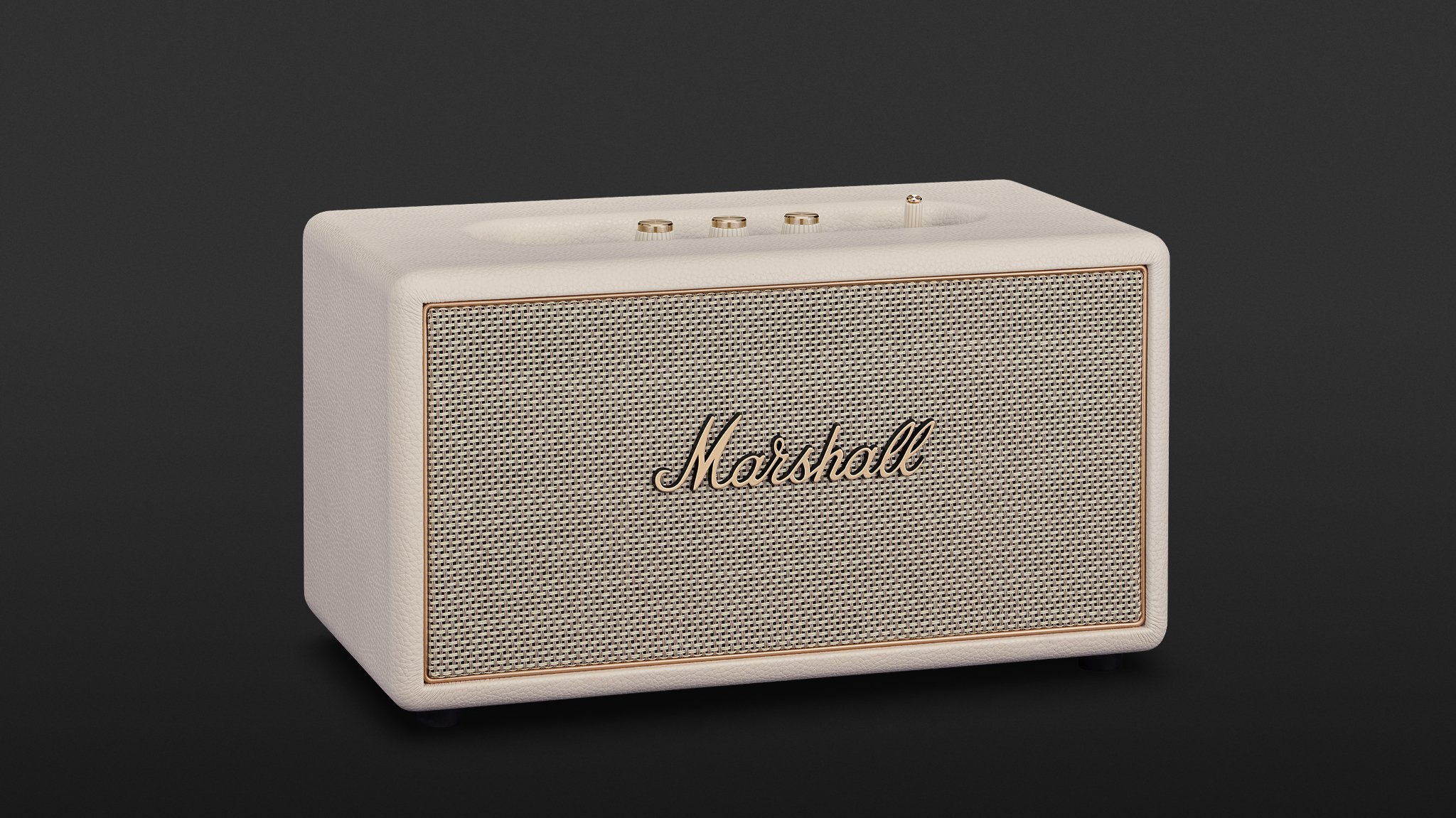
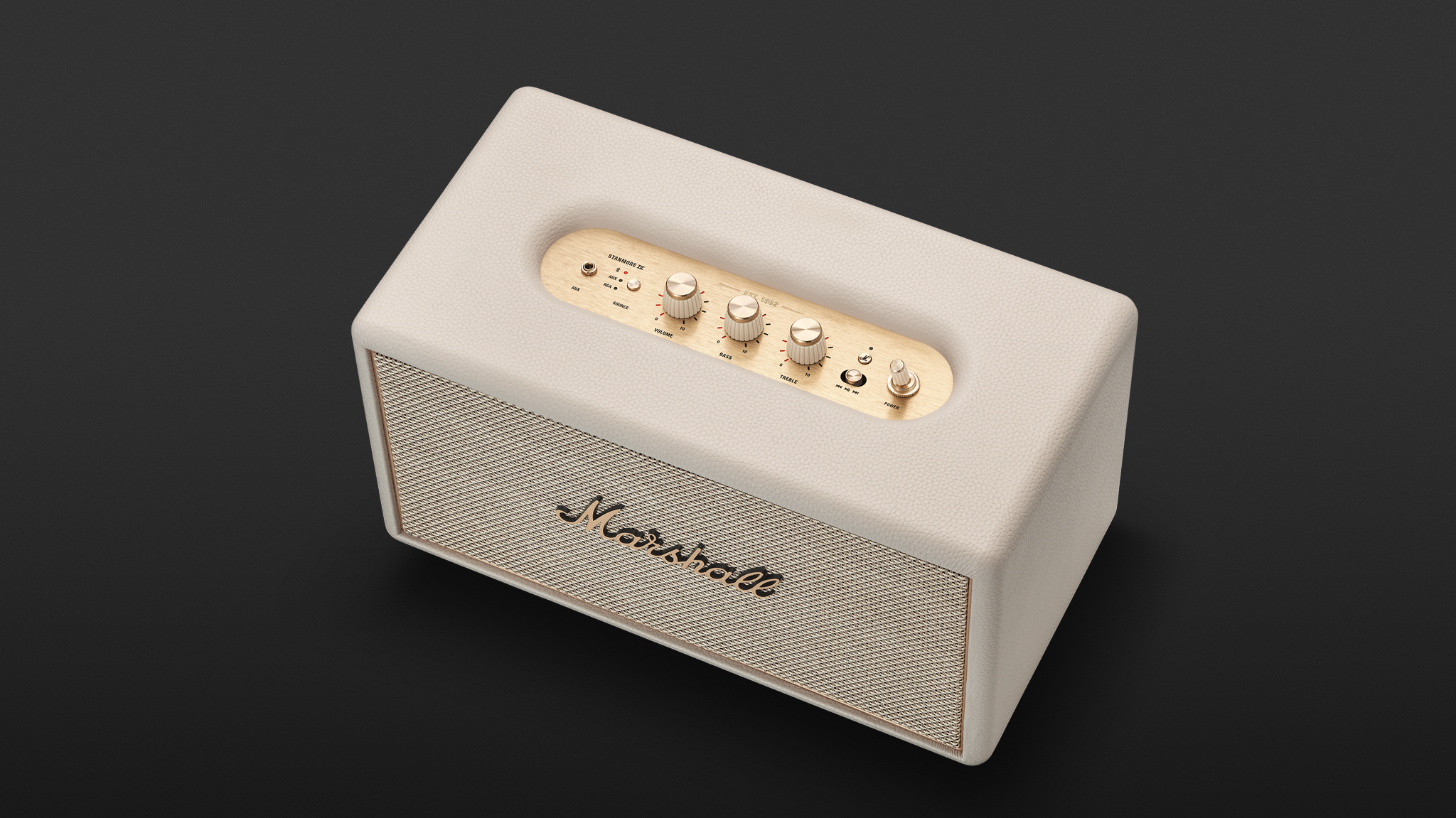
Marshall has reworked the Stanmore line. The result is a modern speaker with fat sound and the classic Marshall vibe.
Table of Contents
Hardware
The bottom line: Barely changed in design, but lighter, stronger, and with a new M button – 110 watts instead of 90.
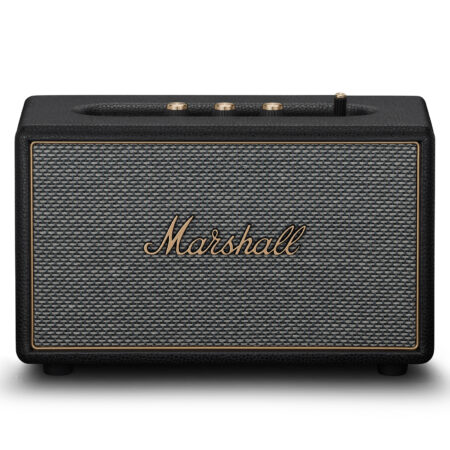
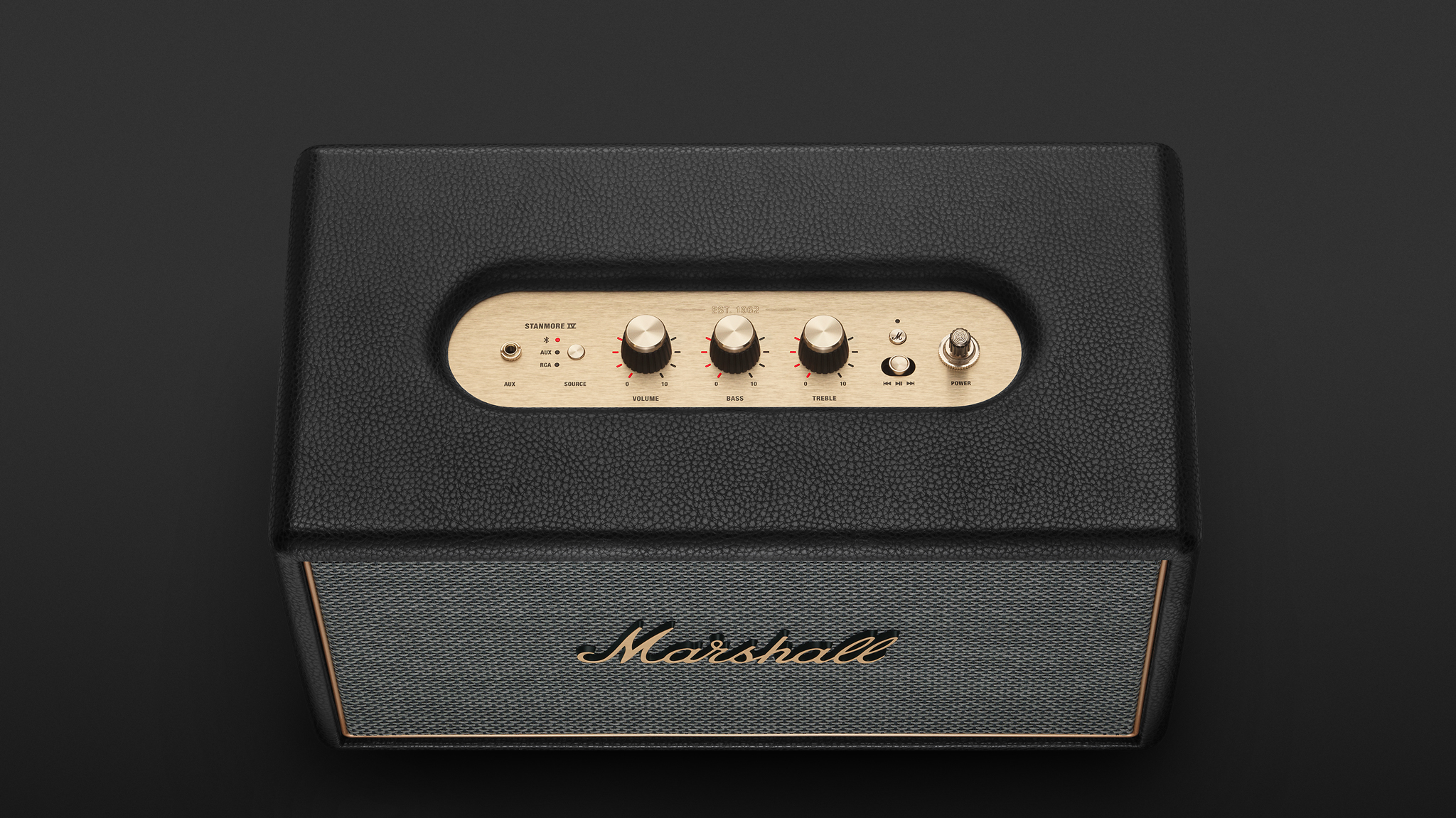
At 35 x 20 x 18.5 centimeters, the outer dimensions have barely shrunk, but the Marshall Stanmore IV has lost about 250 grams, now weighing 2.99 kilograms. You wouldn’t know it by looking: unbox the Stanmore IV, and at first glance it’s hard to tell apart from the Stanmore III. Grippy Tolex covering and a fine-mesh front grille with the bold logo make it instantly clear which workshop this speaker came from. The brass-backed control panel on top now also has an M button. As always: the three exceptionally sturdy and grippy dials, the distinctively clicking power switch, three-way media control, an analog aux input, source selection, and the Bluetooth button.
You are currently viewing a placeholder content from YouTube. To access the actual content, click the button below. Please note that doing so will share data with third-party providers.
Since the bass port has moved from the back to the bottom, the speaker can now also be placed directly against a wall or on a record shelf. Down there also sit the RCA jacks for the new analog input and the power connector.
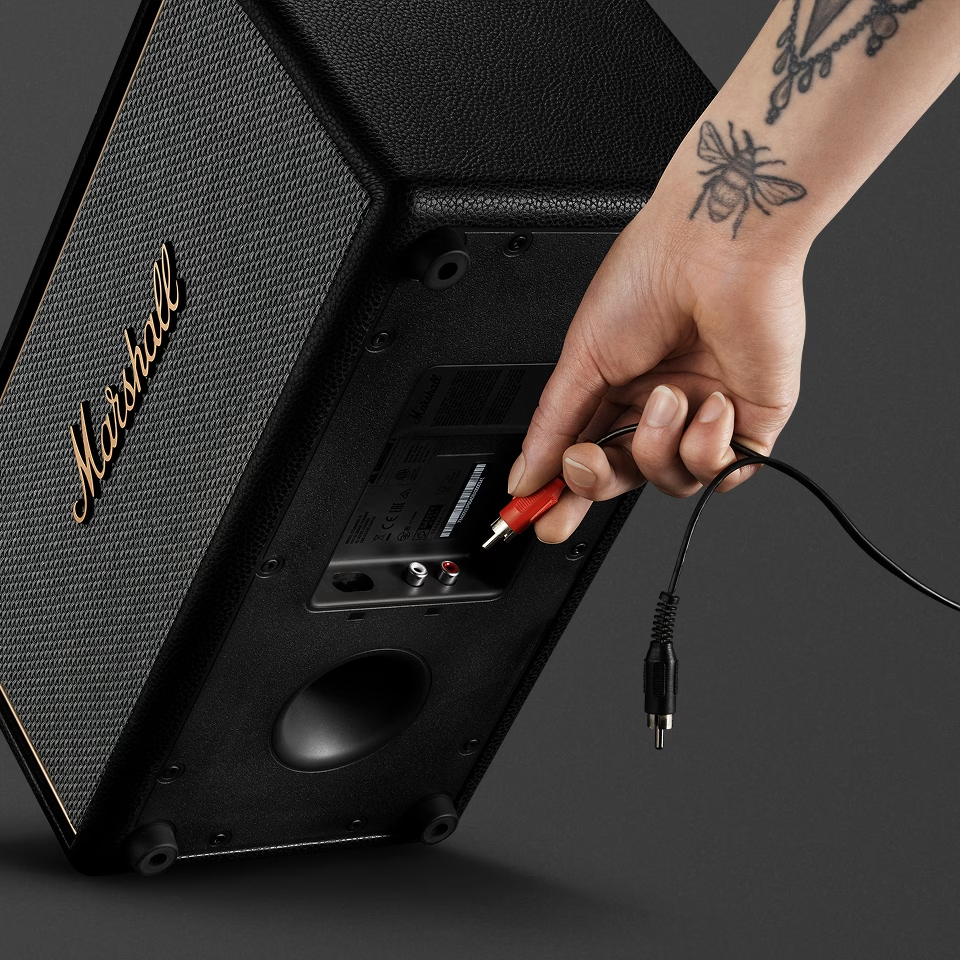
Marshall has reworked the driver system too: alongside the 5-inch woofer, the two 0.75-inch tweeters and their waveguides have been renewed above all. The three Class-D amplifiers now deliver 110 watts total – 20 watts more than the predecessor.
Features and Controls
The bottom line: Bluetooth 5.3, LDAC, and an RCA input bring the Stanmore IV up to date – only the party mode costs extra.
With the updated Bluetooth 5.3, the Marshall Stanmore IV now offers LE Audio and Auracast. Alongside SBC and AAC, LDAC is on board as a higher-quality codec. Thanks to multipoint, two sources can be used simultaneously.
Auracast capability is initially limited to receiving broadcast content via the app.
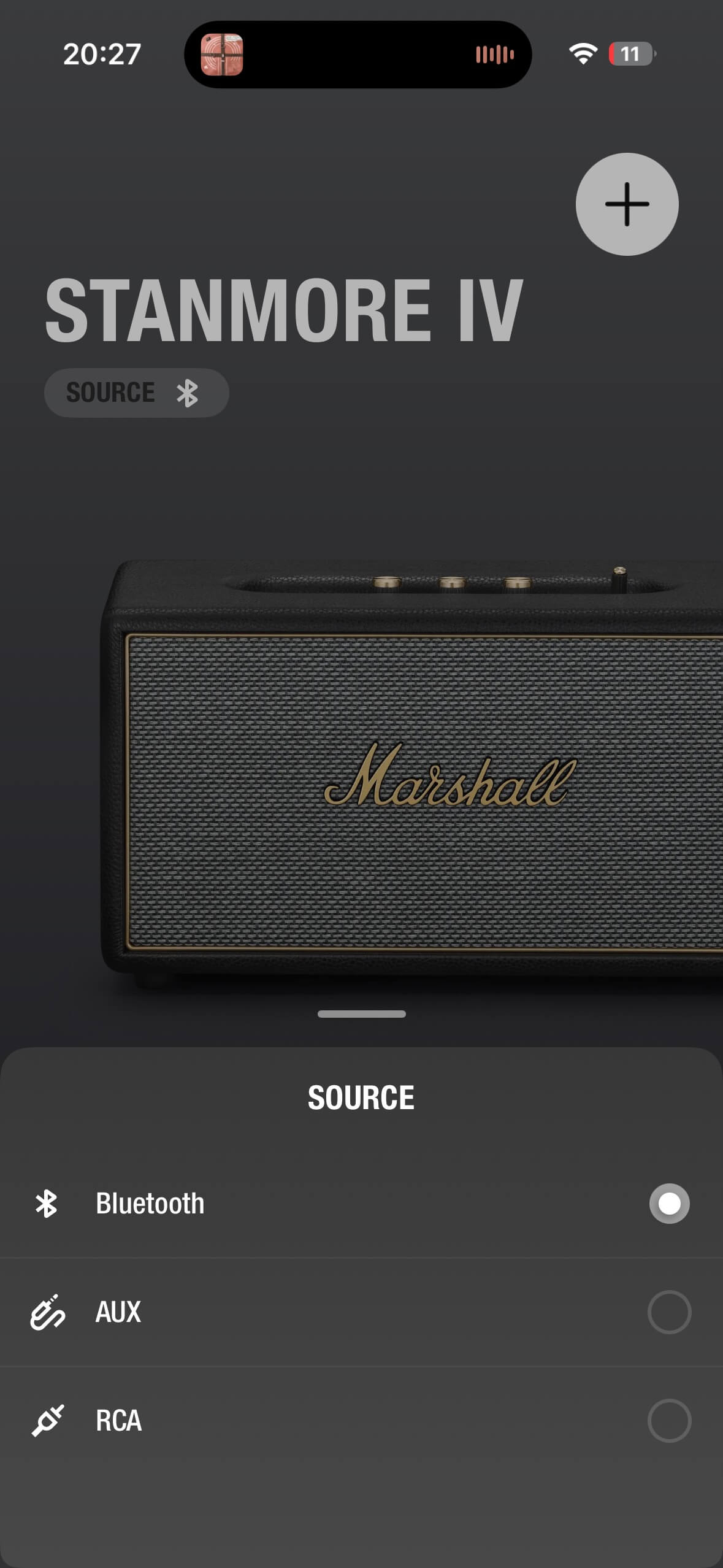

Playing music in sync across multiple speakers – party mode – is only possible for Marshall with additional hardware. What other manufacturers often already build in, Marshall handles via the HEDDON streaming hub, which costs €199.
The new RCA input allows connecting a turntable or tape deck, which is quite appealing. The fact that Marshall skips a digital input like S/PDIF or USB-C – the latter found on the Stockwell III, for instance – still leaves room for improvement on this otherwise very mature speaker.
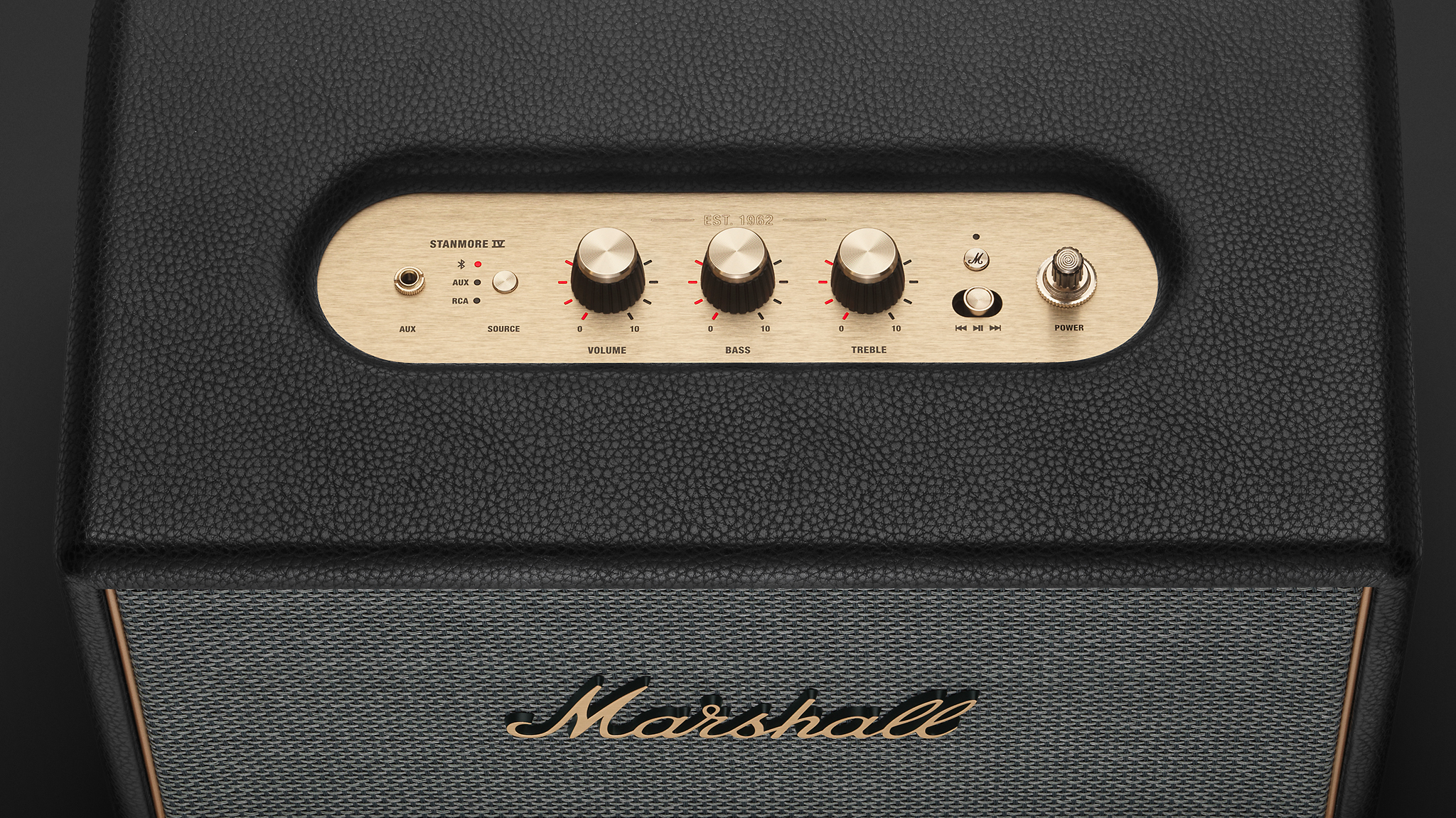
You’ll most want to control the Marshall Stanmore IV directly via the three dials with their handsome red, now dimmable LED rings. That’s where you get the best sense of sound and premium hardware. To get everything out of the speaker, though, there’s no way around the Marshall app.
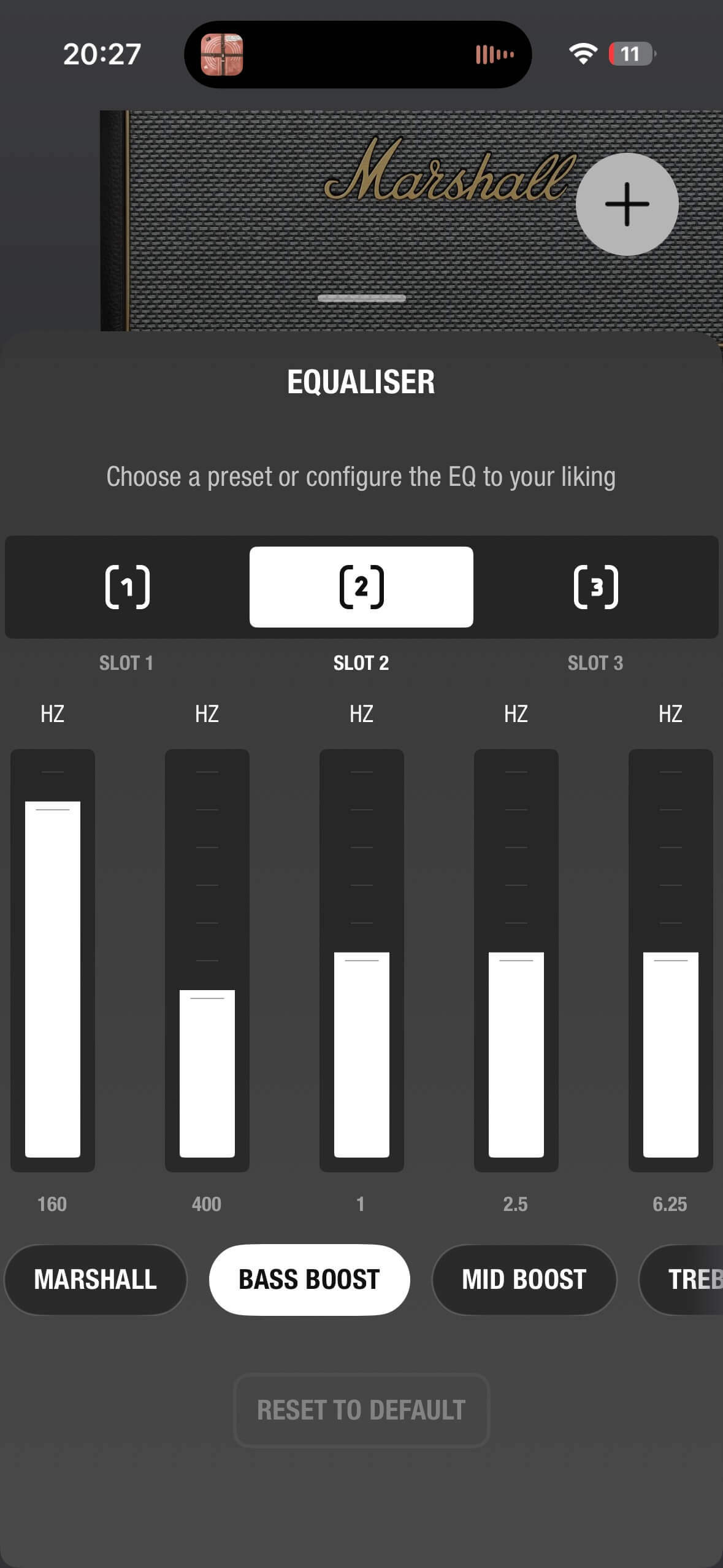
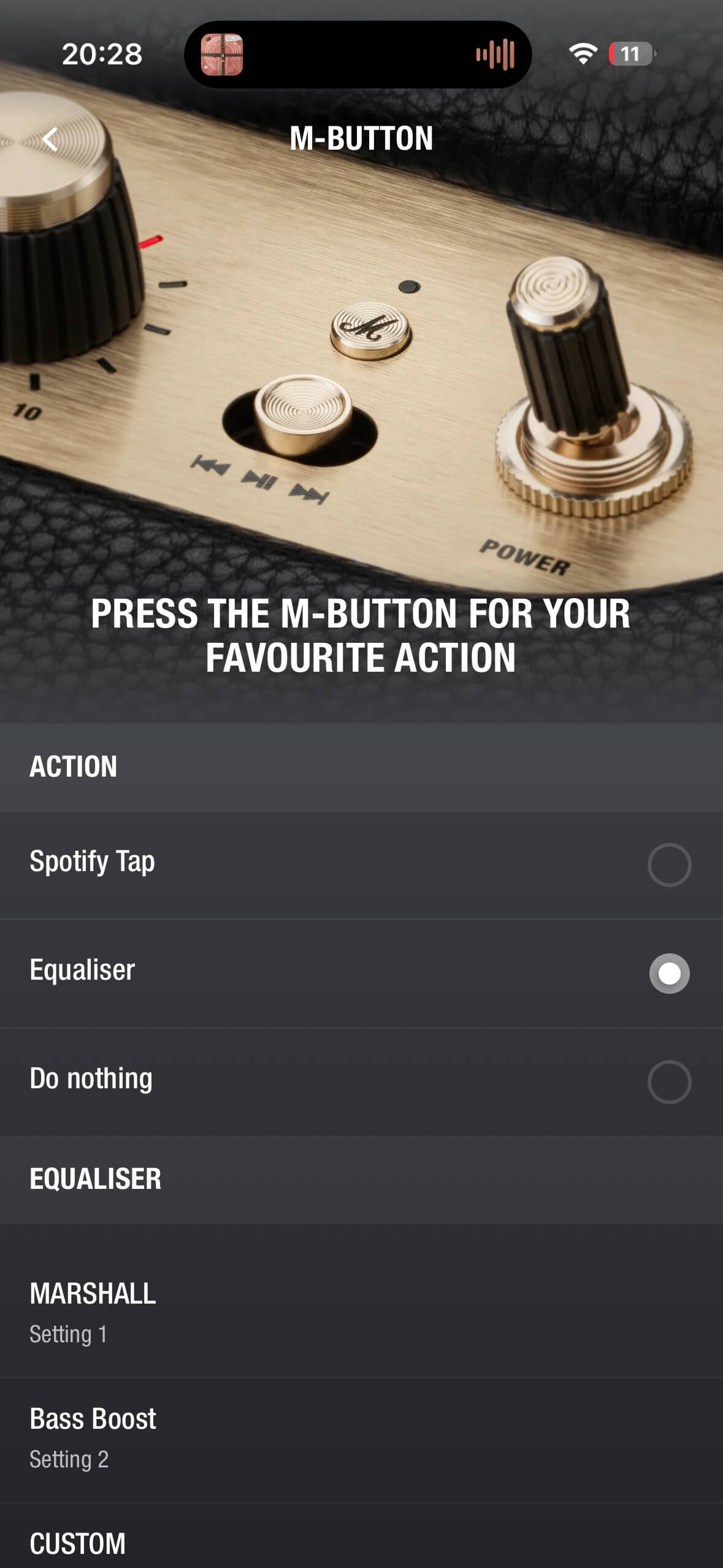
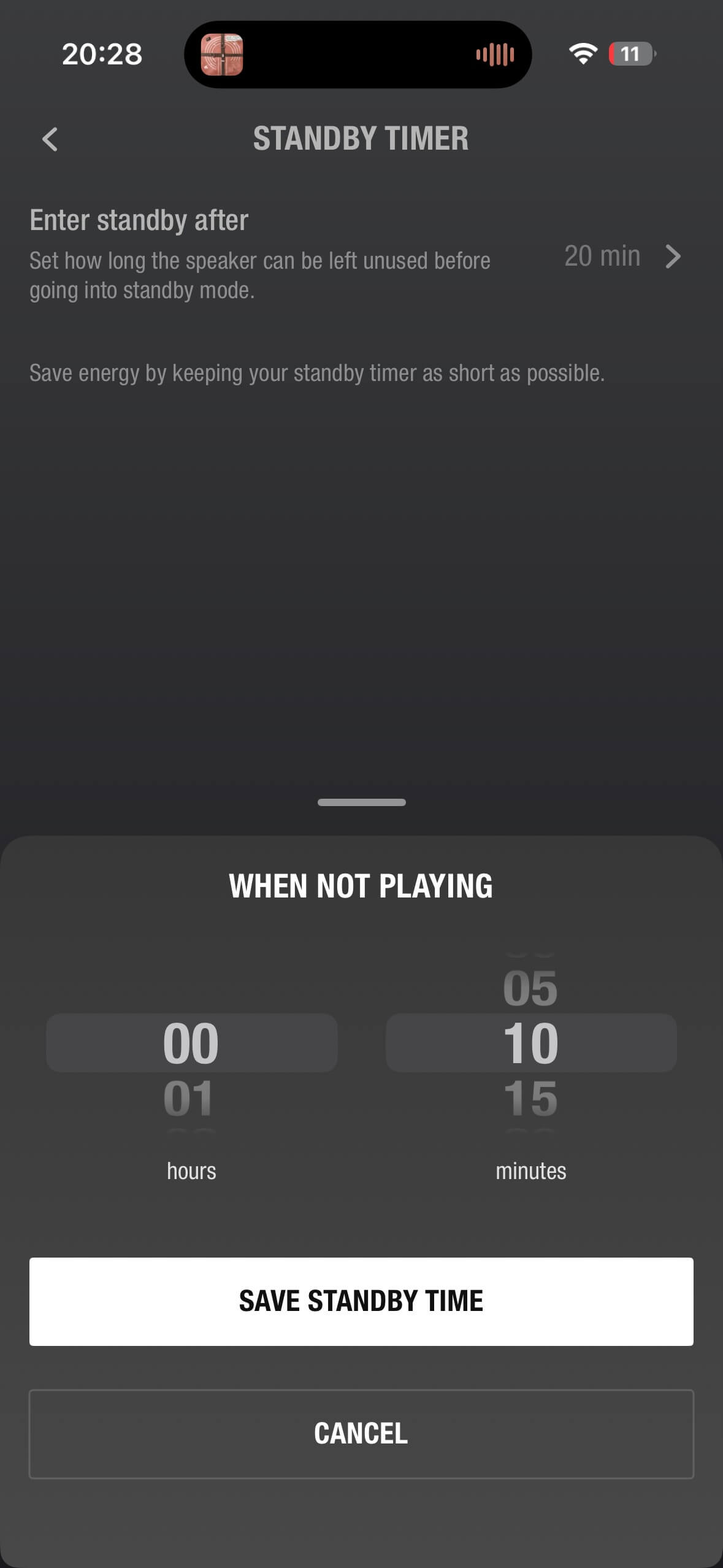
The EQ section offers five presets and a 5-band EQ for tailoring the sound. Three memory slots let you store presets, which can be recalled one after another via the M button. Alternatively, the M button can launch the Spotify tab or do nothing at all.
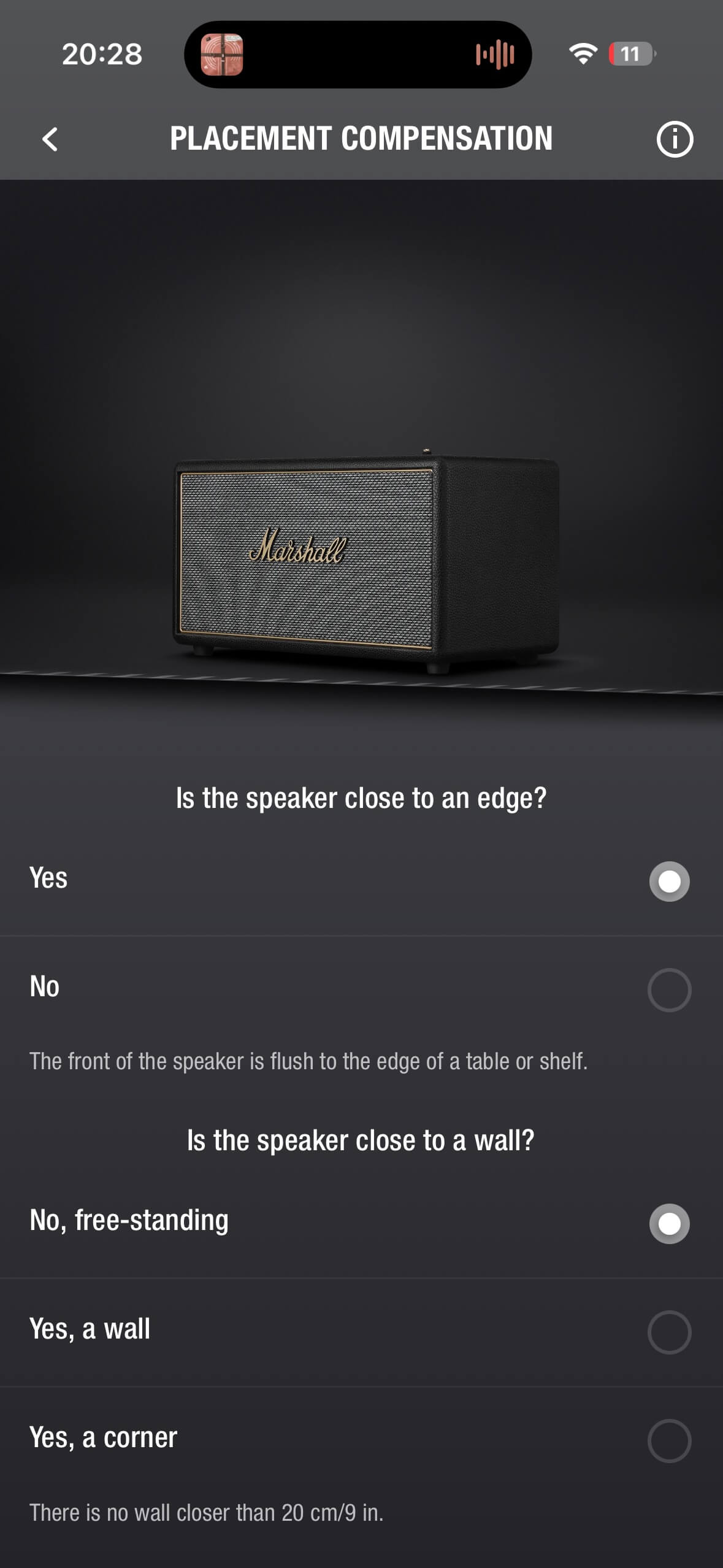
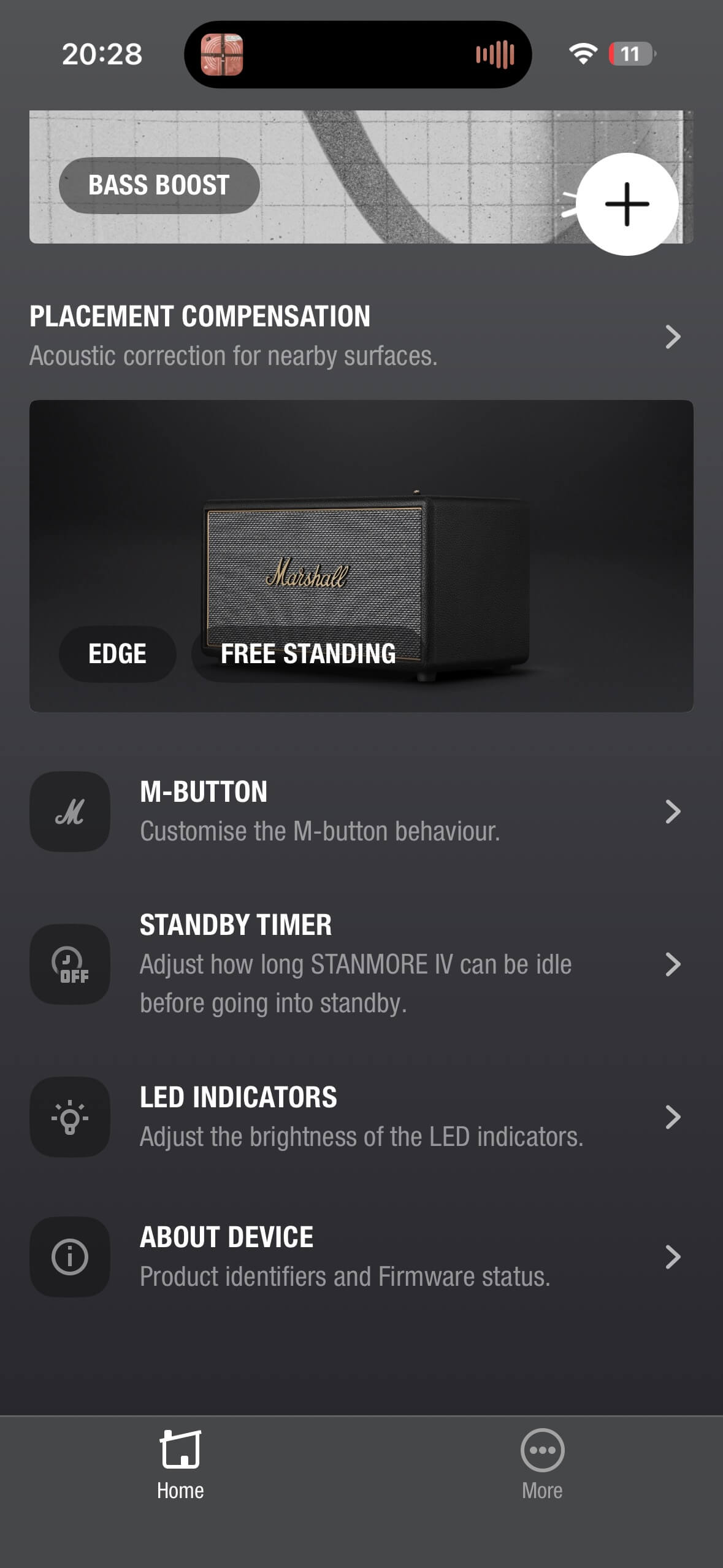
Placement Compensation adjusts the speaker’s sound behavior to its location – for example close to a wall or at the edge of a shelf.
Rounding out the extra features are an adjustable sleep timer and the option to adjust the brightness of the LEDs on the control panel.
At the time of testing, the German version of the app wasn’t yet compatible with the new hardware.
Sound of the Stanmore IV
The bottom line: Warm, powerful Marshall sound with a wide stage – at full volume, it loses a bit of strength.
Sonically, the Marshall Stanmore IV delivers well. Thick bass, not entirely dry, but powerful enough to show who’s boss. The mids draw attention to vocals and instruments, while the highs come across with a matte, silvery character.
All around, it’s a successful and very Marshall-typical impression, warm and full of contrast across a wide stage.
The DSP, in the form of Dynamic Loudness, keeps the sound well in check from low to nearly full volume: at low levels it boosts the bass, while at high volume it tries to keep things from running away.
Push it toward maximum volume, though, and that no longer works quite as well, with the Marshall Stanmore IV’s sound losing some strength.
A solo voice like Glen Hansard’s comes across close and intense, gritty and very present. Bell-like tones from vibraphone and piano in classical crossover music, however, can’t quite break through the slight veil in the system and lose some brilliance and freshness.
On the other hand, the rocking “Heavy News” by Richard Ashcroft crashes through the room and confidently dispels any doubts about sufficient bass power. With Other Lives and the more mid-focused mix of their current album, everything comes together nicely.
When too many highs and too much volume combine, though, the speaker and DSP work together awkwardly, and the highs break out.
Conclusion
The Marshall Stanmore IV is a typical Marshall speaker, and that’s a good thing. The modernized technology and the many detail improvements pay off sonically: a wider stage, a fuller sound. That makes the speaker even more appealing – even though the Auracast party mode requires additional hardware and the sound loses steam at very high volume.
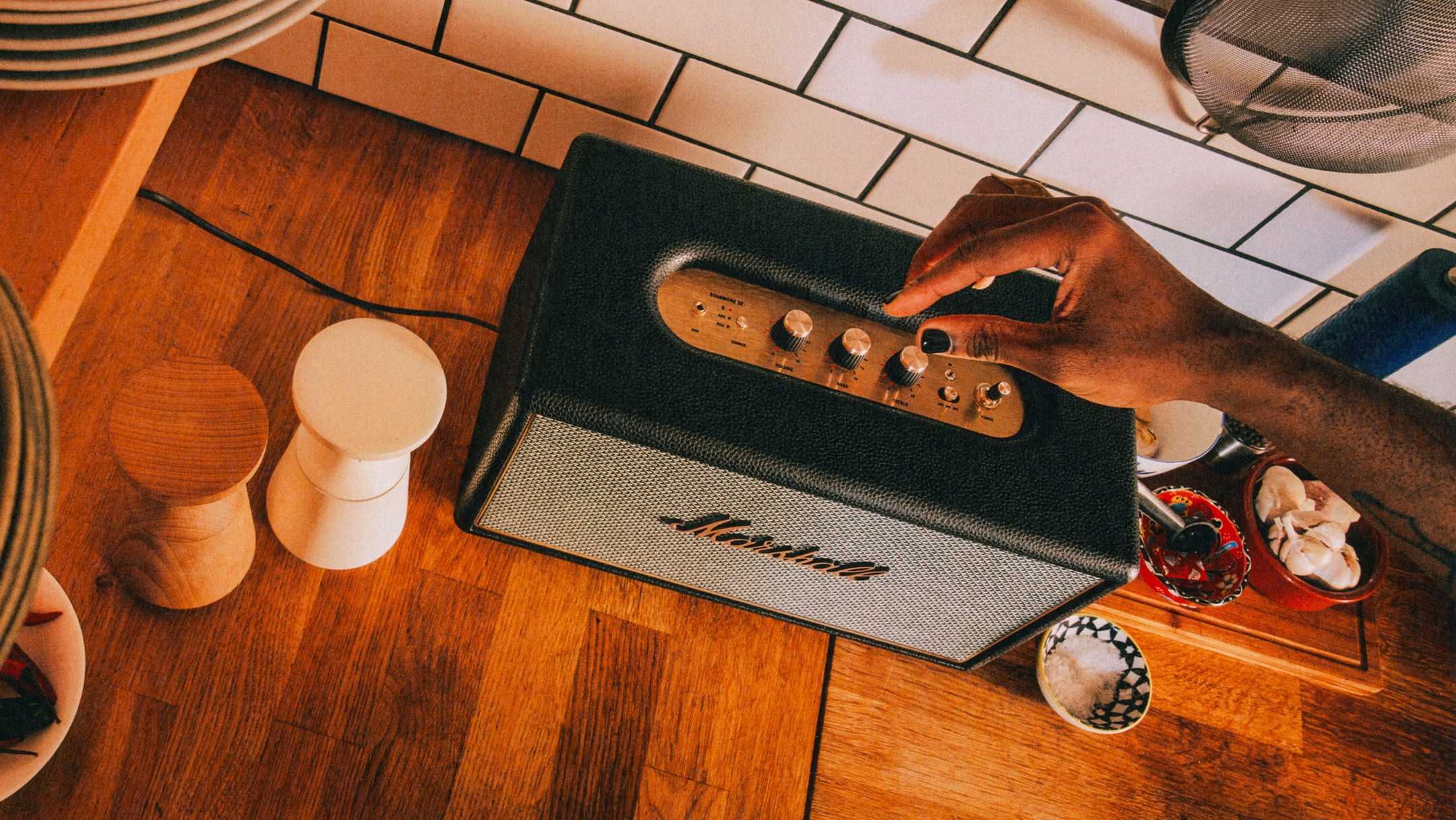
Look, feel, and design remain beyond doubt. With the Marshall Stanmore IV, you get a speaker and a legend at once.

FAQ
Does the Marshall Stanmore IV have a turntable input?
Yes, via the new RCA input on the bottom, a turntable or tape deck can be connected with an RCA cable.
Can multiple Marshall Stanmore IV speakers play music together?
Yes, but only with the separately available HEDDON streaming hub for €199. Without this additional hardware, party mode with multiple Marshall speakers isn’t possible.
Can the Marshall Stanmore IV be placed directly against a wall?
Yes, since the bass port has moved from the back to the bottom, the Stanmore IV can now also be placed directly against a wall or on a record shelf.
How much power does the Marshall Stanmore IV have?
The three Class-D amplifiers together deliver 110 watts, 20 watts more than the predecessor, the Stanmore III.
Does the Marshall Stanmore IV support LDAC and Auracast?
Yes, alongside SBC and AAC, the Stanmore IV also supports LDAC and Auracast, with Auracast initially limited to receiving broadcast content via the app.
Does the Marshall Stanmore IV cost more than its predecessor?
No, despite numerous improvements, the Marshall Stanmore IV is available at the same price as its predecessor.
Technical Specifications
- Enclosure System
- Bass reflex
- Driver Type
- Dynamic
- Frequency Response
- 37–38,000 Hz
- Drivers
- 5-inch woofer, 2x 0.75-inch tweeters with waveguides
- Maximum Sound Pressure Level
- 97 dB SPL @ 1 m
- Amplifiers
- 1x Class-D amplifier (60 W) for the woofer, 2x Class-D amplifiers (25 W) for the tweeters
- Wireless Connectivity
- Bluetooth 5.3, Auracast, multipoint
- Bluetooth Range
- 10 m
- Codecs
- SBC, AAC, LDAC, LC3
- Analog Connections
- Aux 3.5 mm, RCA
- Weight
- 2.99 kg
- Dimensions (W x H x D)
- 350 x 203 x 185 mm
- Colors
- Black, Cream
Conclusion
Advantages / Disadvantages:
Advantages:
-
Dense, rich sound
-
Build quality and feel
-
Good usability
-
RCA input
-
Dynamic Loudness
-
Same price as its predecessor
Disadvantages:
-
No digital input
-
Auracast features require additional hardware
-
Sound at very high volume
Topics:
bluetoothShare Post:


About the author:

From
Sven Opitz
Editor
Sven Opitz, born in 1971, is a film maker with his own company. For some reason he has a penchant for headphones, the cause may well be deep in a past where a pretty headphone with yellow foam hung next to his father's UHER Variocord tape recorder. Now at kopfhoerer.de and headphonecheck.com, he connects his childhood with his ears.