


In a nutshell
With the Momentum True Wireless 5, Sennheiser tackles a problem that the entire true wireless industry has been ignoring for years: the battery as the expiry date of an otherwise perfectly functional product. Replaceable batteries in both the earbuds and the case, Bluetooth 6.0, aptX Lossless, Dolby Atmos with head tracking and meaningfully improved ANC make this the most ambitious True Wireless release the Momentum series has seen to date.
Advantages:
-
Replaceable batteries in the earbuds and case
-
No extra cost despite the expanded range of features
-
Very good ANC
-
Very good voice quality
-
Bluetooth 6.0, multipoint, aptX Lossless Warm, powerful sound
-
Dolby Atmos with head-tracking is among the best in its class
-
Well-designed app with editable EQ presets
Disadvantages:
-
The wingless design does not sit securely in every ear
-
Battery life with ANC is shorter than on the MTW4 (6 hours instead of 7.5)
-
Head tracking is slightly sluggish
-
LE Audio and Auracast not yet enabled
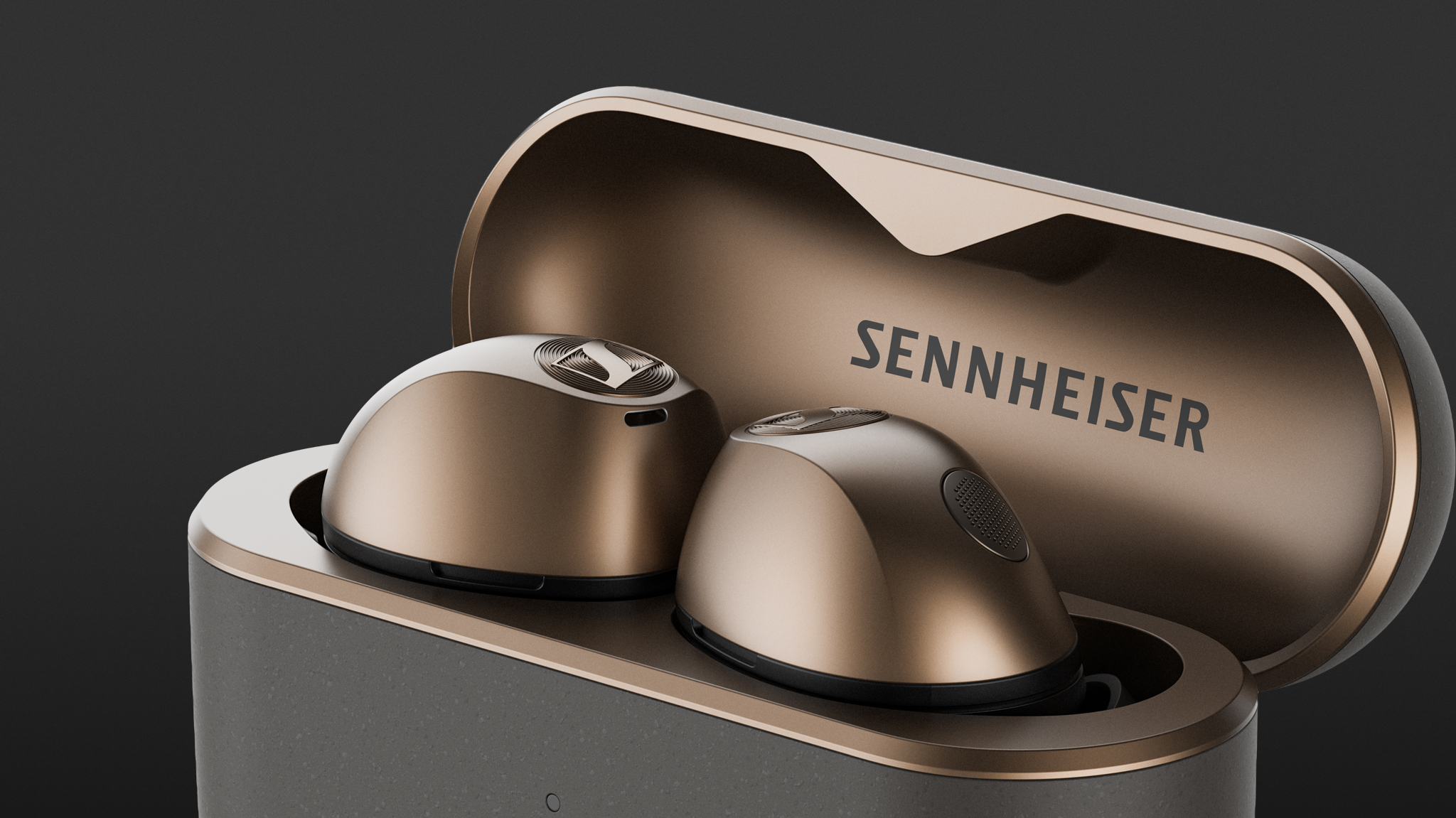
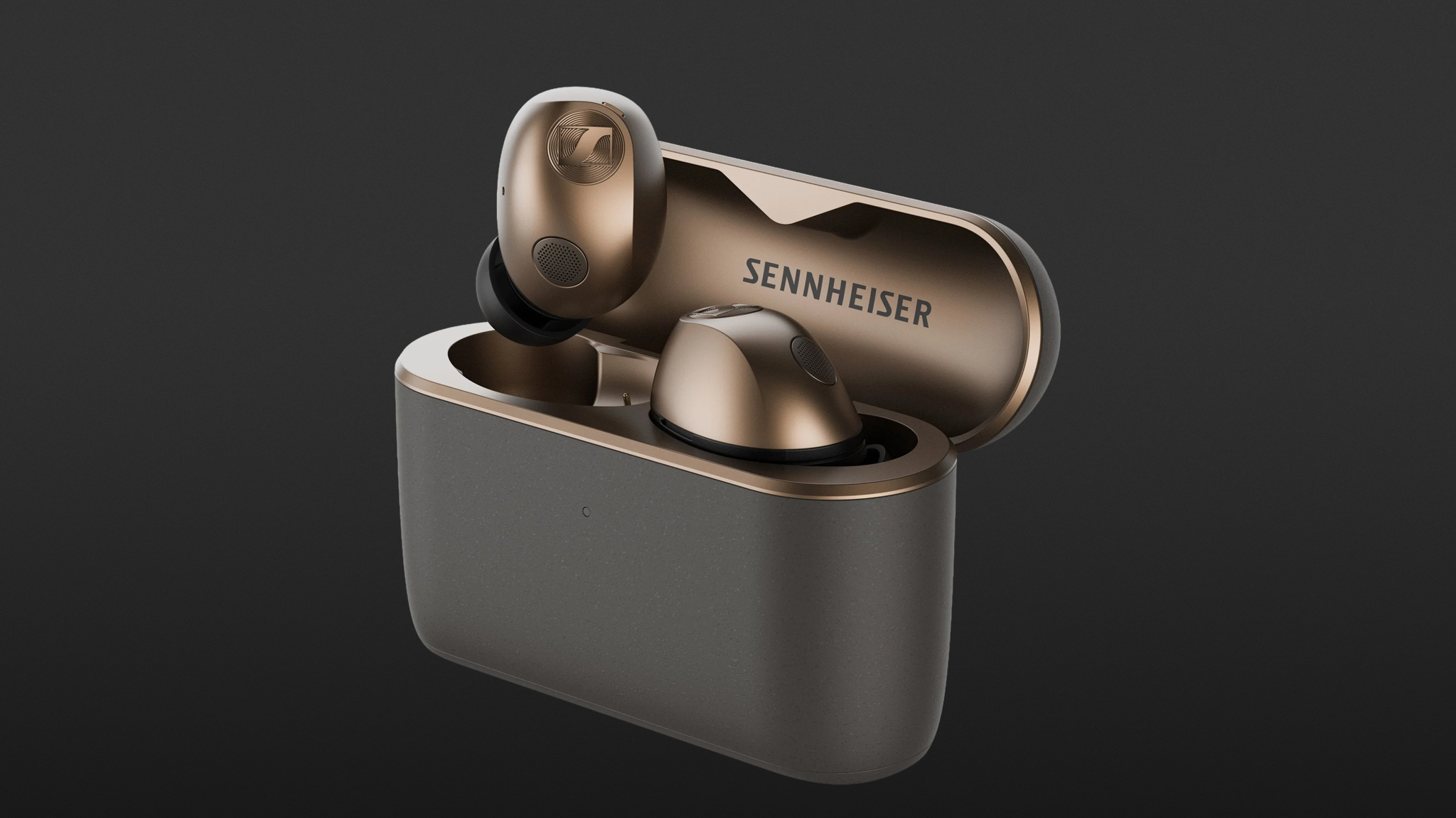
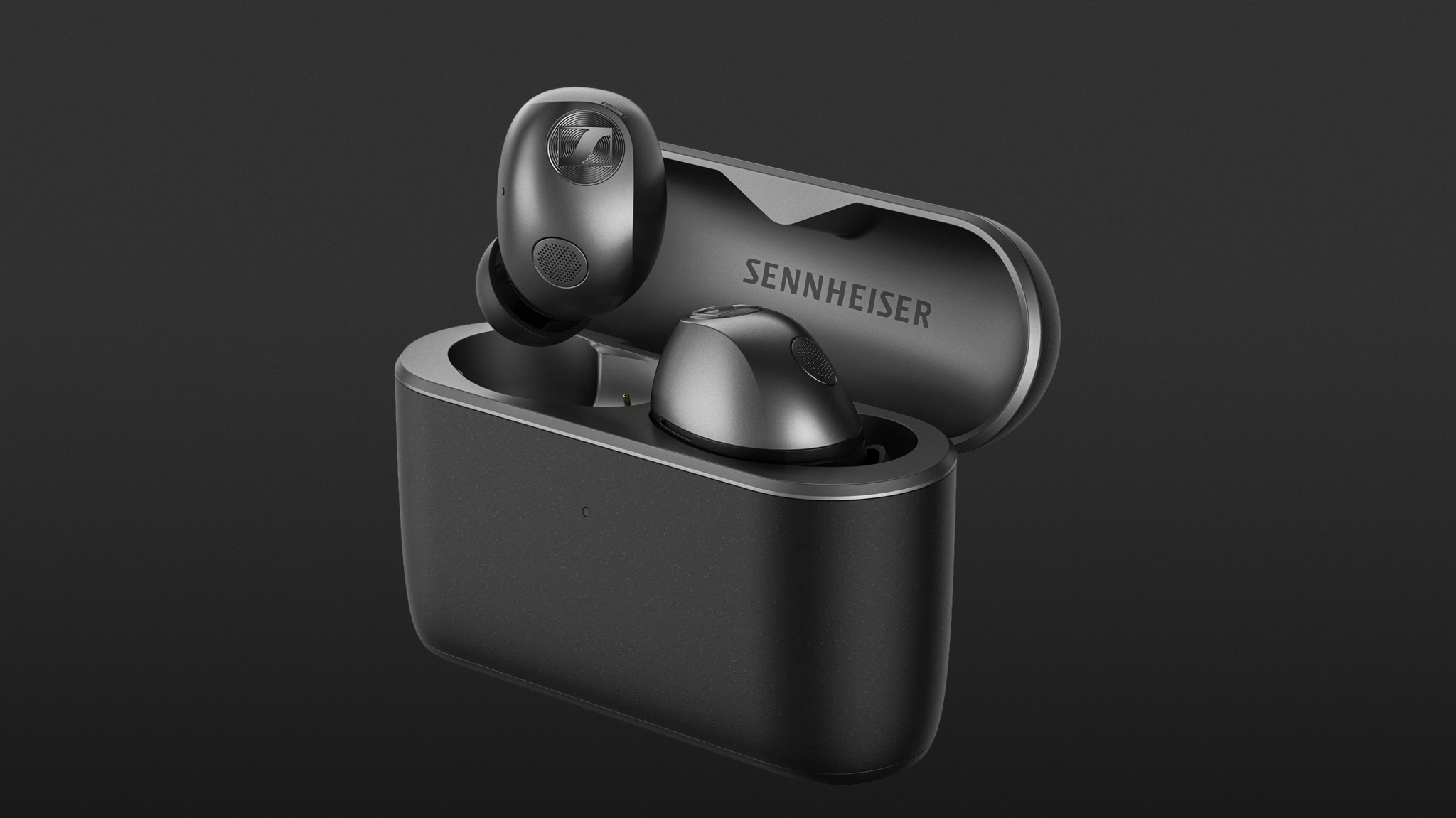
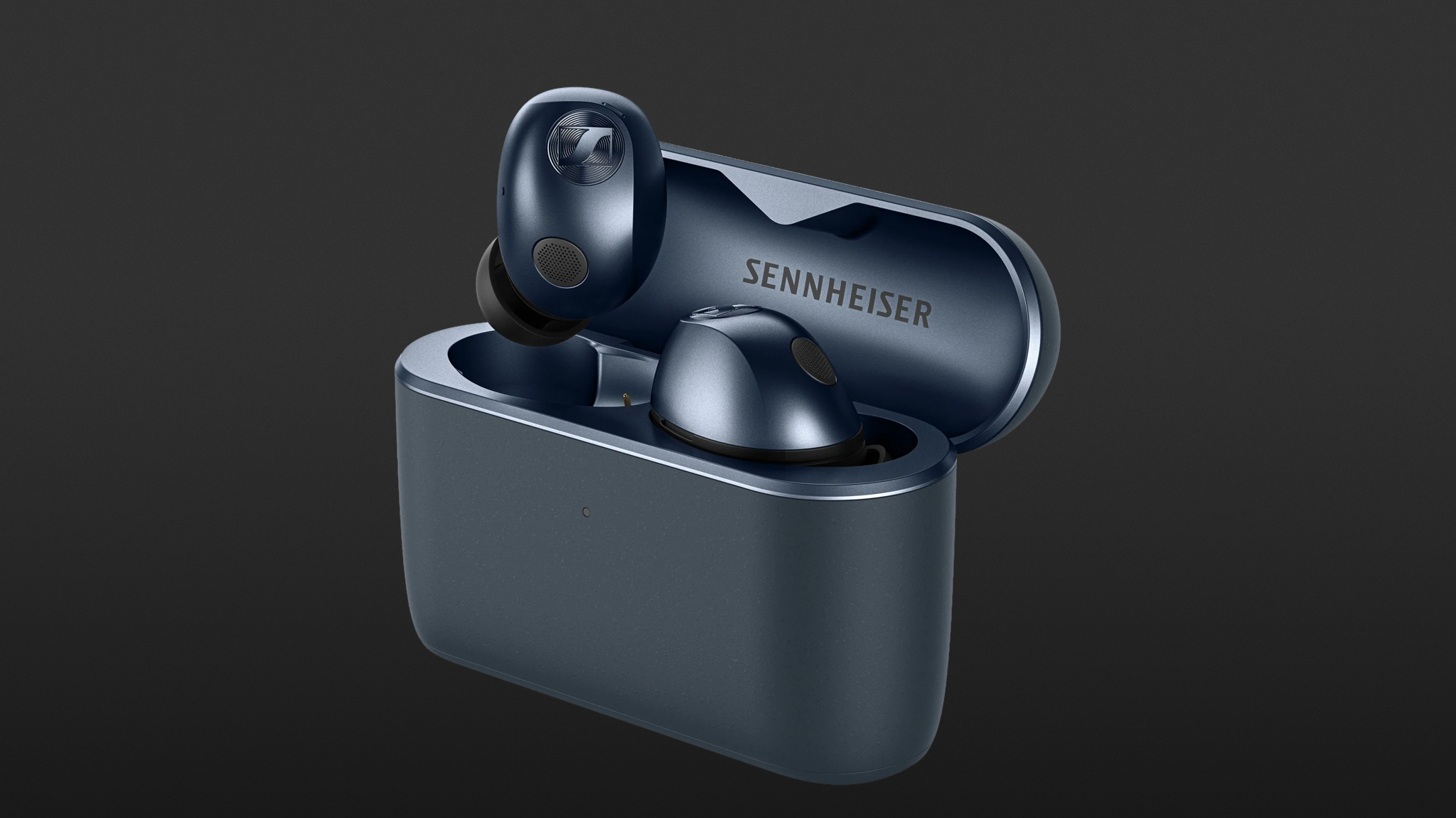
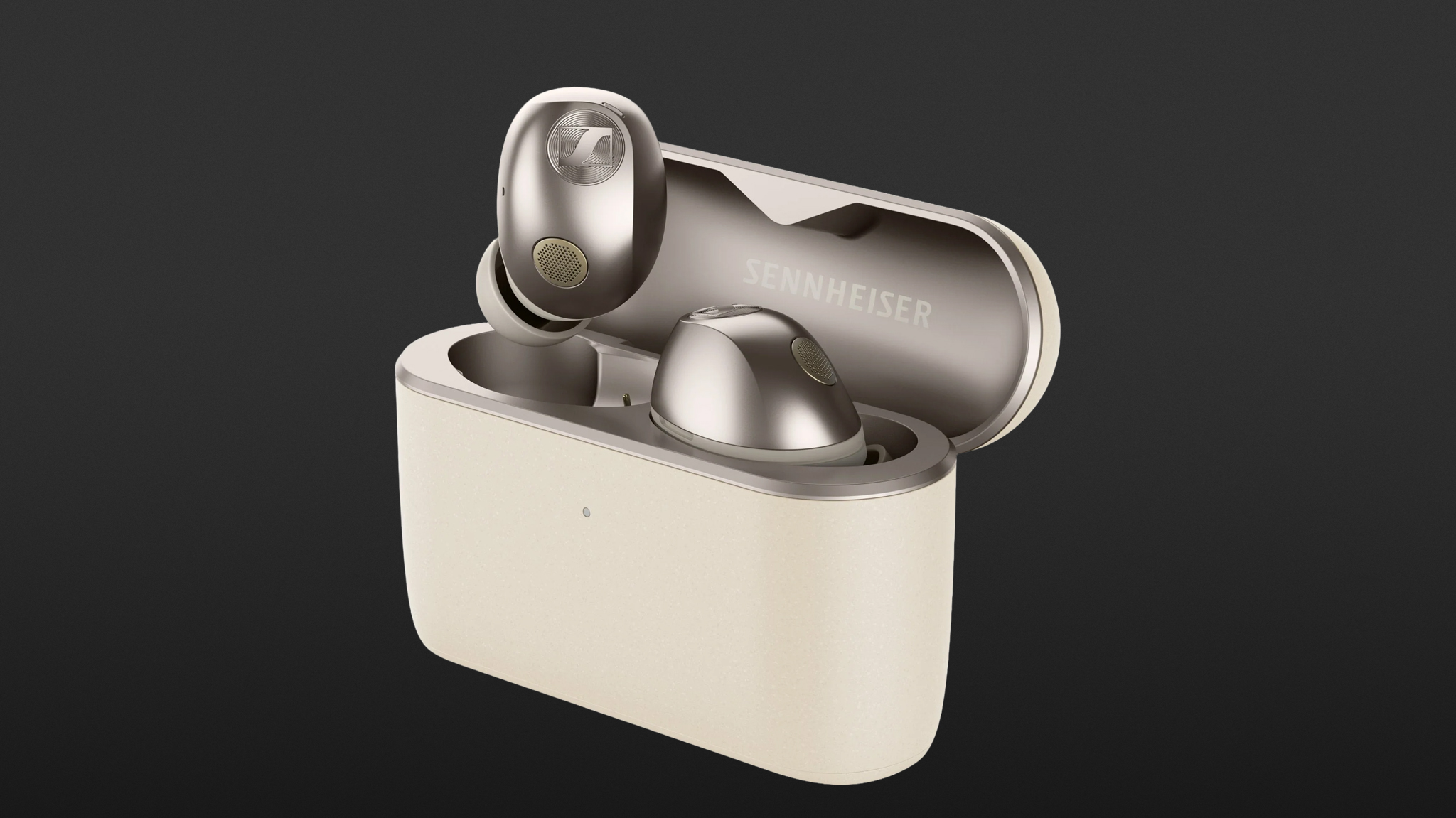
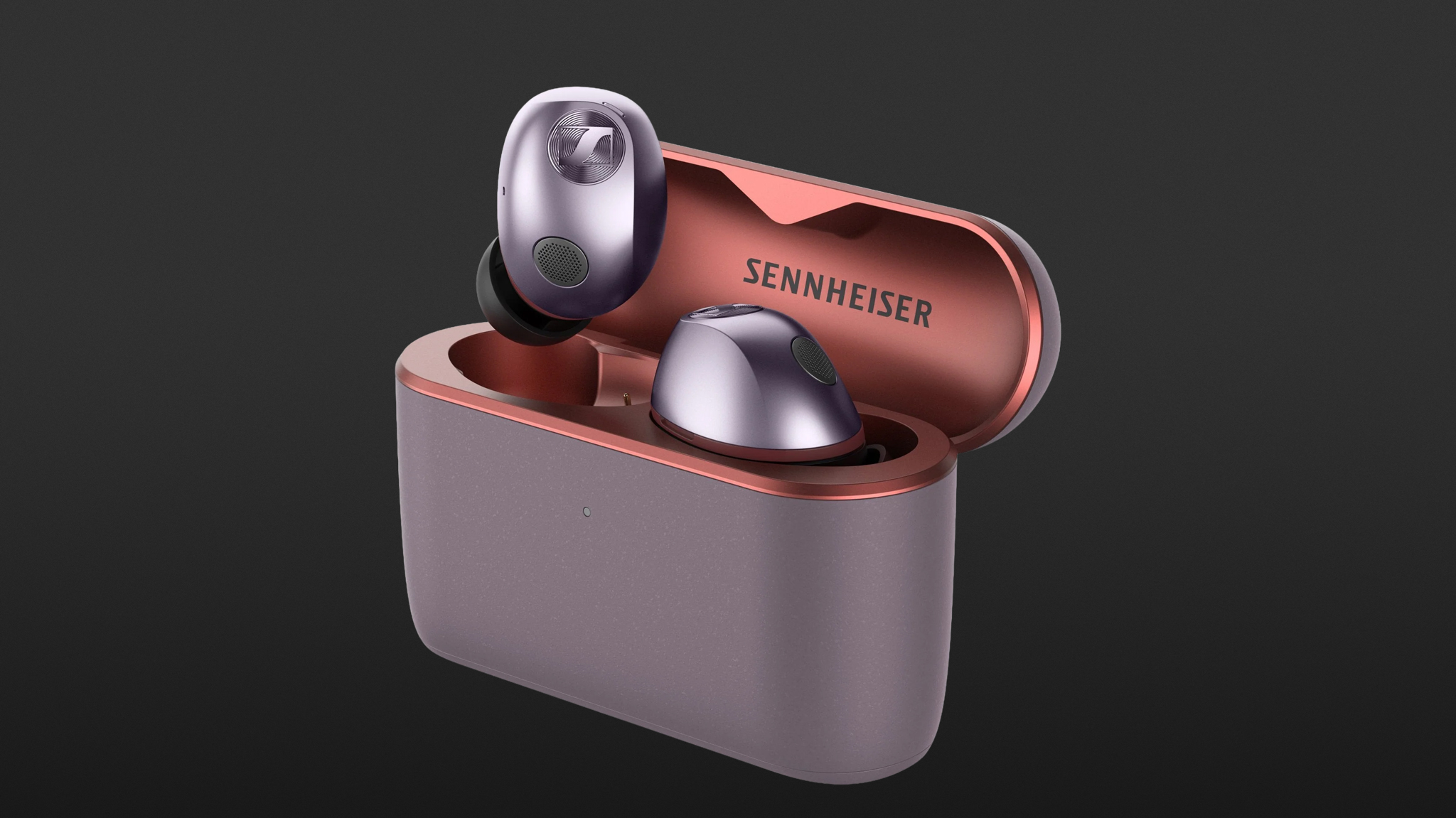
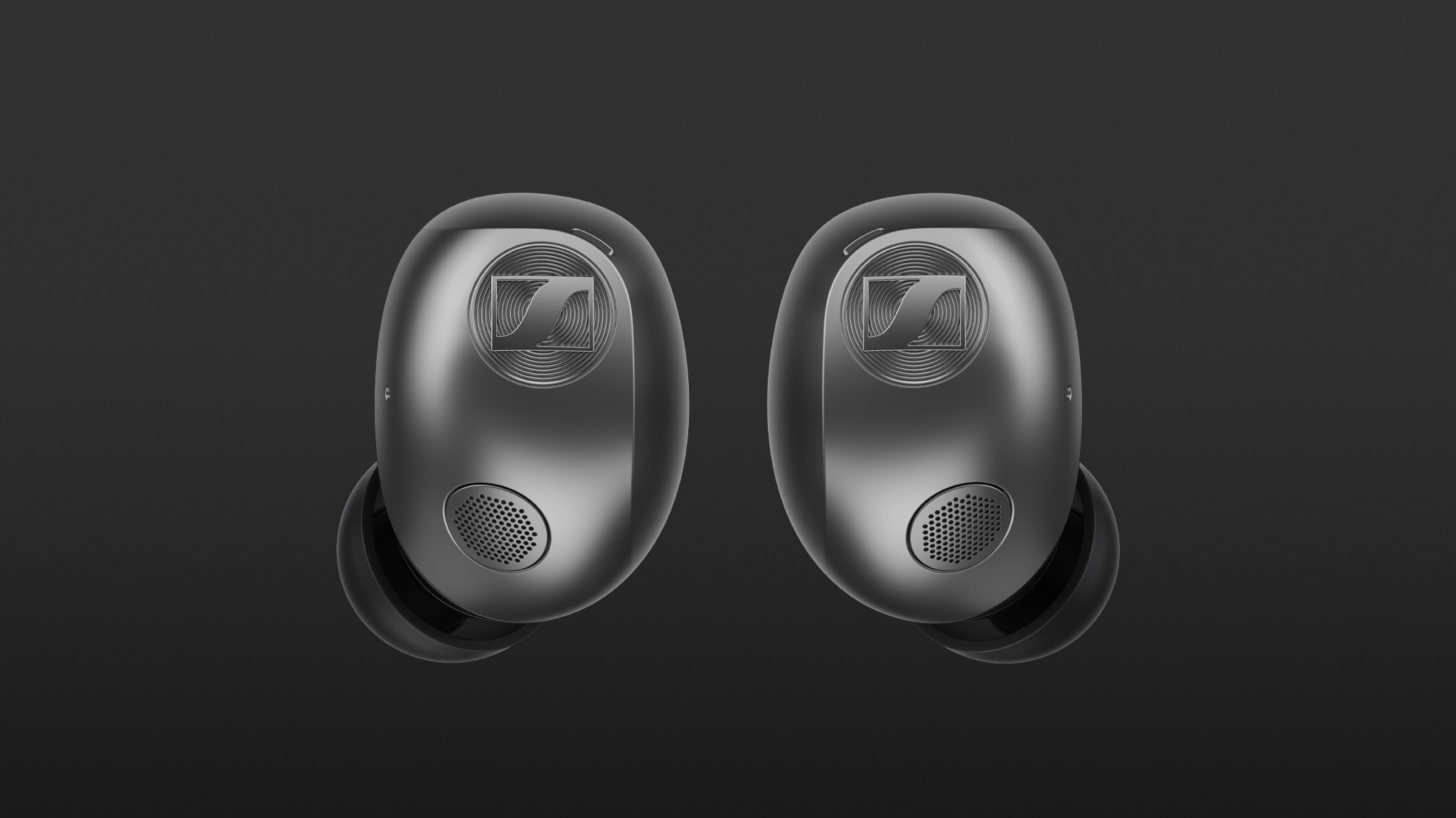
Table of Contents
- Overview
- What’s new compared to the MTW4?
- Testing the replaceable battery
- Design and comfort
- ANC and transparency mode
- Making calls with the Momentum True Wireless 5
- Connectivity and codecs
- Sound quality
- Dolby Atmos and head tracking
- Battery life in real-world testing
- App
- Upgrade considerations
- Conclusion
- FAQ: Frequently asked questions about the Sennheiser Momentum True Wireless 5
- Technical specifications
Overview
The bottom line: Replaceable batteries in the earbuds and case are the major new feature, along with Bluetooth 6.0, aptX Lossless and Dolby Atmos. LE Audio and Auracast remain disabled for the time being, despite the hardware being in place.
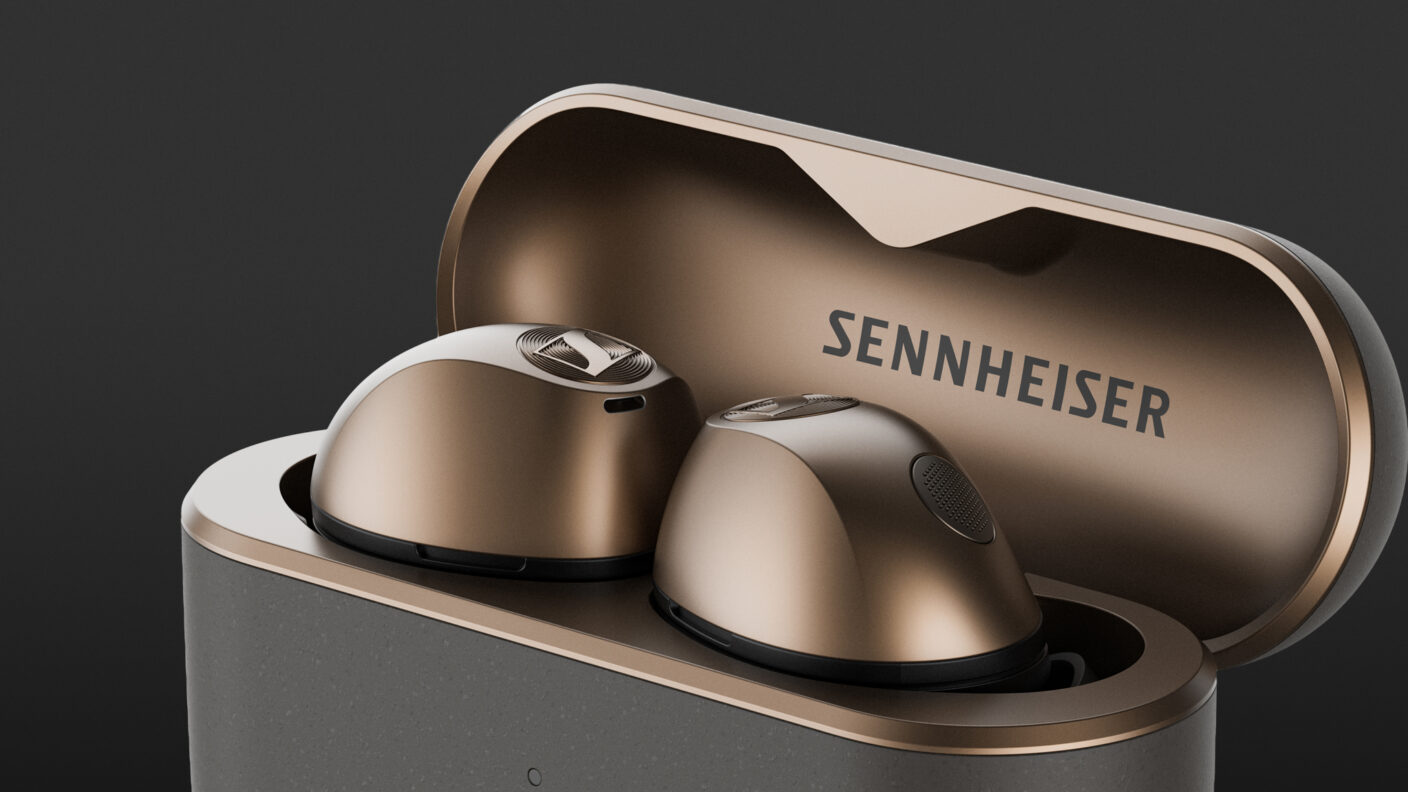
The Momentum True Wireless 5 is Sennheiser’s most ambitious true wireless in-ear headphone to date – and it arrives with a genuinely unique feature. Both the earbud batteries and the charging case battery are user-replaceable. A feature that is practically non-existent in the premium TWS segment, and one that could substantially extend the useful life of the product. On top of that come Bluetooth 6.0, aptX Lossless, Dolby Atmos with head tracking, and a completely redesigned form factor in which Sennheiser dispenses with the stabilisation fin that has been characteristic of previous generations.
You are currently viewing a placeholder content from YouTube. To access the actual content, click the button below. Please note that doing so will share data with third-party providers.
At an RRP of €299.90, Sennheiser positions the Momentum True Wireless 5 firmly in the premium segment. Available since 3 September 2026 in five colour options, the technical specifications read compellingly – but how well do the innovations hold up in practice?
What’s New Compared to the MTW4?
The bottom line: Replaceable batteries in earbuds and case, Bluetooth 6.0, aptX Lossless and Dolby Atmos with head tracking represent the biggest generational leap the Momentum True Wireless series has made, while the new wingtip-free design replaces the familiar stabilisation fin.
The most significant innovation of the Momentum True Wireless 5 is not a new codec or a software feature – it is the battery. Both the earbuds and the charging case have user-replaceable cells. Using a standard screwdriver, they can be swapped in a matter of minutes. Sennheiser transfers a concept already in use on the Momentum 5 Wireless to the true wireless category for the first time. In the premium TWS market, this is currently a genuine rarity.
Sennheiser has also upgraded the Bluetooth and codec specification significantly over the MTW4. Alongside aptX Adaptive at up to 24-bit/96 kHz, the Momentum True Wireless 5 adds aptX Lossless for bit-perfect transmission – a feature previously reserved for the Momentum 5 Wireless. Snapdragon Sound is also on board, bringing with it a low-latency mode for gaming.
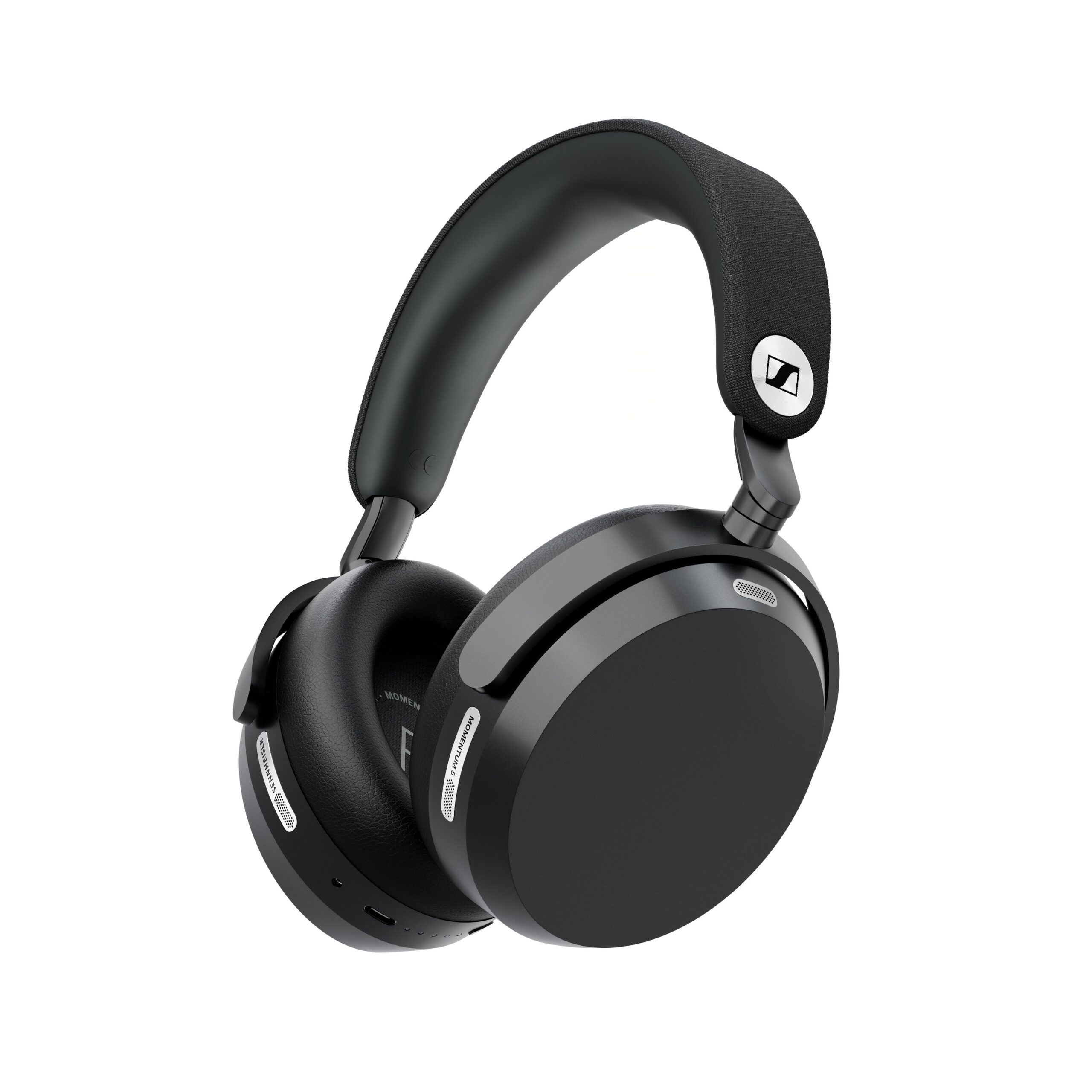
Sennheiser Momentum 5 Wireless
The flagship over-ear model, whose battery and codec technology is now being adopted by the Momentum True Wireless 5.
Bluetooth 6.0 replaces Bluetooth 5.4 in the new model. Multipoint, Google Fast Pair and Microsoft Swift Pair complete the connectivity package. New is also the Robust Mode, designed to maintain a more stable connection in environments with heavy radio frequency congestion. On paper, the MTW5 offers a substantially more comprehensive connectivity package than its predecessor.
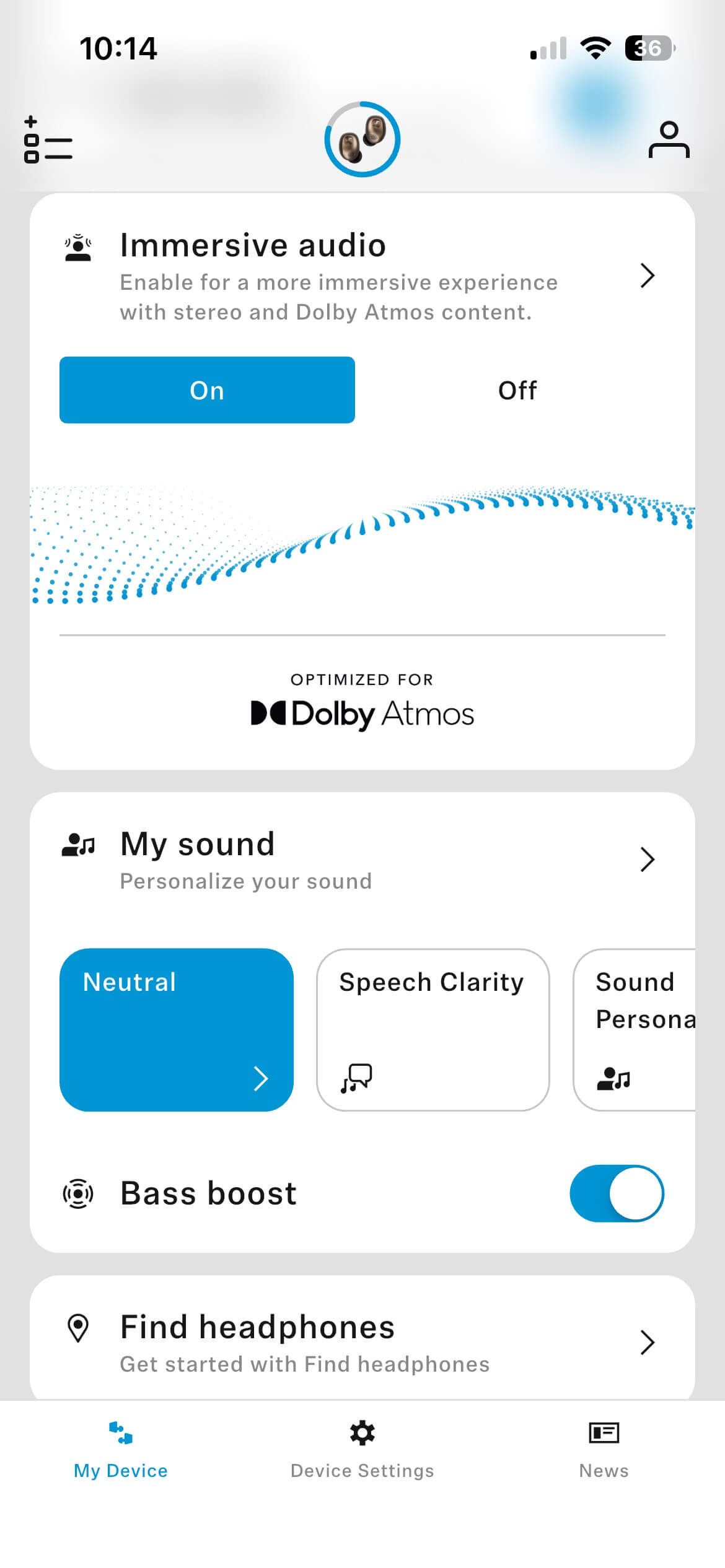
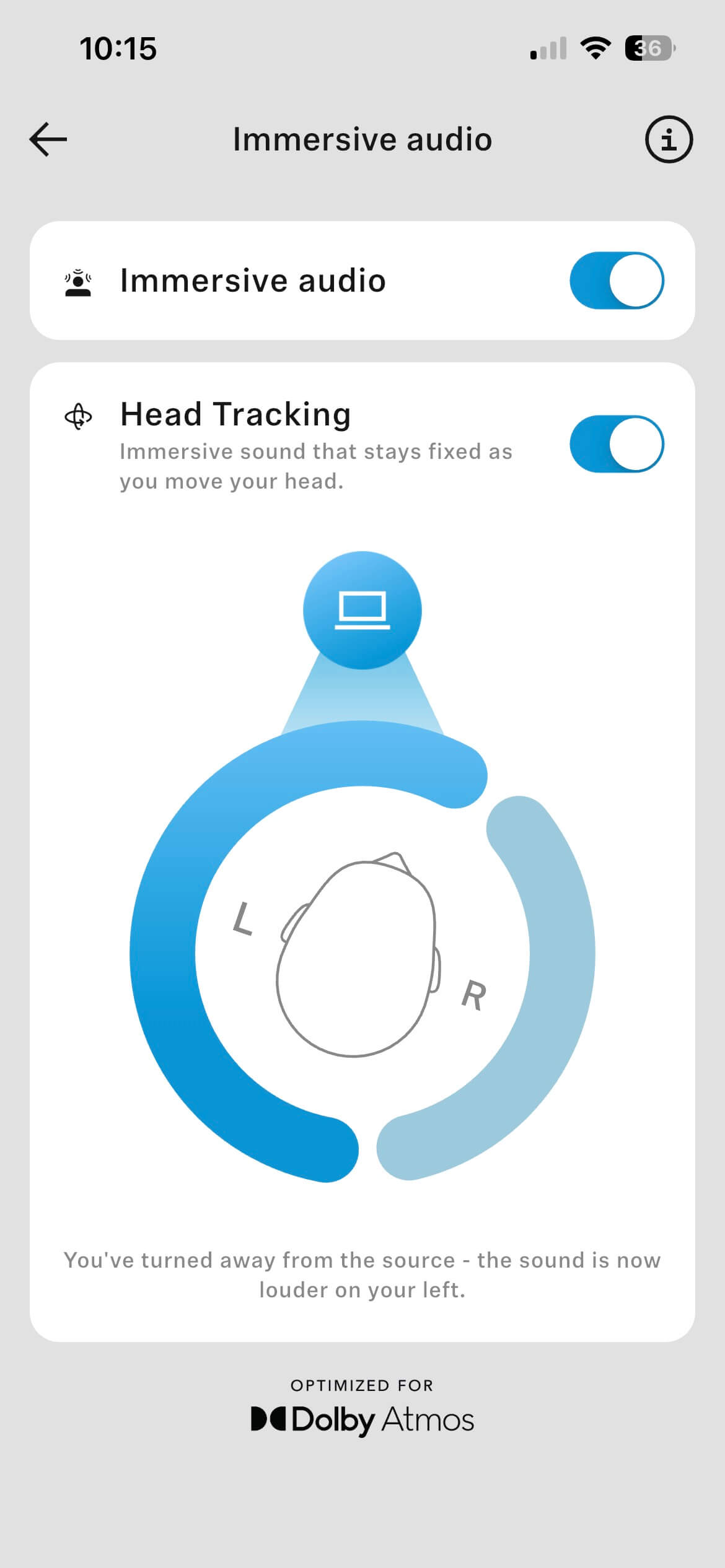
Another important addition is Dolby Atmos with head tracking. Sennheiser brings this feature across from the Momentum 5 Wireless, adding dynamic adaptation to head movements for a more spatially anchored listening experience. The Momentum True Wireless 5 is thereby one of the few true wireless models that goes beyond straightforward spatial audio in its immersive audio implementation.
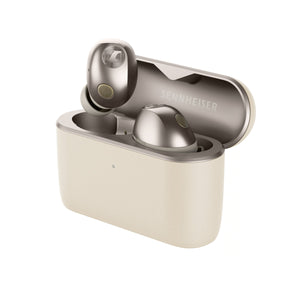
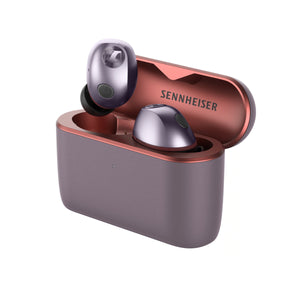
The visual redesign is equally striking. Sennheiser retires the fabric-covered charging case that has been characteristic of the Momentum True Wireless line since its introduction in 2019. The new case is slimmer and significantly better suited to trouser pocket carry. It supports wireless charging via Qi 2.1.
The earbuds themselves have also been substantially redesigned. The stabilisation fin familiar from the MTW3 and MTW4 is gone. In its place, Sennheiser opts for a wingtip-free, aerodynamically revised shape said to have been developed from the analysis of thousands of ear models. Whether the new design actually sits as securely and comfortably as previous generations is addressed below.
At the driver level, Sennheiser deliberately takes no new direction. The Momentum True Wireless 5 continues to use the in-house 7 mm TrueResponse transducer, manufactured in Tullamore, Ireland. What has been revised, however, is the noise cancellation. The adaptive ANC now adjusts automatically to the environment and features an anti-wind function. Newly developed ear adapters are designed to improve both passive isolation and fit.
Replaceable Battery in the Test
The bottom line: Replacing the battery is surprisingly easy with the charging case, as it only requires a single screw; with the earbuds, it’s a little more fiddly – the only thing still unclear at this stage is the price of the replacement batteries.
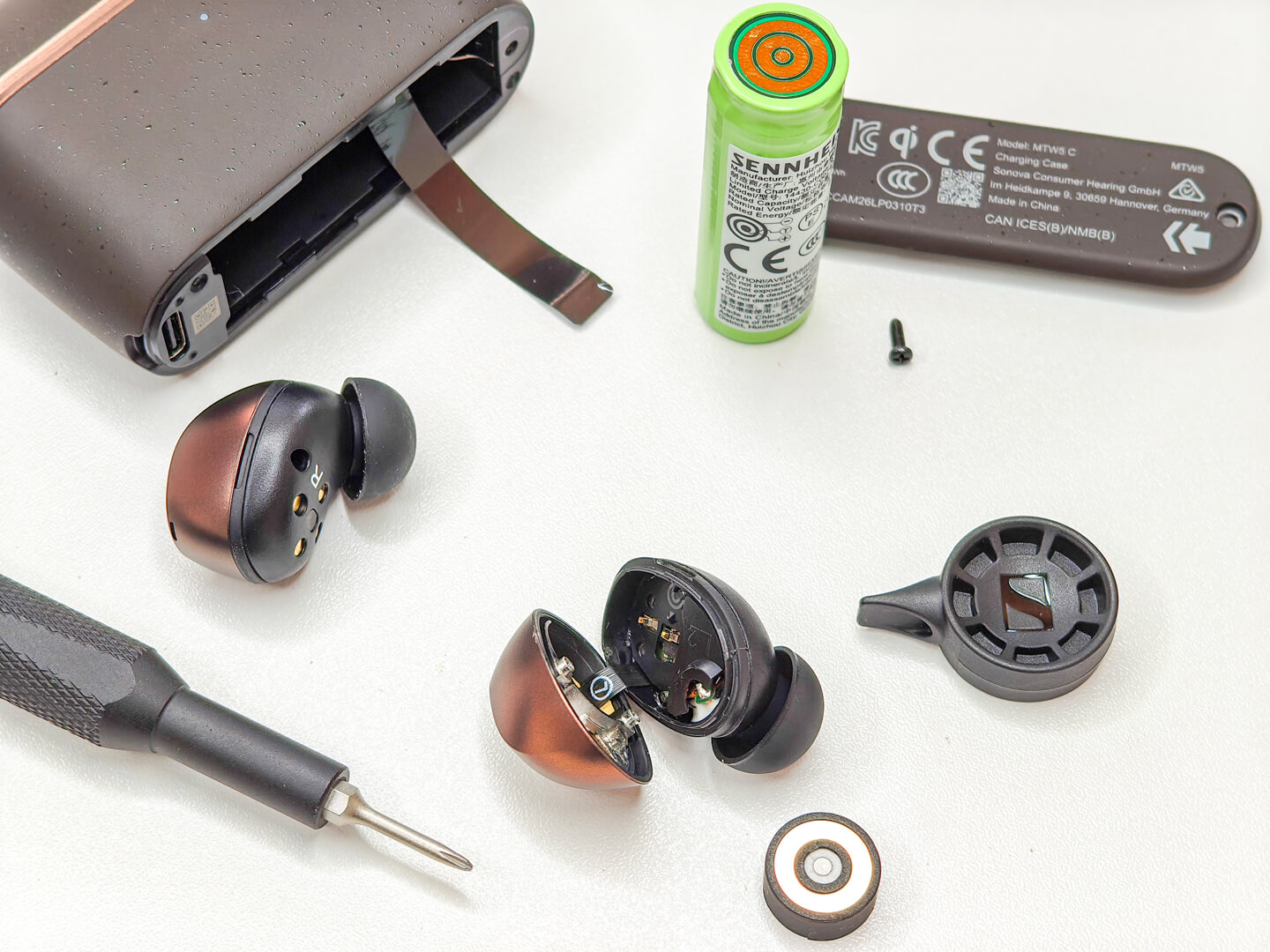
The promise of an easily replaceable battery initially sounds good, and Sennheiser delivers on it – particularly for the charging case – in a genuinely straightforward fashion. On the underside of the case there is a small Phillips screw. After removing it with a PH000 screwdriver, the base of the case slides off to one side, aided by a small arrow on the housing indicating the correct direction. The battery cell is then fully exposed and can be pulled out without any further disassembly.
A battery replacement can hardly be made simpler than this. For us, this is an outstandingly positive step: with true wireless in-ears, a degraded battery is frequently the point at which an otherwise perfectly functional product gets retired. With the Momentum True Wireless 5, this problem is at least fundamentally addressable.
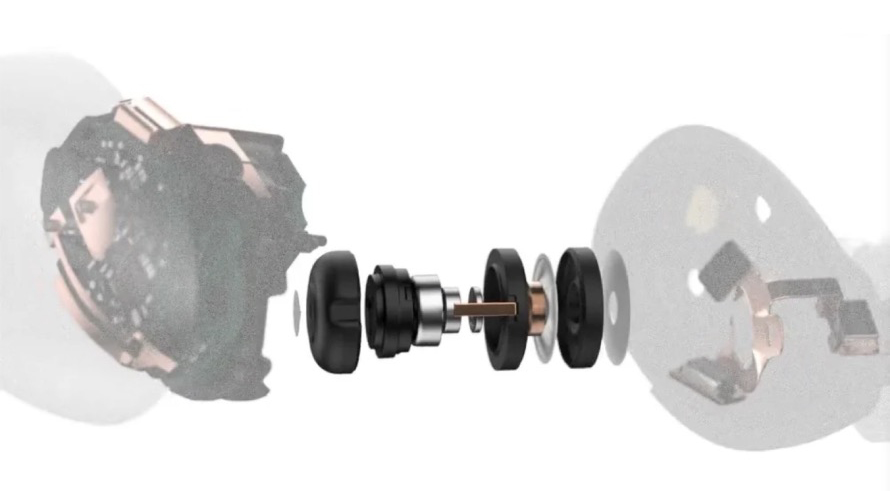
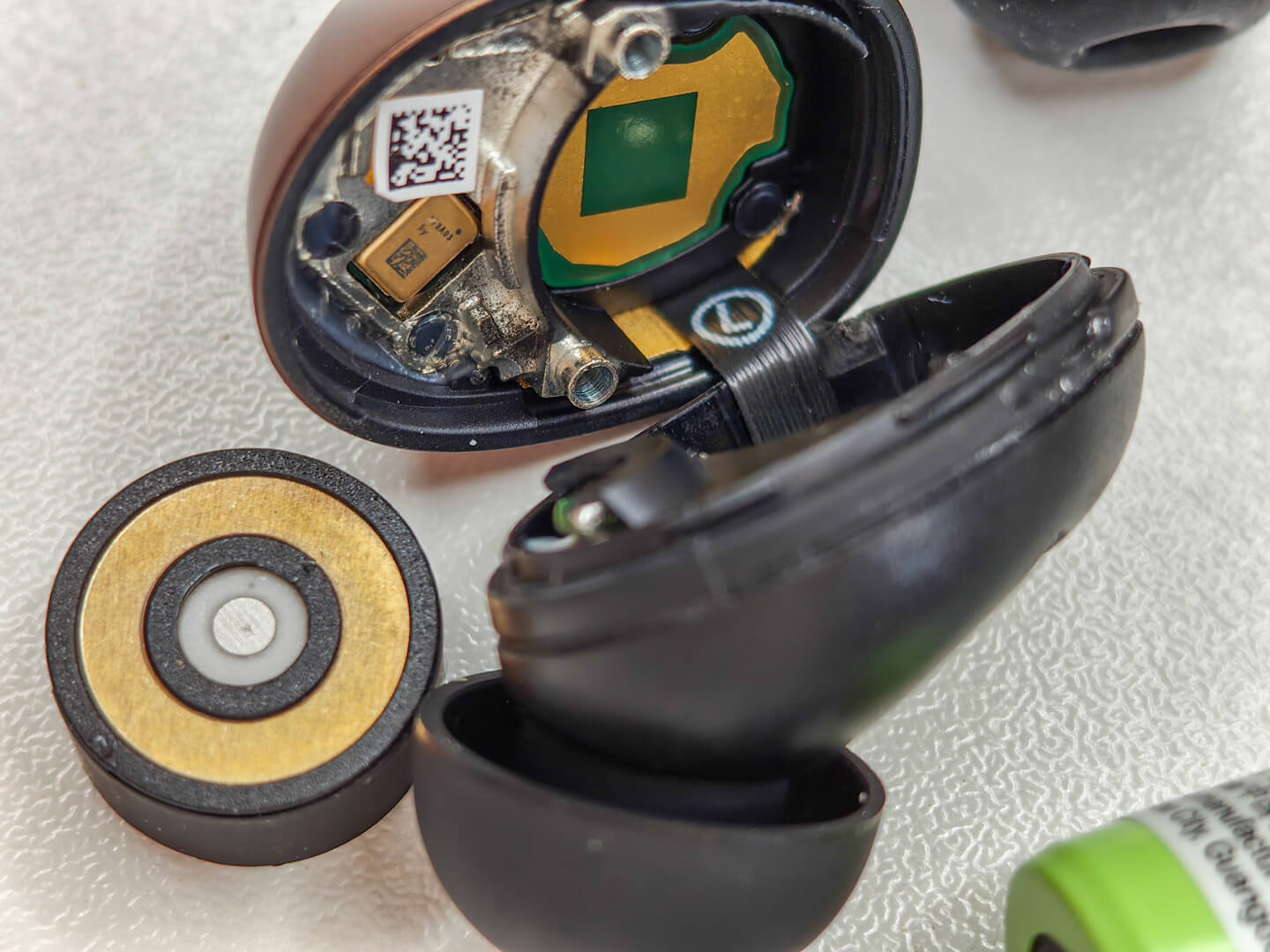
In the earbuds, the swap is naturally somewhat more involved. Two tiny screws per side must be removed, after which the included tool is used to carefully lever the housing open. This requires a degree of dexterity, but is manageable for anyone reasonably comfortable with handling small electronics. Anyone who has never opened a device this small before should proceed with particular care or seek assistance.
With this, Sennheiser takes an important step towards more sustainable and longer-lasting true wireless products. The critical question, however, is how readily available the replacement batteries will be, and above all at what price. At the time of our test, the replacement battery price had not been announced and the relevant spare parts were not yet listed in the German Sennheiser shop.
This is currently the biggest open question surrounding the battery concept. A technically excellent replacement solution delivers little value if the replacement cells are difficult to obtain or disproportionately expensive. Sennheiser still needs to deliver on this. The underlying principle, however, already deserves considerable praise.
Design and Wearing Comfort
The bottom line: In our test, the new wingless design doesn’t sit quite as comfortably as the old stabilising fin and causes noticeable pressure when worn for long periods, whilst the charging case is significantly lighter at 55 grams.
With the Momentum True Wireless 5, Sennheiser takes a distinctly different design direction from previous generations. The prominent stabilisation fin of the MTW3 and MTW4 is history. In its place, Sennheiser opts for a wingtip-free, aerodynamically optimised form said to have been developed from thousands of analysed ear models. According to the manufacturer, 73 percent of participants in internal testing rated the new earbud as more comfortable than the predecessor.
In practice, our assessment is somewhat more measured. In our ears, the Momentum True Wireless 5 does not sit quite as securely. The integrated fit test also requires several attempts before the app confirms a good seal. This is not a disaster in itself, but it does show that the new form is not automatically the better solution for every ear anatomy.
For more sensitive ears, the new construction can even become a drawback. In our testing, the MTW5 sat more noticeably in the ear and produced a degree of pressure after extended wear. After around three hours, a short break was necessary. For a premium in-ear intended for use on the go or throughout longer working days, this is something we cannot leave unmentioned.

Sports use also reveals a minor weakness of the new form. During running and rapid head movements, the position of the earbuds shifted slightly. When the fit test was repeated in the app, an optimal seal was sometimes no longer confirmed. For normal everyday use this is less of an issue, but for sporting activity we would have preferred a more secure hold.
It is important to note that in-ear fit is extremely individual. Ear shape varies considerably from person to person; what feels pressing or insecure in one tester’s ears may work perfectly for another. Sennheiser’s own test data shows that the majority rated the new form as more comfortable. For our ears, some competitors resolve the combination of secure fit and long-term comfort more convincingly – but this is a single-tester assessment, not a universal verdict.
In terms of weight, the Momentum True Wireless 5 gains only marginally. At around seven grams per earbud, the new in-ears are approximately 0.8 grams heavier than the 6.2-gram MTW4 – likely due to the replaceable battery mechanism. In compensation, the charging case is substantially lighter: at 55 grams, it is eleven grams lighter than the 66-gram case of the predecessor, which is noticeable in a trouser pocket.
For protection against dust and water, Sennheiser applies an IP54 rating – covering the earbuds only, not the charging case. The earbuds are therefore protected against harmful quantities of dust and water splashing from any direction. For sports and everyday use this is a sensible level of protection; the MTW5 are not designed for use in or under water.
ANC and Transparency Mode
The bottom line: The ANC comes very close to Apple and Sony in terms of effectively suppressing low-frequency background noise, but the transparency mode still lags behind Apple’s solution due to a slight amount of background noise.
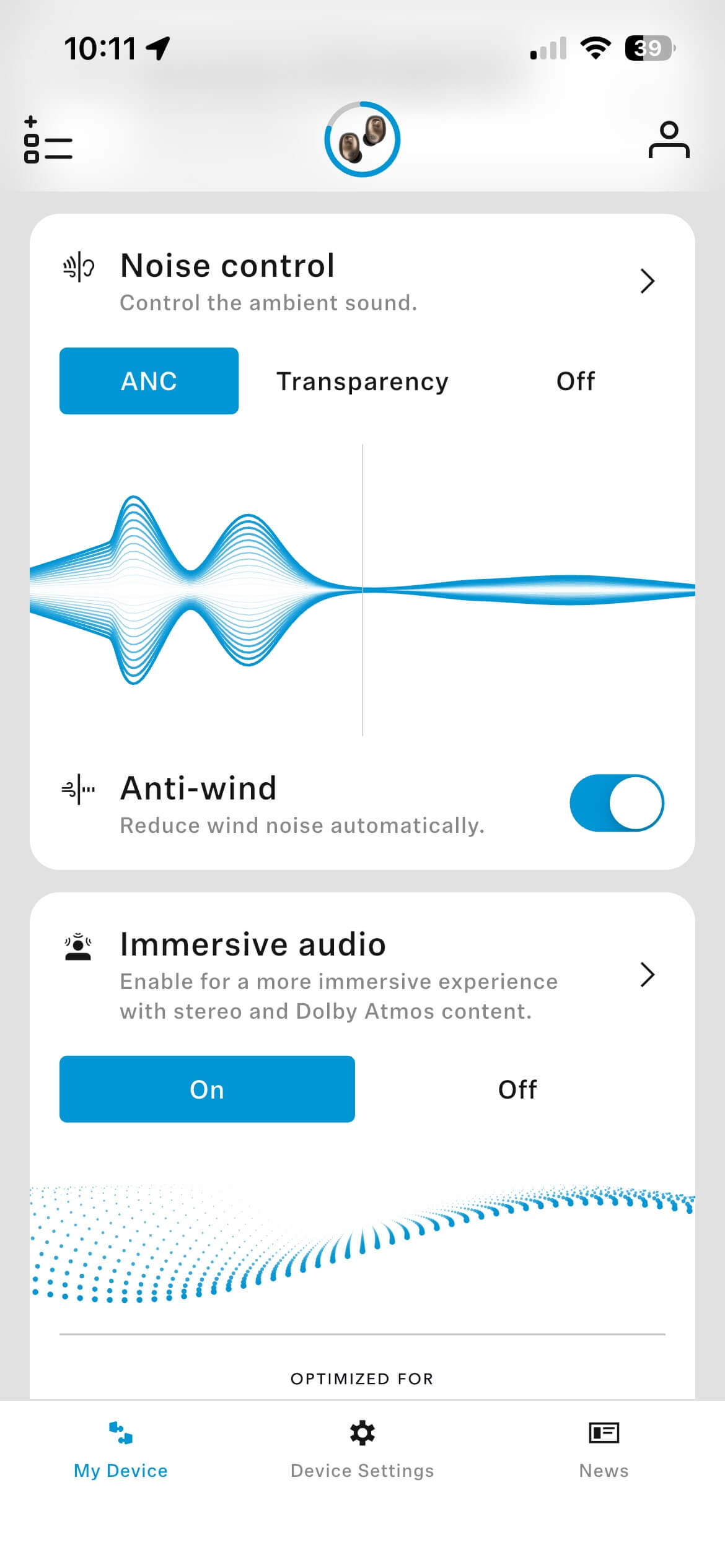
Sennheiser has made a tangible improvement to noise cancellation compared to the MTW4. An adaptive hybrid ANC with automatic anti-wind function is now employed. Newly developed ear adapters are designed to provide better passive isolation, while a microperforated microphone cover reduces wind turbulence.
The ANC of previous generations was already decent but could not match the best models from Apple or Sony at suppressing ambient noise. With the Momentum True Wireless 5, Sennheiser has significantly closed this gap. The noise cancellation works broadband and reduces low-frequency interference particularly effectively.
Turbine-like sounds are substantially attenuated, and train noise also loses considerable energy. In our comparison, the AirPods Pro 3 still held a narrow advantage at the very lowest frequencies – though the difference was small enough to fall squarely into the territory of complaining at a very high level.
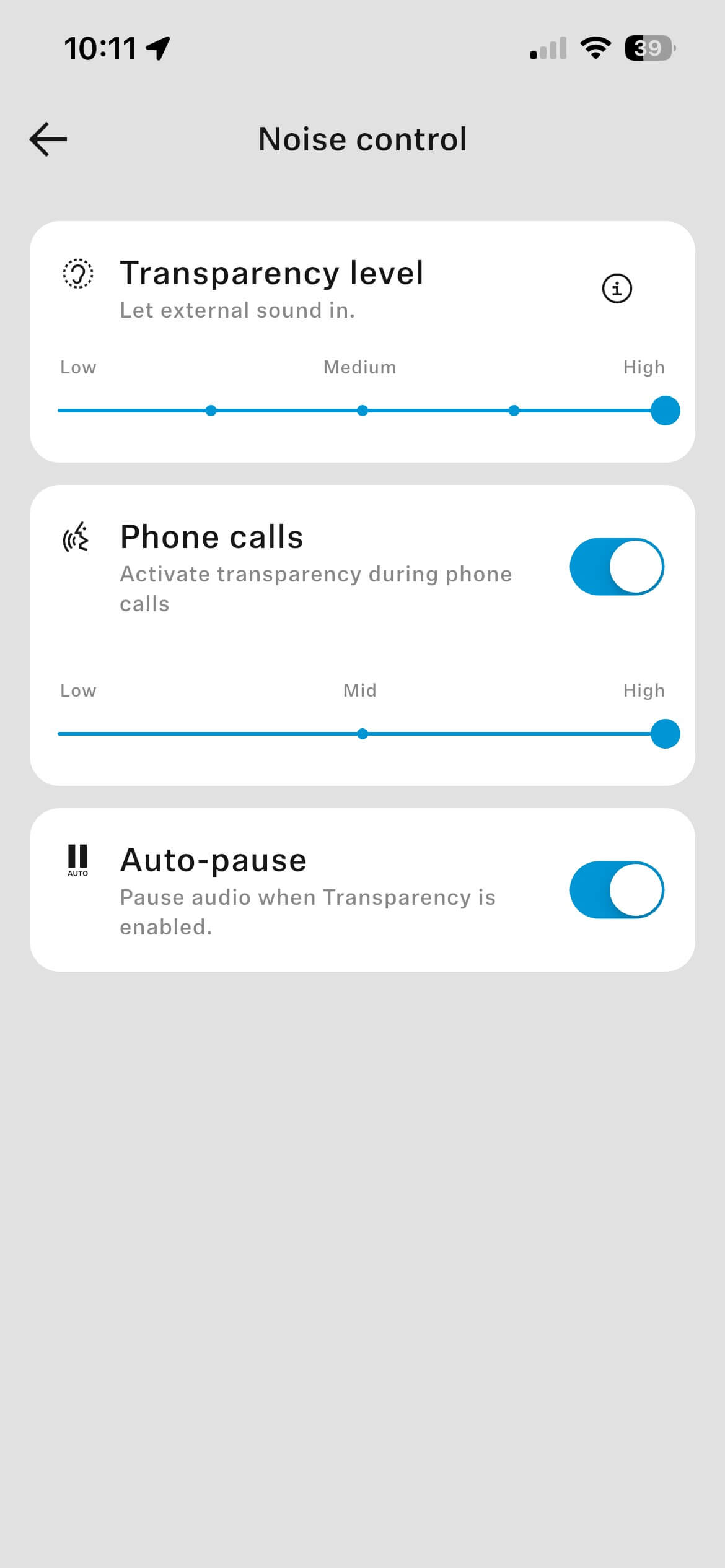
The transparency mode also performs pleasantly naturally. Voices and ambient sounds are integrated convincingly into the audio picture, so that in everyday situations the earbuds do not necessarily need to be removed for conversation. Apple’s implementation still edges ahead in our view, and a faint background noise is also perceptible, most noticeable in very quiet environments.
Call Quality
The bottom line: Eight microphones, including a bone-conduction microphone and AI voice isolation, ensure very clear, natural voice transmission, even when music is clearly audible in the background.
For calls, Sennheiser relies on a comprehensive microphone arrangement. Each earbud features four microphones working up to 16 kHz, including one bone conduction microphone per side. A total of eight MEMS sensors are employed, supported by AI-assisted voice isolation and beamforming.
The result is impressive. The caller’s own voice is transmitted to the other party with very natural clarity, provided the call connection quality holds up. Even in moderately noisy environments, the Momentum True Wireless 5 manages to isolate the voice cleanly from ambient sound.
The suppression of background noise is particularly noteworthy. Even clearly audible background music was barely or not at all perceived by our test call partners. This makes the Momentum True Wireless 5 suitable not only for brief calls on the move, but genuinely for extended conversations in livelier surroundings.
Connectivity and Codecs
The bottom line: Bluetooth 6.0, Multipoint, aptX Lossless and Snapdragon Sound offer a comprehensive range of connectivity options; however, Hi-Res and Lossless modes should always be enabled together, otherwise there is a risk of mono playback.
In terms of connectivity, Sennheiser packs the Momentum True Wireless 5 with virtually everything one would expect from a current premium TWS product. Connection is via Bluetooth 6.0 for the first time and supports Multipoint for simultaneous connection to two devices. Google Fast Pair and Microsoft Swift Pair allow for particularly convenient pairing with compatible devices.
New is also the Robust Mode, designed to maintain a more stable connection particularly in radio-intensive environments. In everyday use, the MTW5 proves thoroughly reliable and flexible in its connectivity.
The supported audio codecs also see a significant step forward. Alongside SBC, AAC and aptX, aptX Adaptive is available at up to 24-bit/96 kHz. Newly added is aptX Lossless, enabling bit-perfect transmission of compatible content, subject to the source device being suitably equipped. Snapdragon Sound completes the package, including a low-latency mode for gaming.
When switching between Hi-Res and Lossless mode, there is an important detail to bear in mind. Sennheiser recommends always activating Hi-Res mode together with Lossless mode, allowing earbuds and source device to negotiate the optimal connection type automatically. Activating Hi-Res mode in isolation can in rare cases result in mono playback – worth knowing before adjusting settings in the app.
LE Audio and Auracast are already prepared at the hardware level but are not yet available at the time of our test. Sennheiser has not yet enabled the functions via firmware, citing the still-limited market penetration of Auracast and the corresponding scarcity of compatible source devices. Technically, the Momentum True Wireless 5 is already equipped for the future – but this potential cannot yet be utilised.
This restraint is not entirely easy to understand from our perspective. Auracast is increasingly transitioning from a future technology to one with practical applications: the Berlin Philharmonie, Frankfurt Airport and Munich Airport have all begun offering Auracast at selected gates as part of pilot projects. A premium in-ear like the Momentum True Wireless 5 could already offer real added value here.

Sound Quality
The bottom line: Rich, controlled bass, warm mid-range and prominent yet not exaggerated treble combine to produce a musical rather than analytical sound, which really comes into its own with pop, rock and electronic music.
In terms of sound, the Sennheiser Momentum True Wireless 5 takes a noticeable step forward compared to its predecessors, particularly in the bass register. The bass reaches deep, sounds full and develops considerably more body. This is not merely a matter of quantity but above all of quality. The sub-bass extends far enough (5 Hz) to give electronic productions a solid foundation without becoming oppressively heavy. In the mid-bass, the Momentum True Wireless 5 then shows its real strength: punchy, cleanly contoured and pleasantly warm. Bass lines gain noticeably more weight while remaining controlled at all times.
This tuning makes itself felt particularly positively with bass guitar. Plucked strings have substance and are easy to follow, while electronic bass lines and deep synthesiser sounds step forward from the background with satisfying presence. Even in complex arrangements, the Momentum True Wireless 5 maintains overview. The bass is present and distinctly characterful without constantly asserting itself. In our view, Sennheiser achieves a very good balance between enjoyment and control.
The midrange connects seamlessly and lends the sound image a pleasant fullness. Voices and instruments in the lower midrange in particular feel warm and substantial without the tuning tipping into muddiness or congestion. Voices sit cleanly in the mix and retain their intelligibility. Detail resolution is solid, though it does not reach the level of genuinely audiophile in-ears. In return, the Momentum True Wireless 5 sounds agreeably direct and natural.
The treble is present and detailed without becoming fatiguing. Cymbals, hi-hats and fine electronic effects have a crisp edge and can be picked out clearly from the mix. At the same time, Sennheiser avoids an exaggerated high-frequency emphasis. This means the last measure of airiness and sparkle is absent, but in return the sound remains comfortable over longer listening sessions.
The Momentum True Wireless 5 handles the rendering of decays and reverb particularly well. Individual notes are allowed to ring out audibly before fading in a controlled fashion. With live recordings or acoustic pieces, this creates a convincing sense of space. The headphone does not try to extract as many details as possible artificially, but integrates them naturally into the overall picture.
The Momentum True Wireless 5 is clearly tuned for a full, substantial and simultaneously controlled sound. The powerful bass delivers the enjoyment factor, the warm midrange gives voices and instruments substance, and the present treble adds sufficient clarity. Those seeking a maximally neutral or analytical tuning will not necessarily find it here. For everyday music enjoyment, however, the tuning is outstandingly well-judged and particularly fun with pop, rock, hip-hop and electronic music.
Dolby Atmos and Head Tracking
The bottom line: The spatial reproduction is among the cleanest in this class of device, but it does not create a genuine sense of sound outside the head, and the head-tracking is noticeably sluggish.
Dolby Atmos is no longer a distinguishing feature in itself and can in principle be reproduced through virtually any headphone. Sennheiser optimises the spatial rendering of the Momentum True Wireless 5, however, to the point where films and series genuinely feel more immersive. Voices, effects and individual sound sources separate more convincingly and are given a more persuasive spatial arrangement.
With music, the effect is somewhat less spectacular. That said, the immersive rendering of the Momentum True Wireless 5 ranks alongside the AirPods Pro 3 as the best we have heard so far in this product class – yet even here, a genuine sense of sound originating outside the head does not quite materialise. Sound sources ultimately remain within the familiar in-ear stage, and convincing localisation in front of the head with clearly differentiated height and depth information is not achieved.
This is criticism at a high level, because the algorithm works with considerable cleanliness. Even in complex passages, the sound remains stable. Bass drums lose neither their contour nor become blurred or phase-shifted. Sennheiser manages to deploy the spatial processing without unnecessarily distorting the underlying sound.
Head tracking, however, could respond a little more quickly. As with the Momentum 5 Wireless, the realignment of the soundstage to head movement reacts with a degree of lag. In our experience, it takes around eight to ten seconds before the virtual centre realigns to the new head position. For films this is less significant, but for music the delay can be mildly irritating if an immediate response is expected.
Battery Life in the Practical Test
The bottom line: Our in-practice test indicates an estimated eight-and-a-half hours’ usage under mixed conditions, thereby confirming that the manufacturer’s claim of six to twelve hours is plausible.
For an initial practical assessment, we wore the Momentum True Wireless 5 for around eight hours under mixed usage – alternating between active ANC, phone calls and head tracking enabled. The battery level dropped from around 95 to 60 percent over approximately three hours, a reduction of 35 percentage points. Extrapolated to a full charge, this gives a runtime of just over eight and a half hours.
This figure sits plausibly between Sennheiser’s two stated values of twelve hours without and six hours with continuously active ANC. Users who, like us in this test, alternate between ANC, phone calls and head tracking will realistically land somewhere in between. Sennheiser’s figures therefore prove broadly credible, even if a single practical assessment is naturally no substitute for laboratory validation.
App
The bottom line: The Sennheiser Smart Control Plus app impresses with its Fit Test, Soundzones and an editable 8-band equaliser, without overwhelming the user with unnecessary options.
The Sennheiser Smart Control Plus app offers numerous ways to personalise the Momentum True Wireless 5. These include the previously mentioned fit test, a find function for locating lost earbuds, and the familiar Soundzones feature, which can automatically activate specific functions or sound profiles depending on location.
Particular praise goes to the integrated 8-band equaliser. In addition to manual adjustment, various genre-specific presets are available. Notably, and by no means a given, the presets can subsequently be edited – they serve not only as finished sound profiles but as a starting point for one’s own tuning.
Overall, the app feels thoughtfully designed and functional without overwhelming the user with unnecessary options. The most important settings are quickly accessible, while more ambitious users are given sufficient scope to personalise sound, controls and features to their liking.
Upgrade Considerations
The bottom line: The upgrade is most worthwhile for anyone whose MTW4 battery life has noticeably declined, whilst users who are already satisfied with the sound quality and ANC do not necessarily need to upgrade.
The case for upgrading is clearest for anyone whose MTW4 battery has noticeably degraded. For them, the Momentum True Wireless 5 addresses exactly the problem they currently face in everyday use. The replaceable battery is not a nice-to-have here but a genuine reason to switch.
The pricing also makes a compelling argument: at €299.90 at launch, the MTW5 costs exactly what the MTW4 did at its introduction, despite adding Bluetooth 6.0, aptX Lossless, Dolby Atmos and the battery replacement feature. Those who already own a Momentum 5 Wireless and are looking for a matching TWS for on-the-go use will also gain a coherent ecosystem with an identical codec and battery concept.
Those who are satisfied with the sound and ANC of the MTW4 and are primarily seeking sonic improvement do not necessarily need to switch – the step forward is noticeable, but not a quantum leap. Regular sports users should also try before buying: in our testing, the new wingtip-free design did not sit as consistently securely as the previous fin-equipped form, though individual ear shape is decisive here. And those waiting for LE Audio or Auracast will need to continue waiting: the hardware is ready, but Sennheiser has not announced an activation date. The replacement battery price also remains unknown. For those to whom the sustainability aspect is particularly important, waiting until Sennheiser provides clarity on both points may be worthwhile.
Verdict
Sennheiser takes on a problem with the Momentum True Wireless 5 that the entire true wireless industry has been ignoring for years: the degrading battery as the expiry date of an otherwise perfectly functional product. The solution is technically convincing – exemplary in its simplicity for the charging case. This is accompanied by a thoroughly modernised package of Bluetooth 6.0, aptX Lossless, Dolby Atmos with head tracking, and ANC that for the first time genuinely comes within striking distance of the class leaders from Apple and Sony. Our practical battery assessment also confirms that Sennheiser’s figures are not inflated.
Not everything about it is unconditionally successful, however. The new wingtip-free design does not feel as consistently secure and comfortable as the previous fin-equipped form, and for sports use in particular a more stable hold would have been welcome, even if Sennheiser’s own data and the highly individual nature of ear shape paint a more nuanced picture than a single-tester review can convey. Head tracking could also be a touch more responsive. And without a known price for the replacement batteries, the sustainability promise cannot be fully assessed at this stage – LE Audio and Auracast also remain unavailable despite the hardware being ready.
For anyone looking for a premium in-ear with long-term potential, and who appreciates a warm bass and pleasant midrange character, the Momentum True Wireless 5 is nonetheless one of the best TWS models of the year.
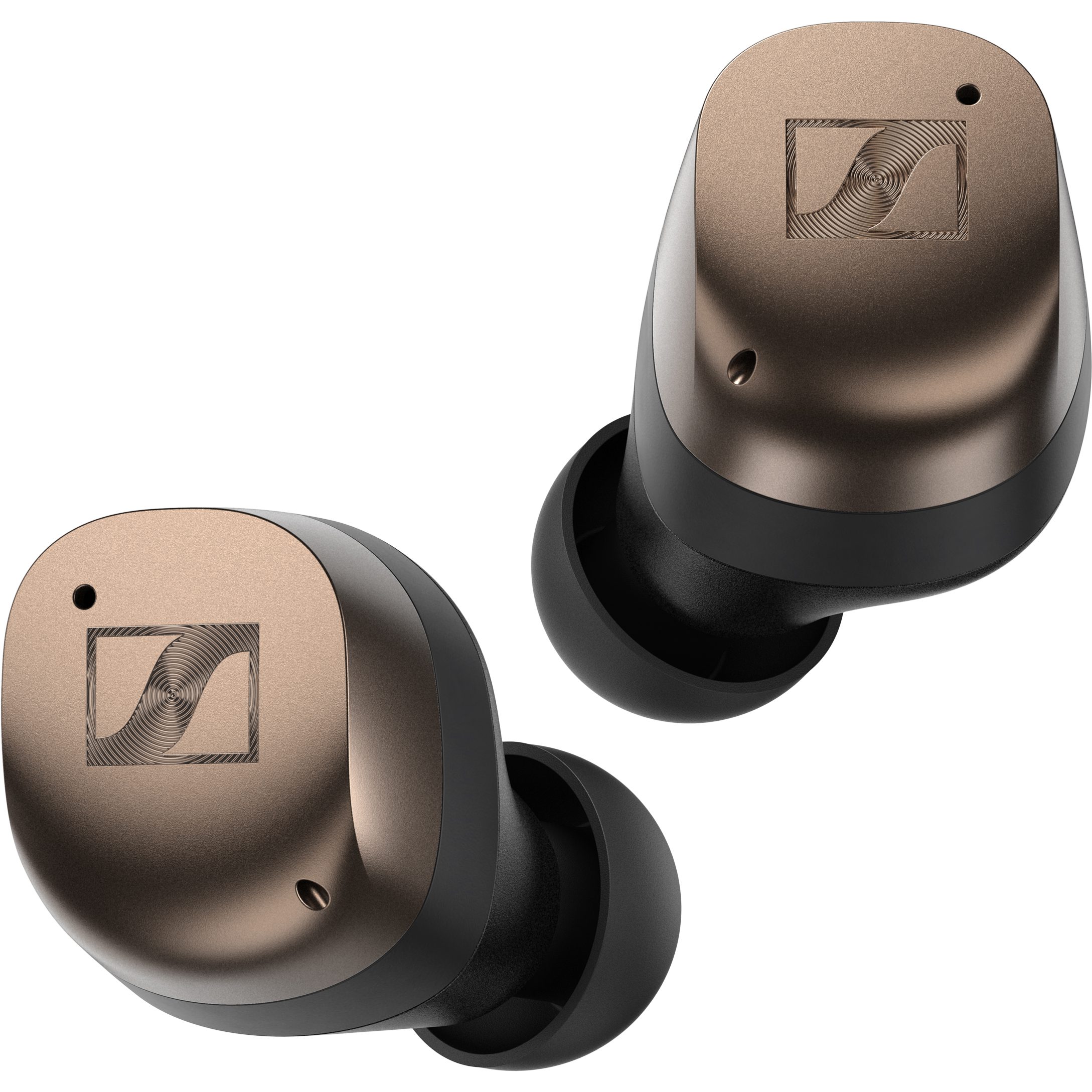
Sennheiser Momentum True Wireless 4
The direct predecessor to the MTW5 – still a strong performer with revised ANC and a Qualcomm S5 platform, for those weighing whether to upgrade.
FAQ: Frequently Asked Questions About the Sennheiser Momentum True Wireless 5
What is new on the Momentum True Wireless 5 compared to the MTW4?
The most significant addition is user-replaceable batteries in both earbuds and charging case. This is accompanied by Bluetooth 6.0, aptX Lossless, Dolby Atmos with head tracking, and a completely redesigned wingtip-free form that replaces the previous stabilisation fin.
How does the battery replacement work?
In the charging case, the battery can be removed without further disassembly after loosening a single Phillips screw. In the earbuds, the process is more involved: two tiny screws per side must be removed and the housing carefully levered open using the included tool.
How long does the battery of the Momentum True Wireless 5 last?
According to the spec sheet, up to 12 hours without ANC and up to 6 hours with ANC active, with a total of up to 40 hours including the charging case. Our practical assessment under mixed usage – ANC, calls and head tracking – gave an extrapolated runtime of just over eight and a half hours, sitting plausibly between both stated values.
Are LE Audio and Auracast available?
The hardware already supports both features, but Sennheiser has not yet enabled them via firmware. The manufacturer cites limited market penetration and the still-small number of compatible source devices as the reason.
What should I bear in mind regarding Hi-Res and Lossless mode?
Hi-Res mode should always be activated together with Lossless mode. Enabling Hi-Res mode alone can in rare cases result in mono playback.
How good is the ANC on the Momentum True Wireless 5?
Significantly improved over the MTW4, and now close to the class leaders from Apple and Sony. The noise cancellation works broadband and suppresses low-frequency noise such as turbines and trains very effectively. Only at the very lowest frequencies did the AirPods Pro 3 hold a marginal edge in our comparison.
Are the Momentum True Wireless 5 waterproof?
No – the IP54 rating protects against dust and water splashing from any direction, but not against submersion. The certification applies to the earbuds only, not the charging case.
Is the upgrade from the MTW4 worthwhile?
Most clearly for anyone whose MTW4 battery has noticeably degraded. For those satisfied with the sound and ANC of the MTW4, the upgrade is not strictly necessary – the sonic step forward is noticeable but not a quantum leap.
Technical Specifications of the Momentum True Wireless 5
| Specification | Value |
|---|---|
| Form factor | True wireless in-ear, ear canal coupling |
| Bluetooth version | 6.0, Class 1, max. 10 mW transmission power |
| Operating frequency | 2,402–2,480 MHz; GFSK, π/4 DQPSK, 8DPSK |
| Supported profiles | A2DP, AVRCP, HFP |
| Supported codecs | SBC, AAC, aptX, aptX Adaptive / Lossless |
| Transducer principle | Dynamic |
| Driver type / size | TrueResponse, 7 mm diameter |
| Frequency response | 5 Hz – 21 kHz |
| Sensitivity | 107 dB SPL (1 kHz / 1 mW) |
| THD | < 0.08% (1 kHz / 94 dB) |
| Active noise cancelling | Adaptive hybrid ANC |
| Microphone principle | MEMS |
| Microphone frequency range | Up to 16 kHz (Super Wideband telephony mode) |
| Microphone configuration | 4 mics per earbud incl. bone conduction mic; AI and beamforming-assisted noise reduction |
| Battery life | Up to 12 h (ANC off) / up to 6 h (ANC on) per earbud; up to 40 h total with charging case |
| Charging time | Approx. 1.5 h full charge; 8 min → 1 h playback |
| Battery type | Lithium-ion, user-replaceable with standard tools. Earbud L/R: 72 mAh, charging case: 760 mAh |
| Power supply | 5 V / 1,000 mA, up to 5 W; USB-C (no Power Delivery); Qi wireless charging 2.1 |
| Water resistance | IP54, dust and splash-proof (earbuds only, not the case) |
| Weight | 7 g per earbud, 55 g charging case |
| Dimensions | 67.2 × 48.4 × 25.0 mm (case with earbuds) |
| App | Sennheiser Smart Control Plus (iOS and Android) |
| Price (RRP) | €299.90, $299.95 |
Conclusion
Advantages / Disadvantages:
Advantages:
-
Replaceable batteries in the earbuds and case
-
No extra cost despite the expanded range of features
-
Very good ANC
-
Very good voice quality
-
Bluetooth 6.0, multipoint, aptX Lossless Warm, powerful sound
-
Dolby Atmos with head-tracking is among the best in its class
-
Well-designed app with editable EQ presets
Disadvantages:
-
The wingless design does not sit securely in every ear
-
Battery life with ANC is shorter than on the MTW4 (6 hours instead of 7.5)
-
Head tracking is slightly sluggish
-
LE Audio and Auracast not yet enabled
Share Post:


About the author:

From
Peter Schloßnagel
Editor-in-Chief
He started out with music as a child and never really stopped. Except that at some point, it turned into kopfhoerer.de. Peter had worked in radio, as an entertainer, in the record industry, in print media and in marketing before co-founding kopfhoerer.de: because no one could give him the answers he was looking for himself.
When he’s not writing, he’s making music, cooking or out and about on an old bike somewhere in the Upper Palatinate.