



In a nutshell
Sennheiser delivers a consistently strong premium package with the Momentum 5 Wireless: characterful sound true to the Sennheiser tradition, significantly improved ANC, aptX Lossless as a codec first, and battery life that clearly outpaces Sony, Bose, and Apple. Add a user-replaceable battery, and this becomes a long-term investment within the premium segment. At €399, it’s a well-rounded package with only a handful of weaknesses.
Vorteile:
-
Balanced, punchy sound
-
Significantly improved adaptive ANC with eight microphones
-
aptX Lossless
-
Bluetooth 6.0, including Auracast announced via firmware update, plus LE Audio
-
Very long battery life (up to 57 hours with ANC)
-
User-replaceable 700 mAh battery
-
High-quality build
-
USB-C audio with added sound value
-
Very good call quality, even in wind
Nachteile:
-
No folding mechanism — the headphones don't fold into a more compact travel format
-
Head tracking takes noticeably long to refocus after turning your head
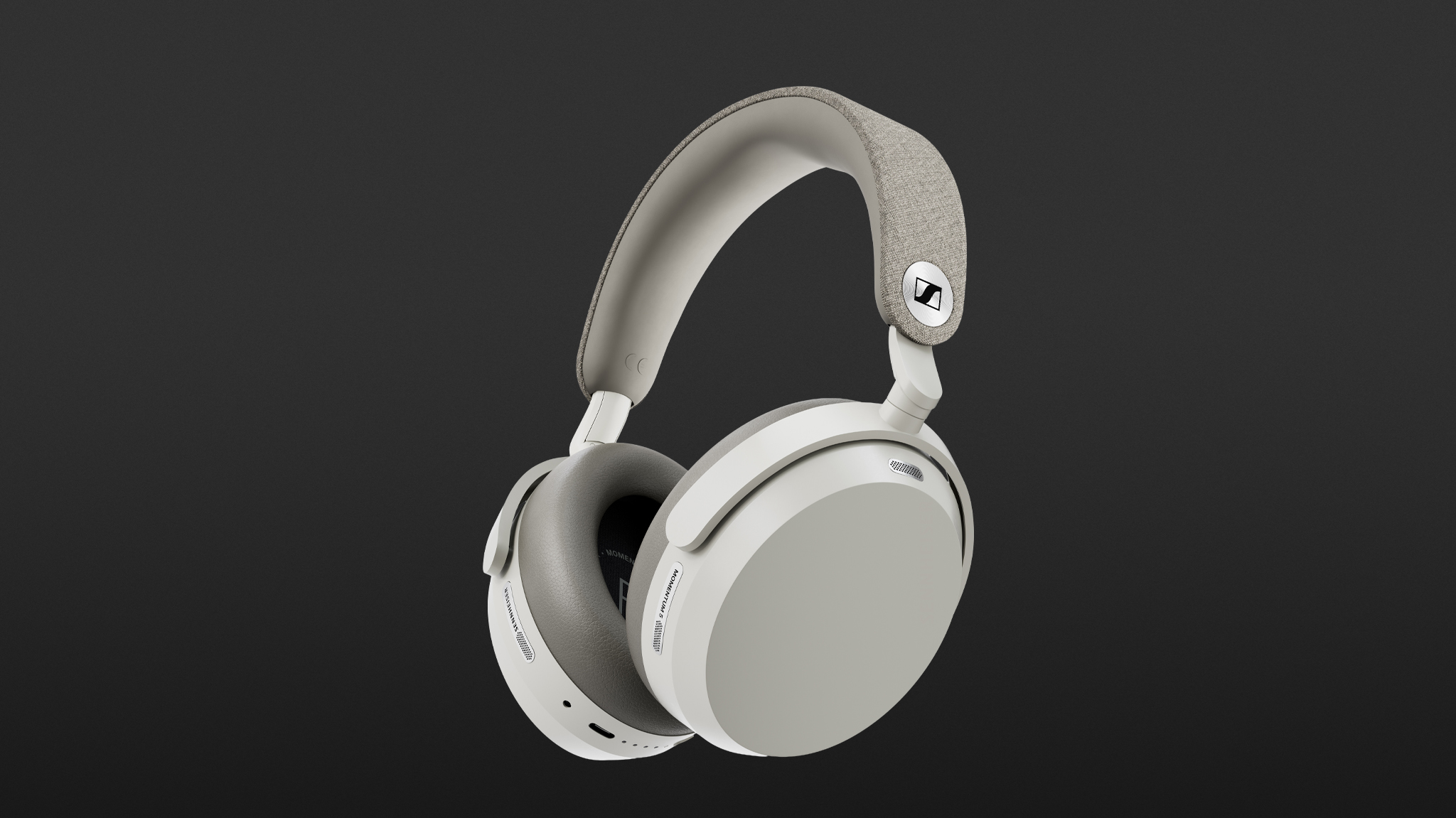
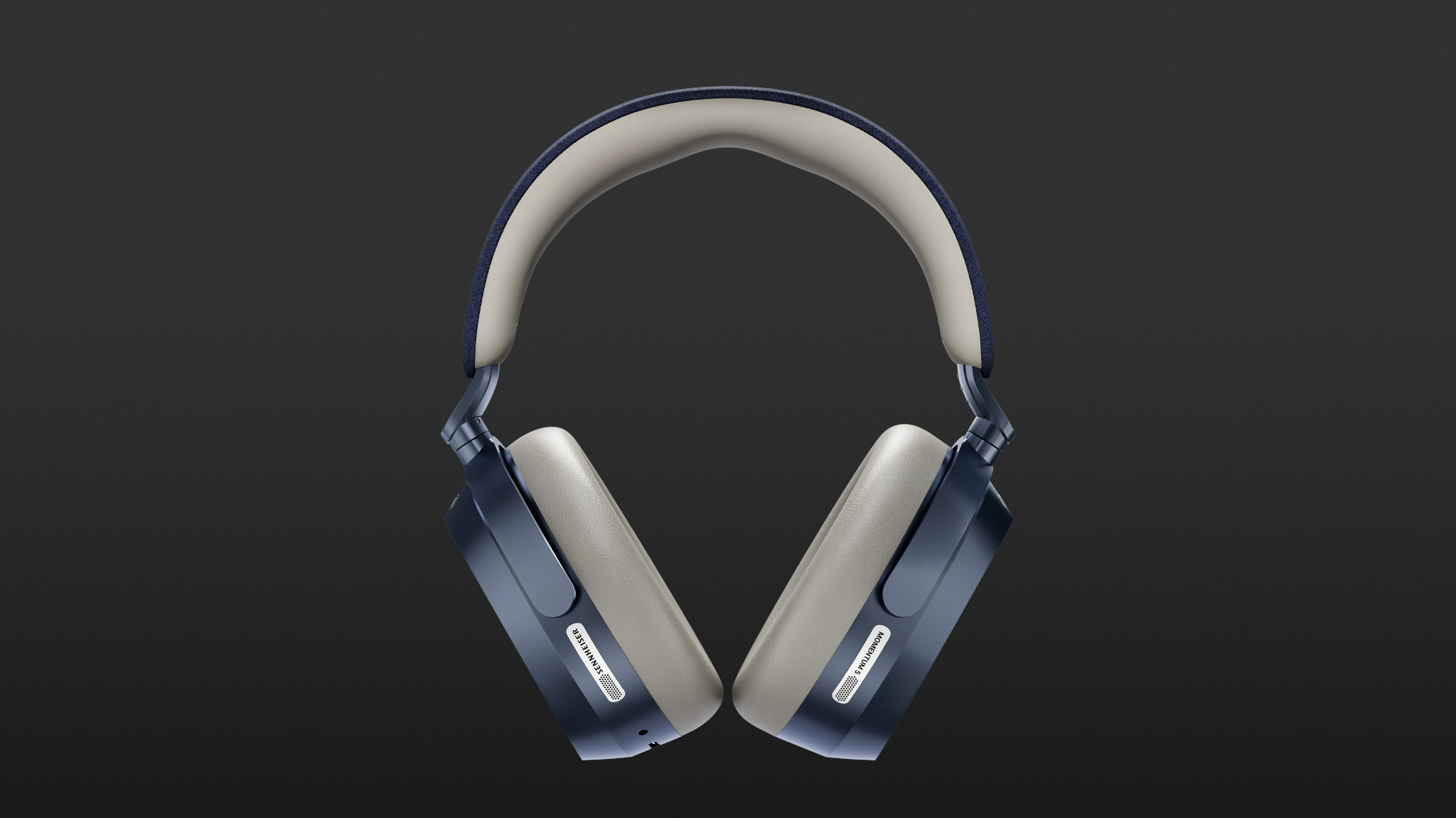
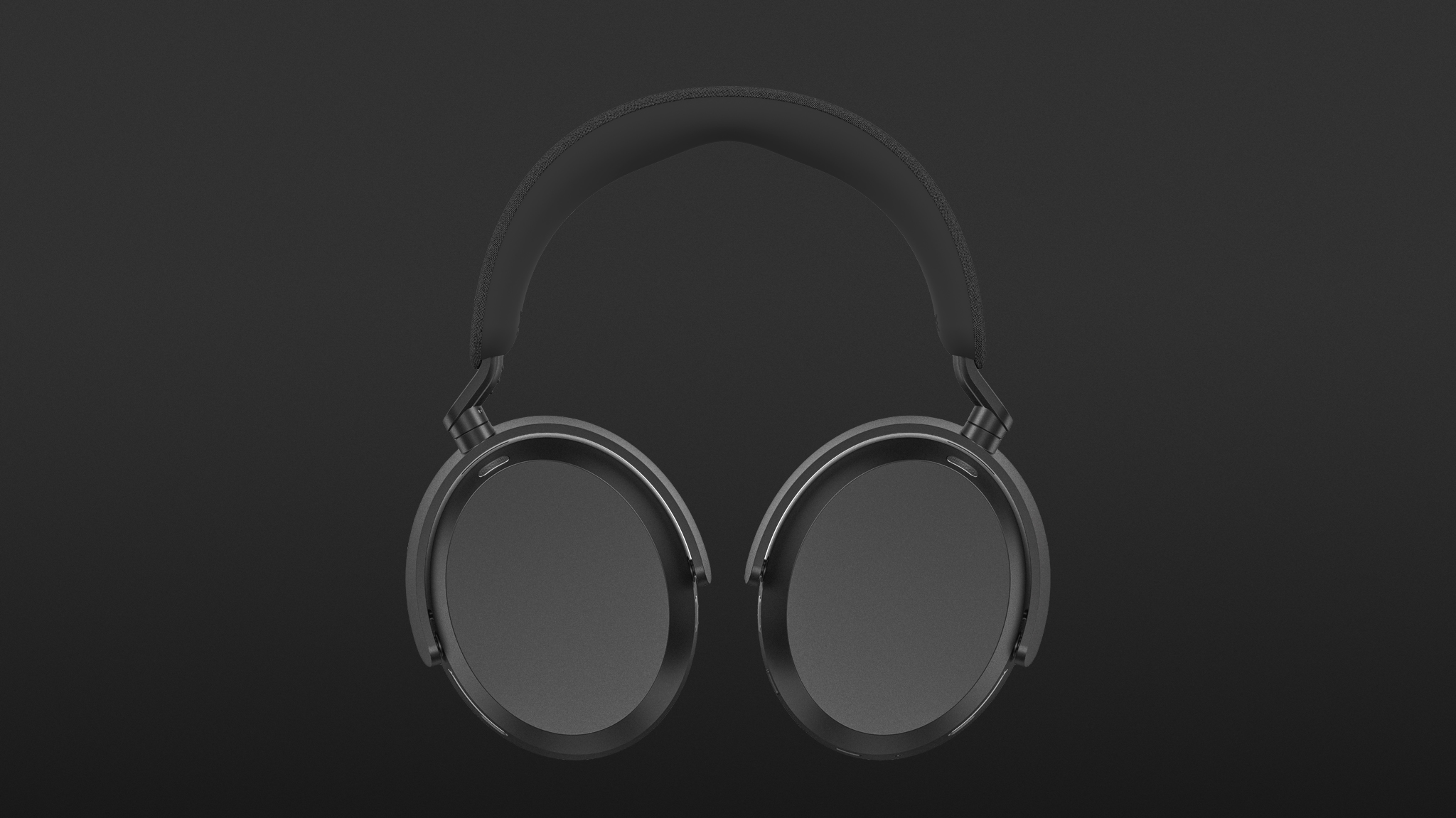

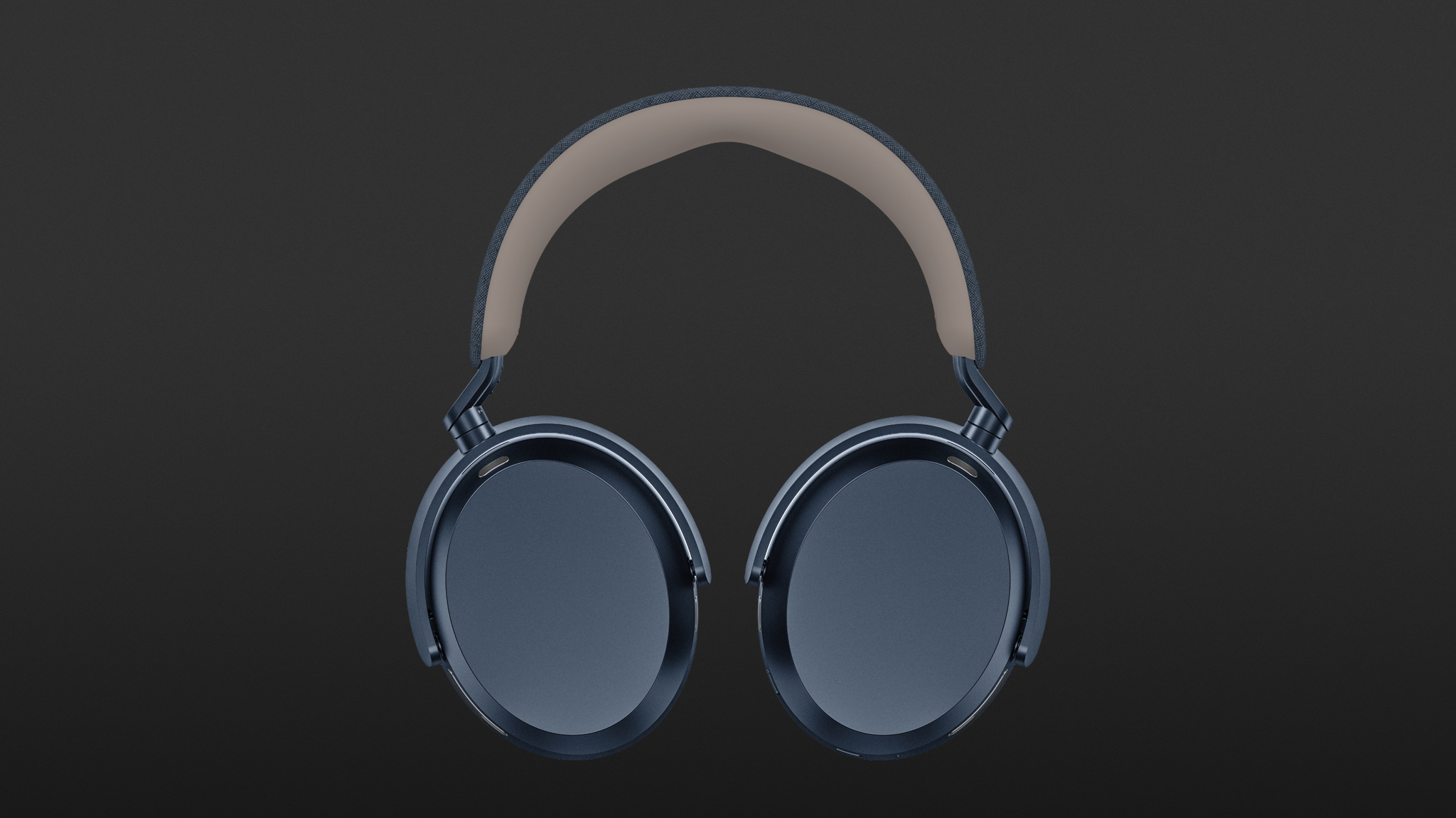
With the Sennheiser Momentum 5 Wireless, the company from Wedemark, Germany presents the fifth generation of its flagship wireless over-ear, sending it into the market at €399.90 in a premium segment most recently shaped by Sony’s WH-1000XM6, while Apple’s AirPods Max and the second-generation Bose QuietComfort Ultra hold the upper end of the price bracket. Sennheiser is itself long established in this category: the previous Momentum 4 Wireless is among the headphones you’ll regularly spot out in the wild.
With this release, Sennheiser isn’t just taking aim at the market’s top tier, it’s also making a statement in the premium segment that’s long been standard practice in the mid-range: sustainability as a selling point. What Marshall demonstrated with the Milton A.N.C. in the €200 category now belongs on Sennheiser’s spec sheet as well, in a league costing twice as much.
What’s a differentiator today, though, is likely to become standard fairly soon. Starting February 18, 2027, the EU Battery Regulation will require manufacturers to design headphone batteries to be replaceable by end users. So Sennheiser isn’t just arriving at the right moment, it’s arriving slightly ahead of the legislation. It’s a little reminiscent of the early days of active noise cancellation: ten years ago, ANC was a premium exclusive, today it shows up in €50 headphones. Replaceable batteries are likely headed down the same path.
Which leaves the central question every Momentum review has had to answer for years: does the proven 42mm driver, unchanged from the previous Momentum 4 Wireless, carry the sonic ambition on its fifth attempt that the line wants to be measured against, in keeping with the house’s own HD 600 tradition?
A Note on the Review Unit
Our review unit was running pre-release firmware at the start of testing. Sennheiser rolled out a firmware update during our test period that added several features not yet fully enabled at launch. These include the head tracking function for Dolby Atmos and touchpad control in wired USB-C mode. These features were incorporated into the review and evaluated on the updated firmware (V 6.21.1).
Design and What’s in the Box
The bottom line: Sennheiser refines the predecessor’s design rather than reinventing it. Metal details on the logo button and microphone openings elevate the look without redefining the design language.
Included in the box is a transport case that Sennheiser states is roughly 20 percent smaller than the previous generation’s and is cleanly finished, along with a USB-C cable and a 3.5mm to 2.5mm audio cable color-matched to the headphone itself.
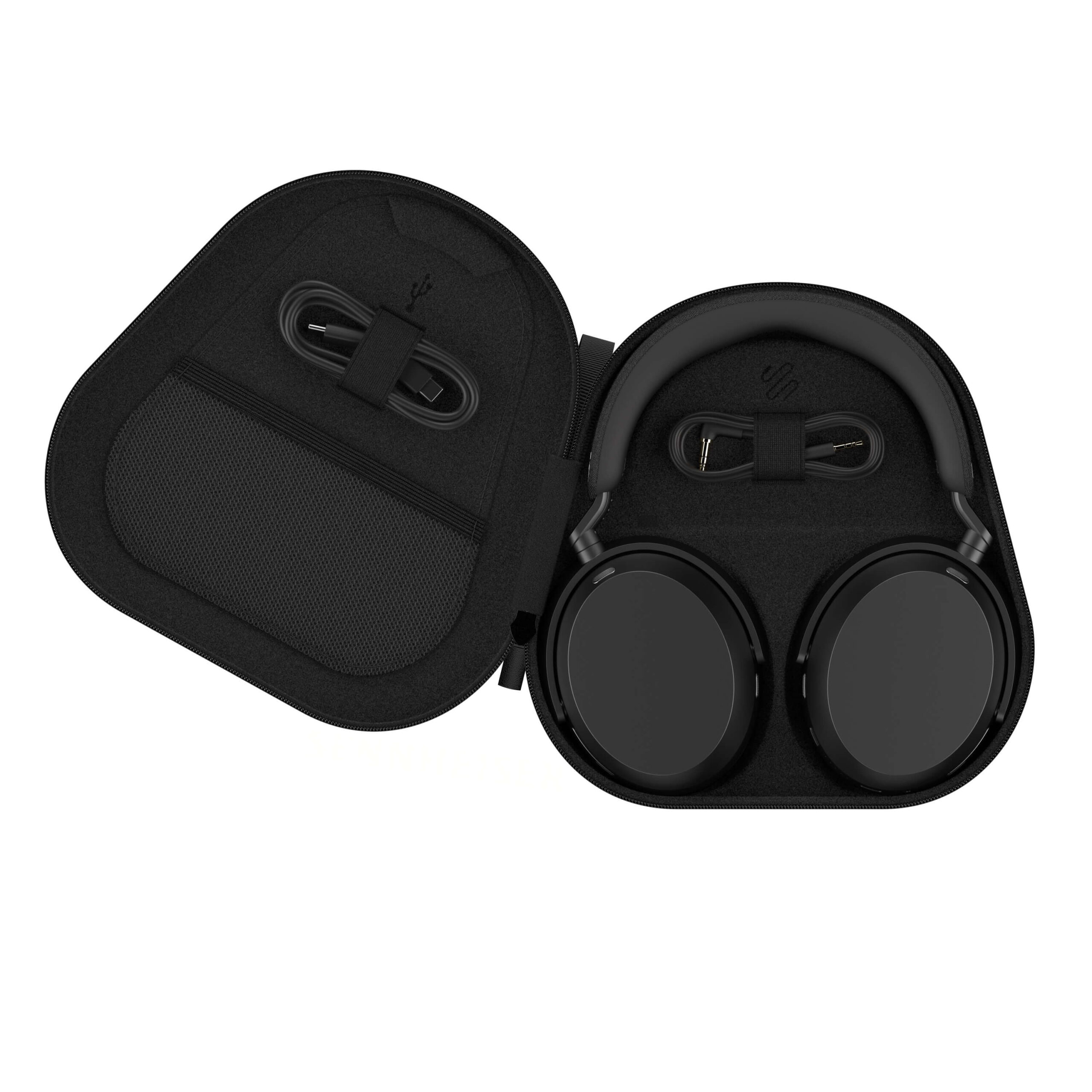
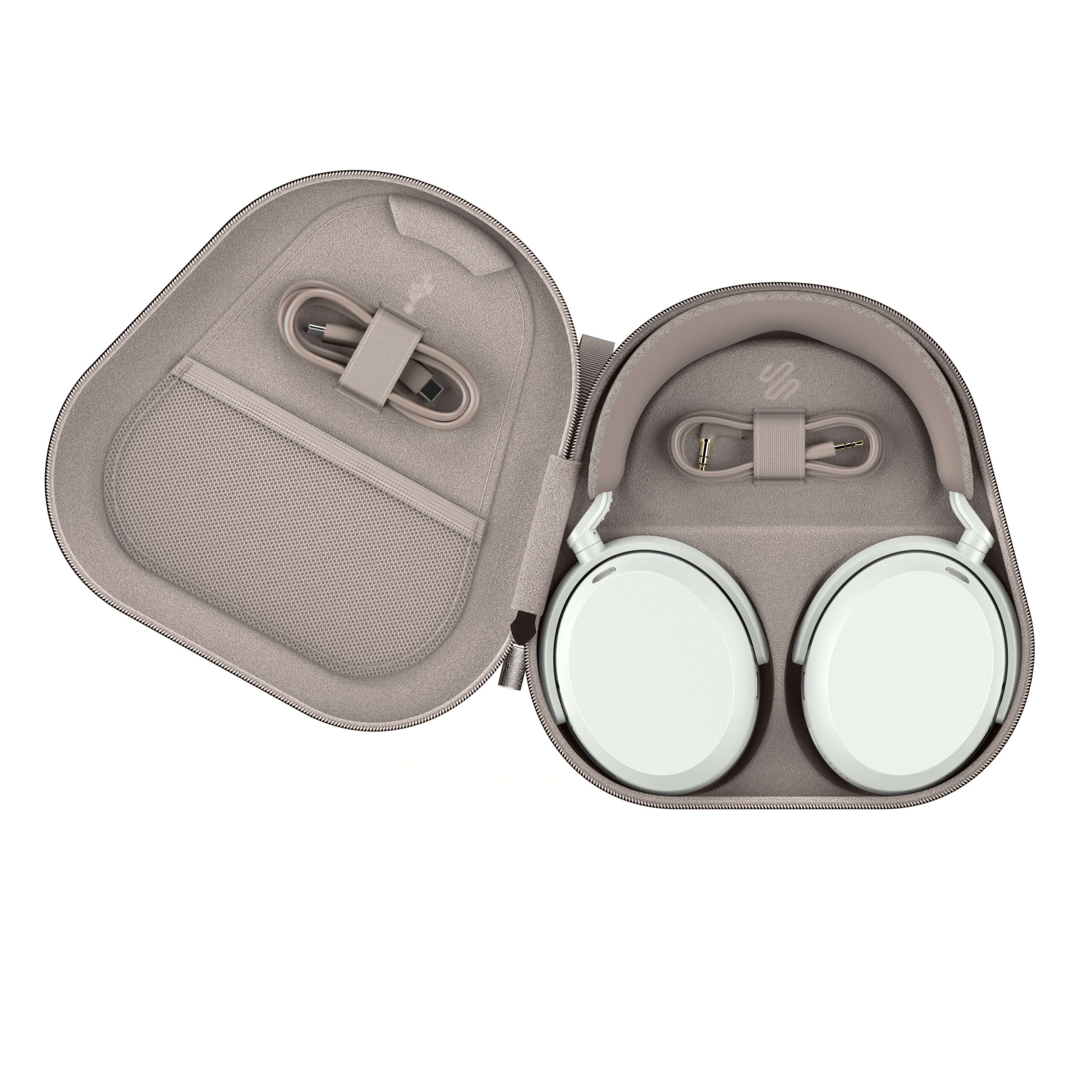
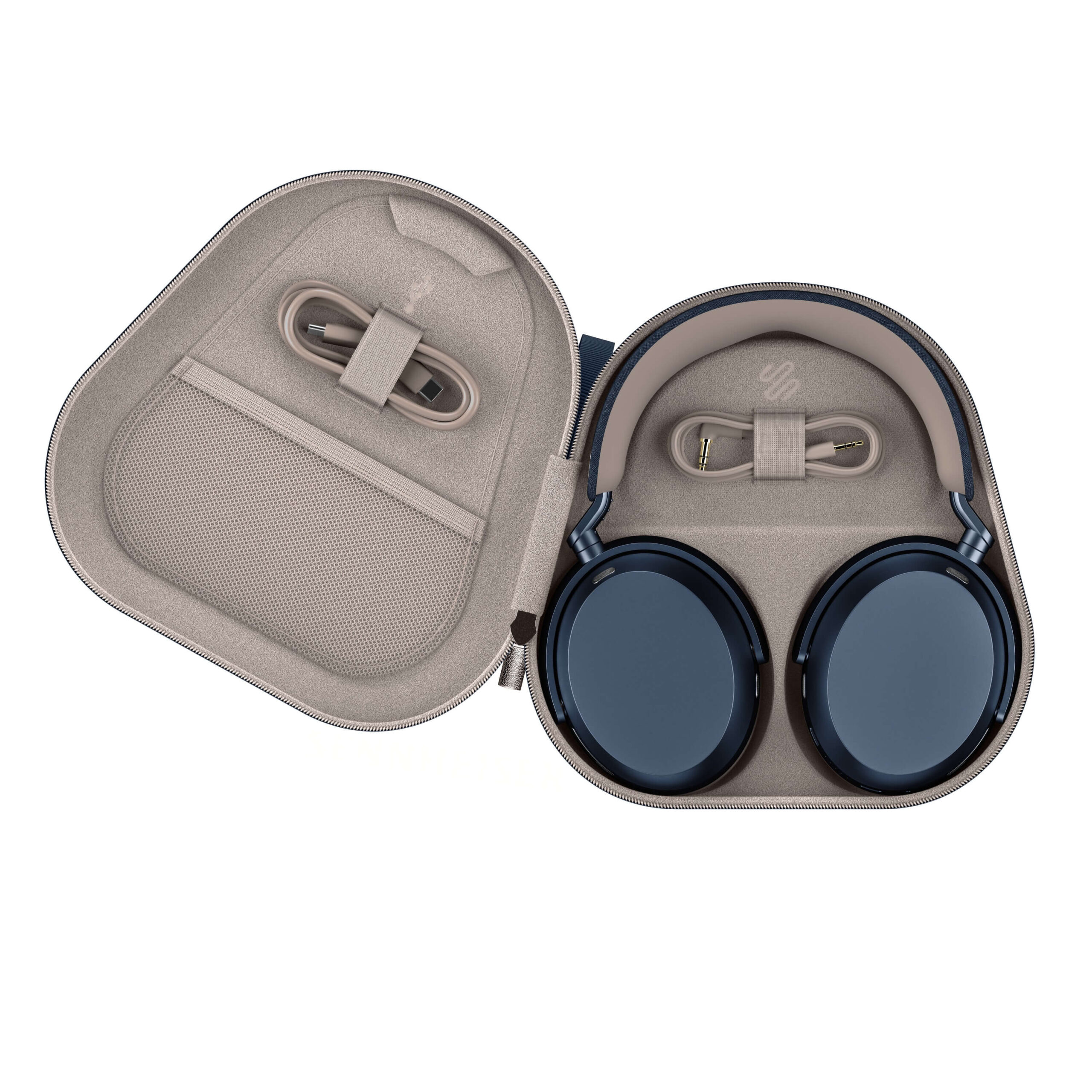
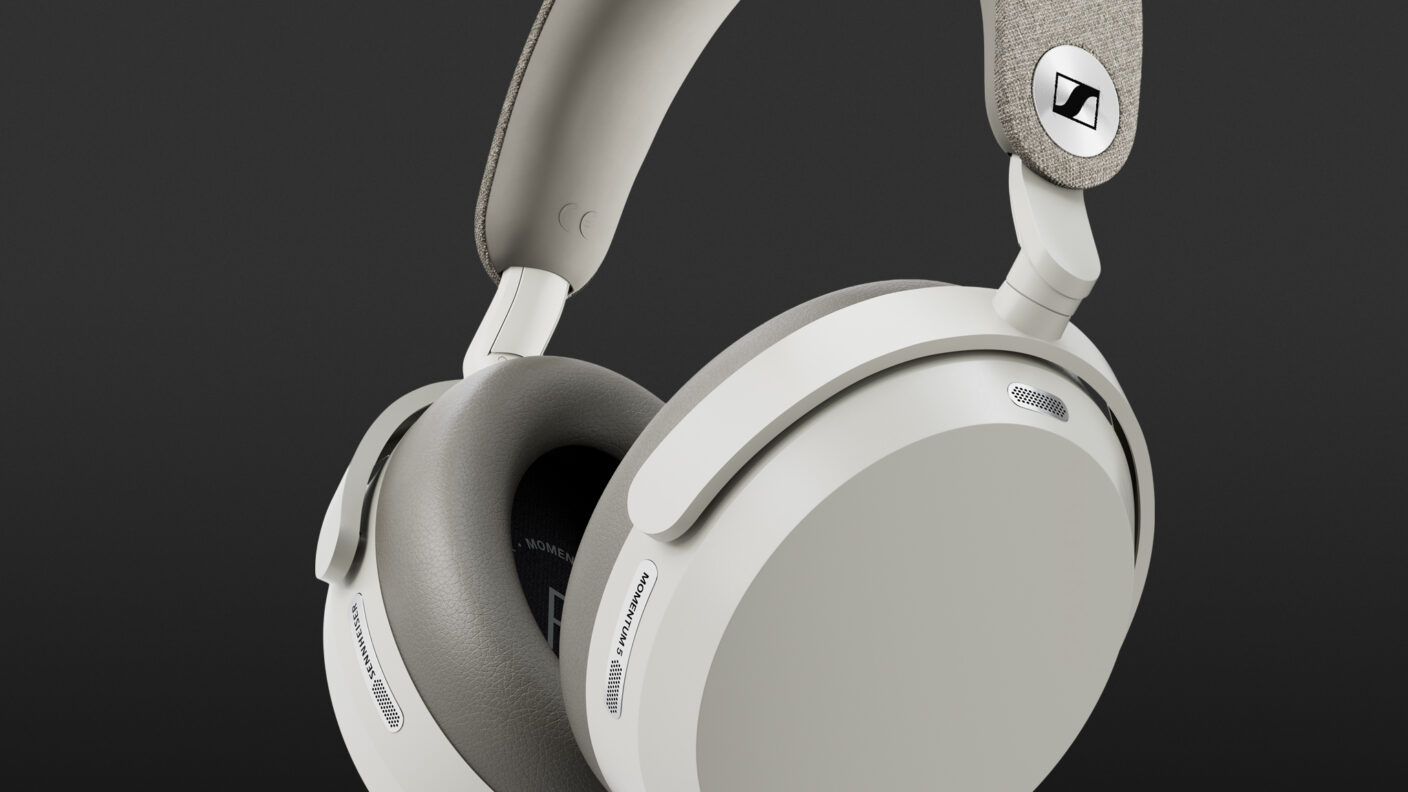
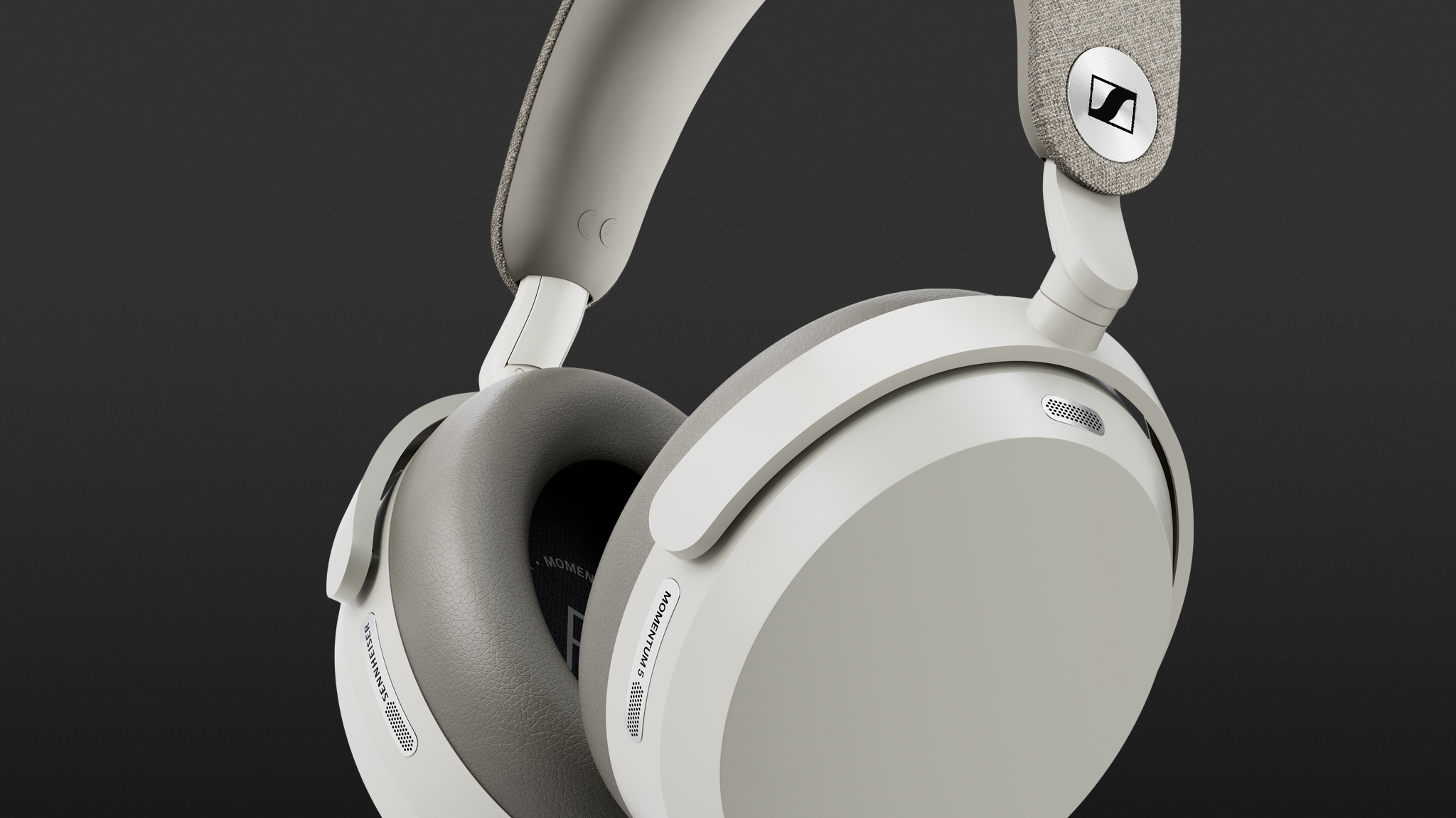
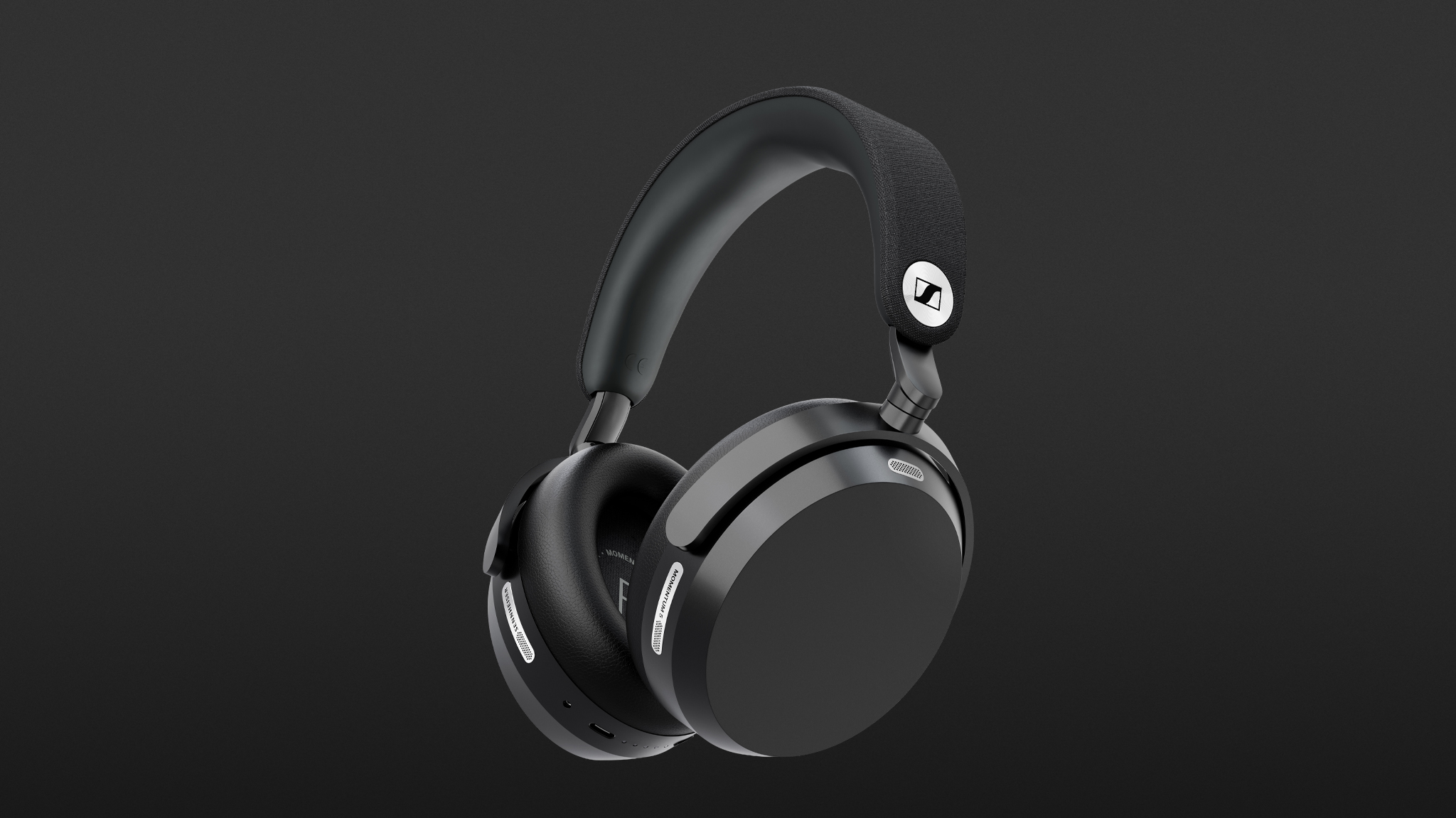
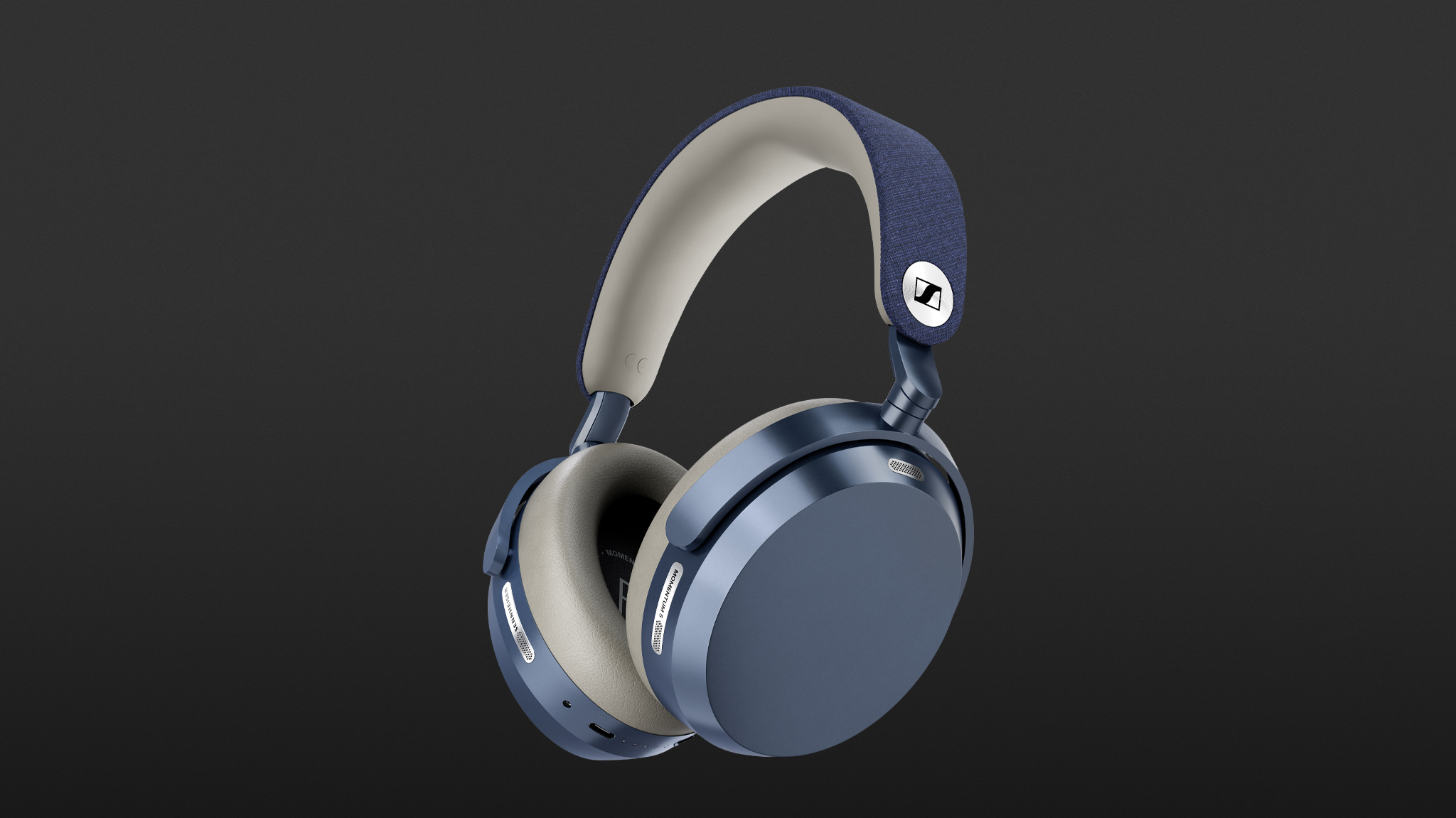
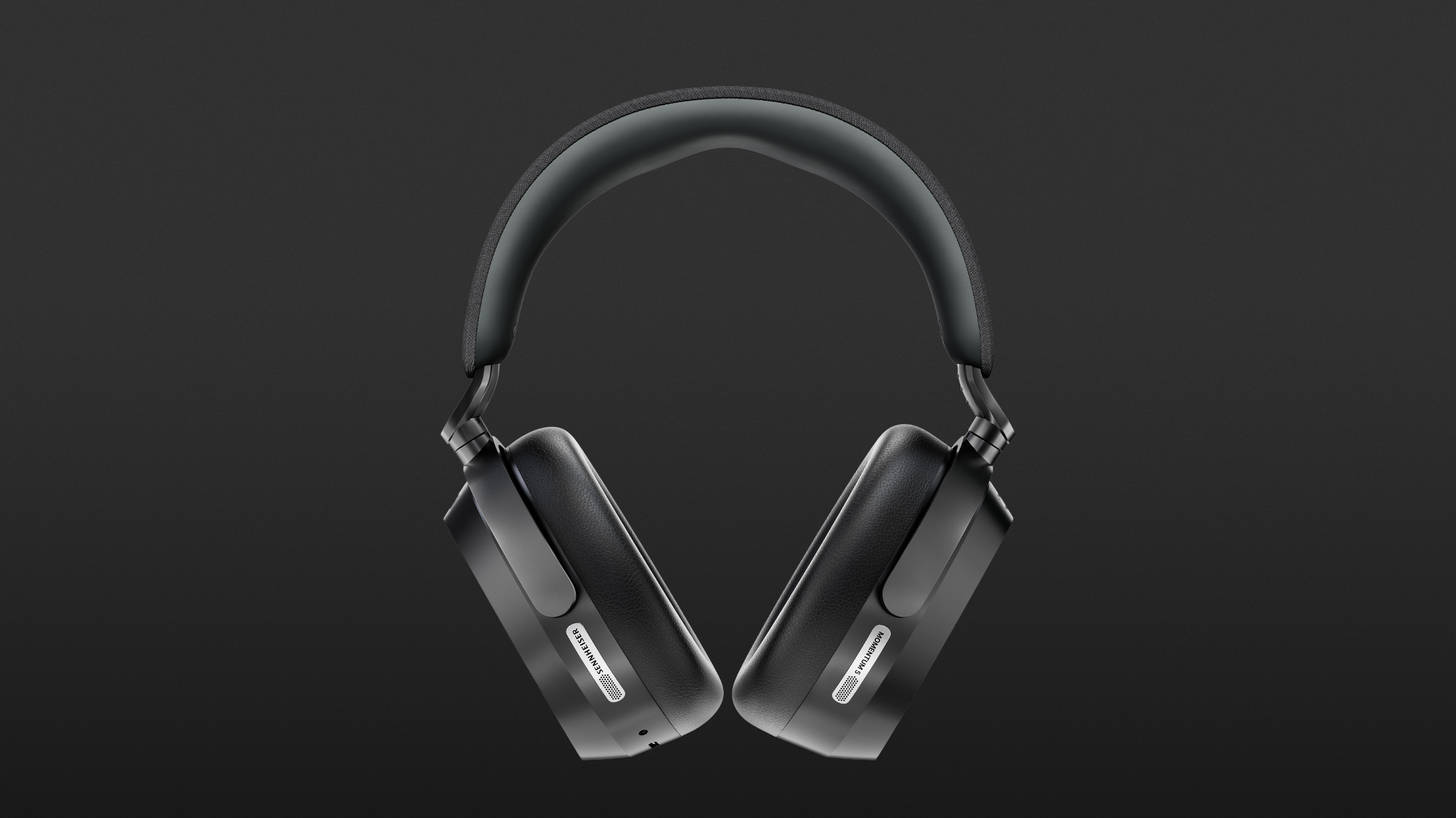
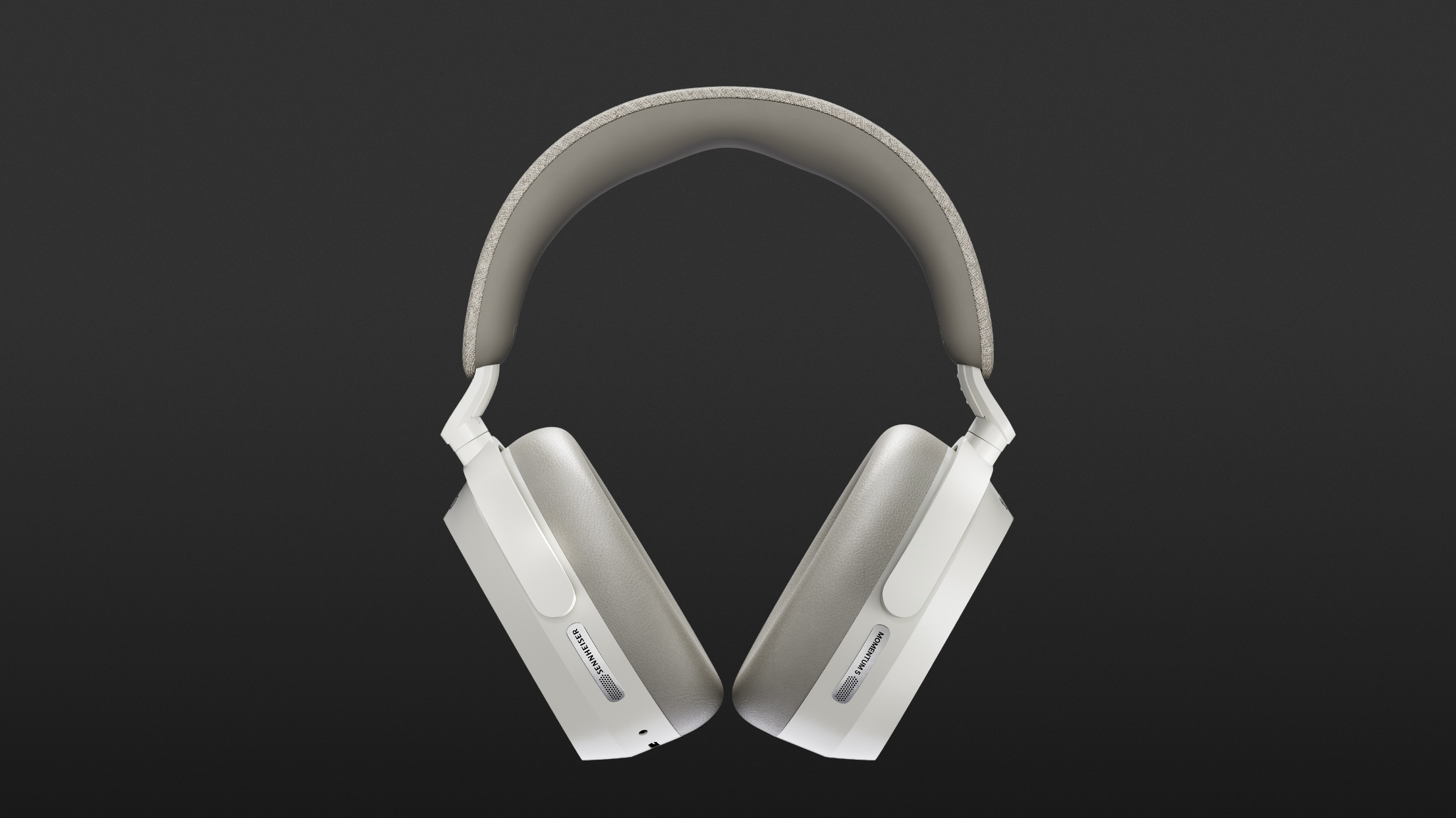
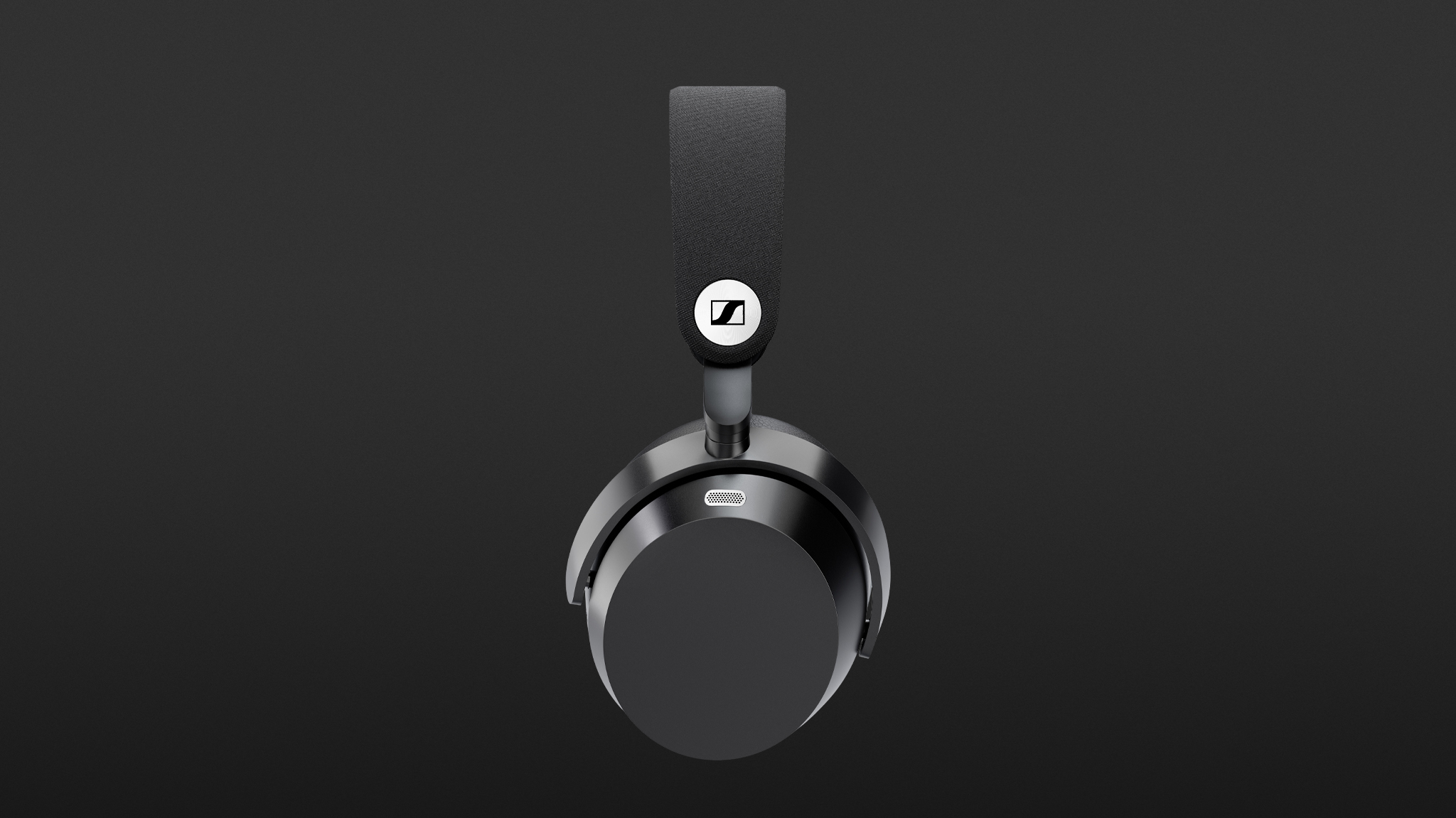
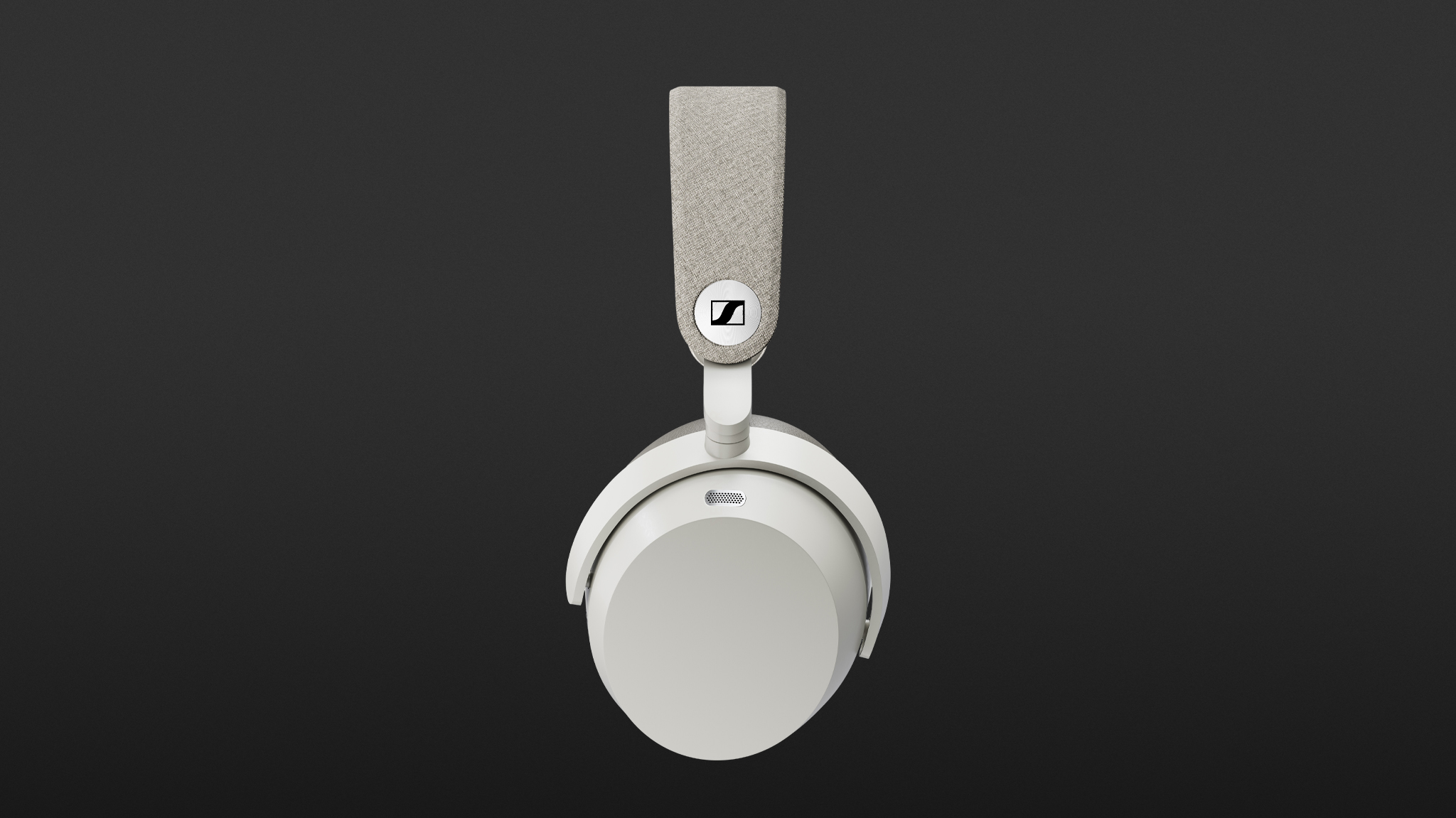
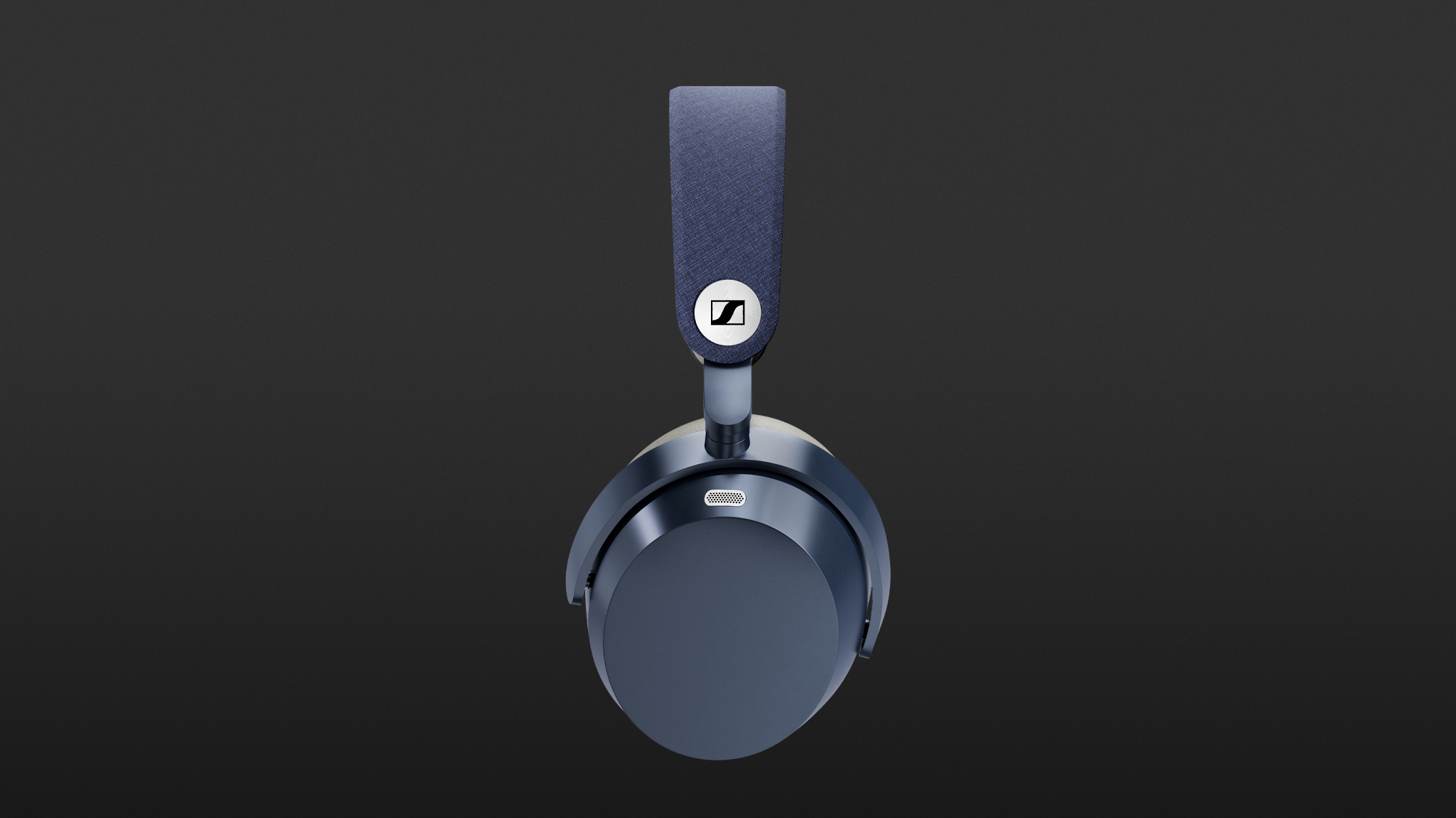
The Sennheiser Momentum 5 Wireless is available in three color options: black, white, and denim. Our review unit was the white variant, which projects a tasteful understatement with its light gray ear pads and matching light gray fabric headband.
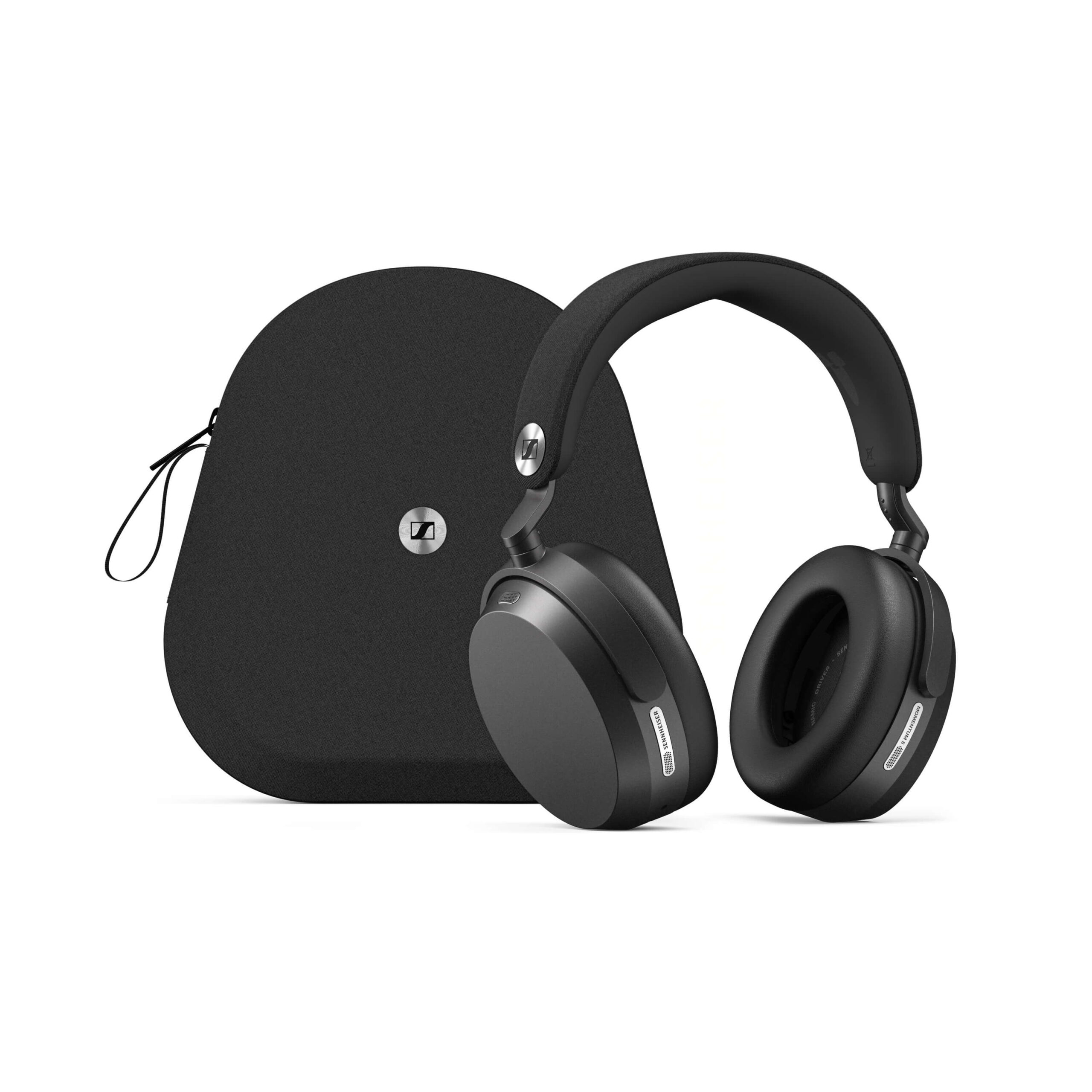
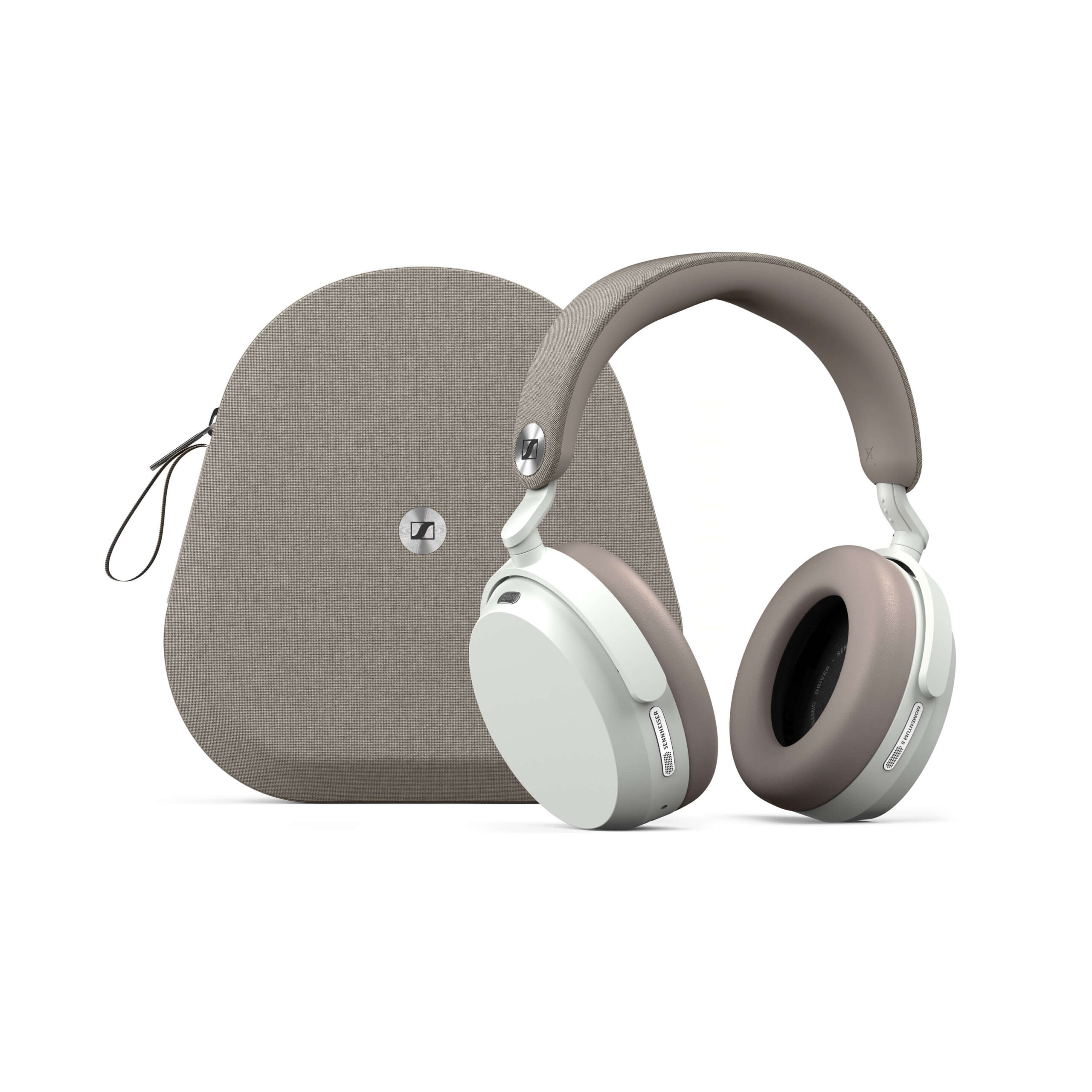
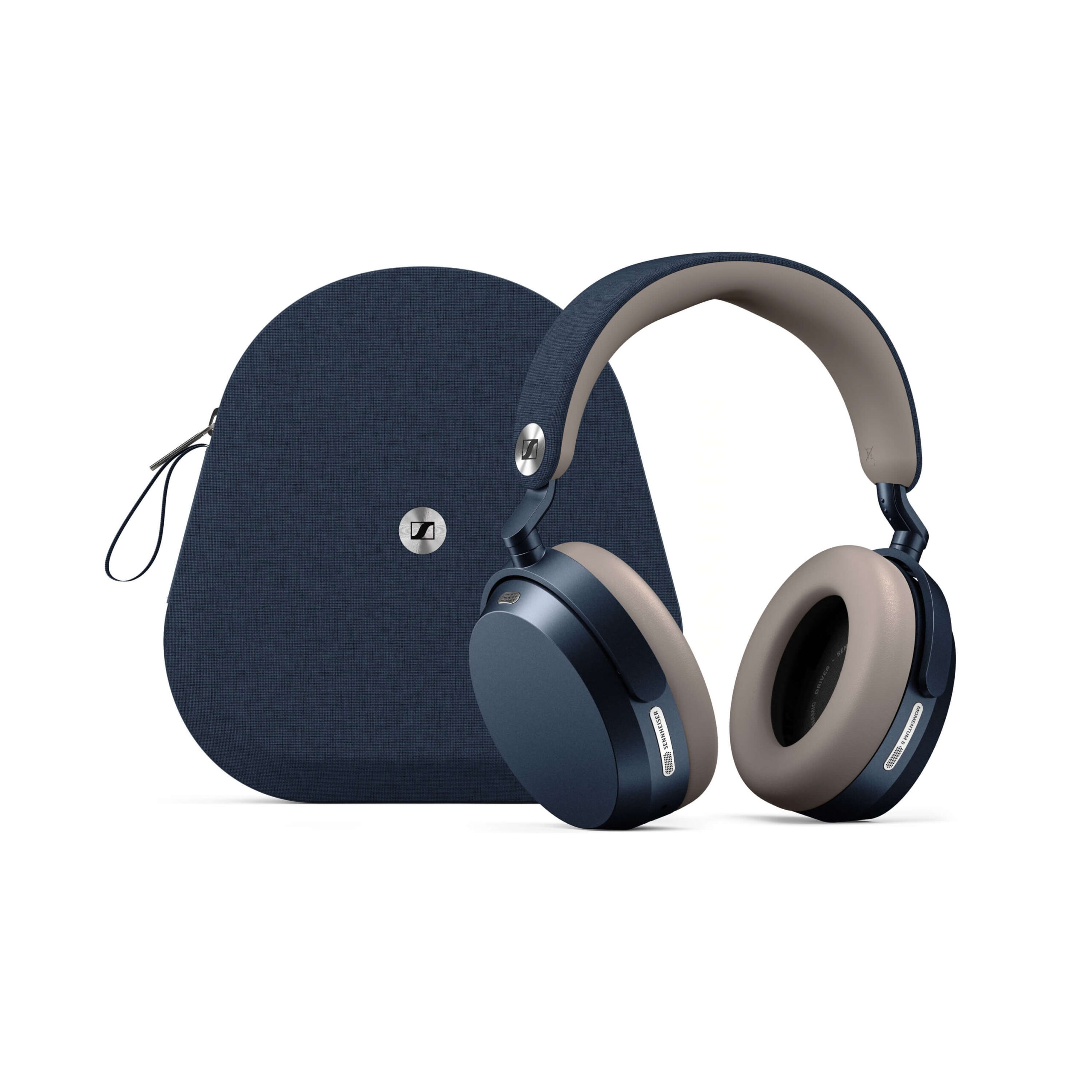
Looking at the earcups, Sennheiser hasn’t fundamentally overhauled the design compared to the Momentum 4 Wireless, but several details have been upgraded. The surrounding groove from the previous model is gone, giving the surface a cleaner look. The Sennheiser logo has been elevated to a round metal button, and the microphone openings are now framed in metal as well. The overall effect feels more premium than the 4, without abandoning the underlying design language.
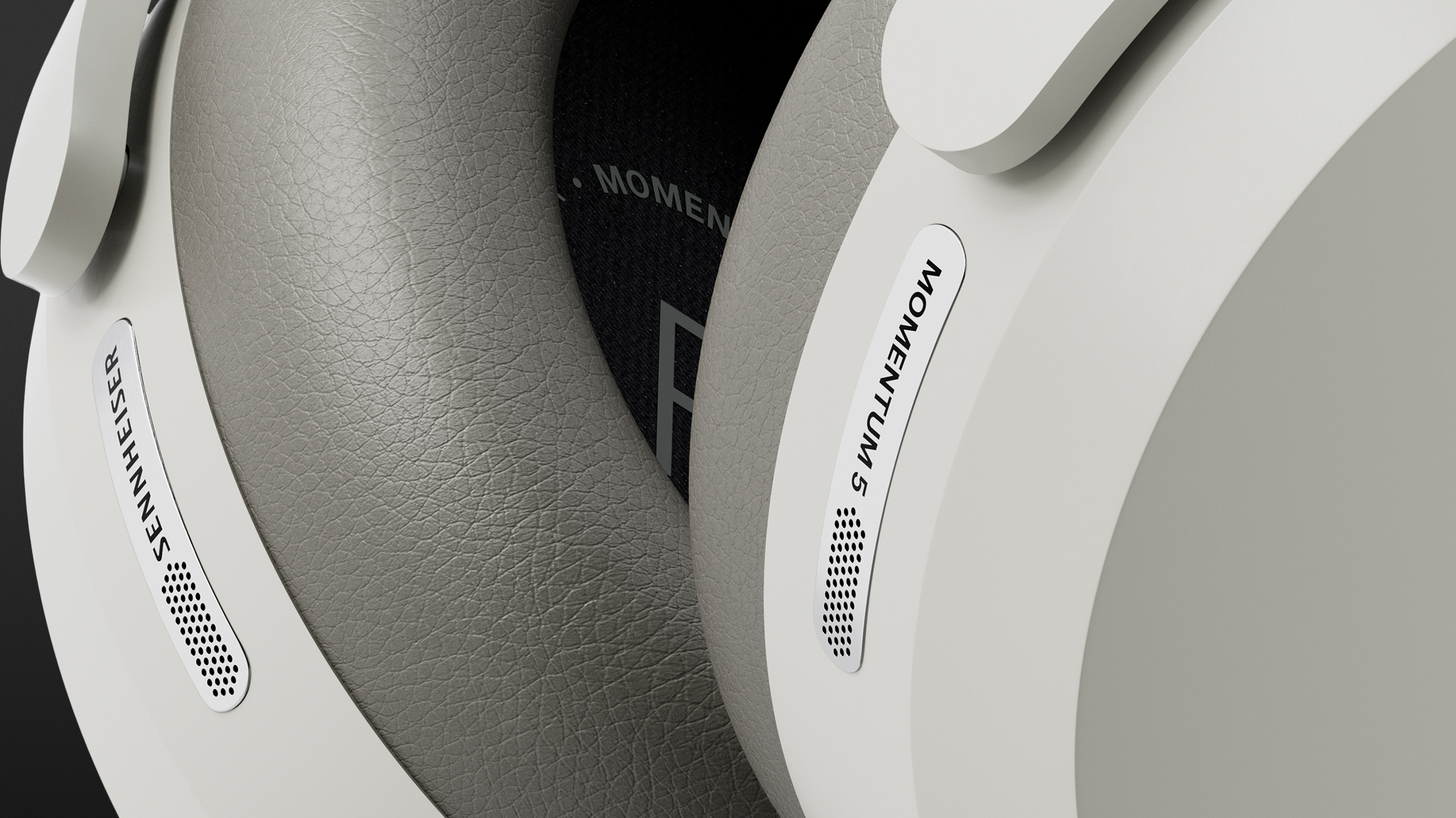
What remains, though, is the same impression we noted with the predecessor: across its first three generations, Sennheiser’s Momentum line, with its metal headbands, leather pads, and pronounced retro touch, was a design statement with its own distinct signature. That visual identity was set aside with the Momentum 4 in favor of touch-sensitive, smooth-surfaced earcups, a decision that made technical sense, since the old metal surfaces didn’t support touch controls.
The Momentum 5 Wireless continues down that path and regains some of that sense of quality through its metal details. It doesn’t, however, recapture the distinctive design identity of the first three generations.
Wearing Comfort
The bottom line: At 292 grams, weight is distributed convincingly, clamping force is well balanced, and it remains comfortable for glasses wearers over extended sessions. What’s missing is a folding mechanism for a more compact travel format.
The Sennheiser Momentum 5 Wireless distributes its roughly 292 grams convincingly across the head. Even as a glasses wearer, longer listening sessions produced barely any pressure on the ears. Only a slight buildup of warmth becomes noticeable after a while, which is difficult to avoid entirely with a closed-back design. Clamping force is calibrated for balance: firm enough to stay securely in place even while moshing, loose enough to allow hours of listening without pressure points.

The earcups, which rotate a full 180 degrees, don’t get in the way when wearing the Momentum 5 around the neck. A folding mechanism for a more travel-friendly compact size is missing, though, an area where models like the Marshall Milton A.N.C. or the Sony WH-1000XM6 offer more convenience for transport.
Bluetooth, Codecs, and Connectivity
The bottom line: Bluetooth 5.4 at launch with a promised update to 6.0. aptX Lossless marks a codec first for Android flagships, alongside multipoint. iPhone users need a separate dongle for lossless.
The Momentum 5 Wireless launches with Bluetooth 5.4 and is set to be upgraded to Bluetooth 6.0 via firmware update. That update wasn’t yet available at the time of testing. The promise is credible, though, since Sennheiser regularly ships firmware improvements through its Smart Control Plus app. The manufacturer hasn’t named a specific timeline so far.
On the codec side, the Momentum 5 Wireless is the first Momentum headphone to support aptX Lossless via Qualcomm’s Snapdragon Sound. In practical terms: with a current Android smartphone that supports Snapdragon Sound (typically devices with Snapdragon 8 Gen 3 or newer), lossless wireless transmission becomes possible.
iPhone users don’t benefit from this particular first, though. Apple’s iOS doesn’t support aptX in any form. iPhone owners are limited to AAC over a standard Bluetooth connection. Sennheiser offers its own workaround: the USB-C dongle BTD 700 (€49.90 RRP), which according to the manufacturer supports aptX Lossless in combination with iPhones and iPads equipped with USB-C.
We haven’t tested the dongle ourselves and can’t speak to its real-world performance, but we want to flag this option for iPhone users regardless. Sennheiser itself states that occasional audio distortion can still occur when using the BTD 700.
Auracast, the forward-looking Bluetooth LE Audio feature, wasn’t yet enabled at the time of testing but is expected to arrive in a future update according to Sennheiser. Multipoint connectivity for simultaneous pairing with two sources, on the other hand, already works smoothly in practice: a tap on the second source switches the Sennheiser Momentum 5 Wireless over within a few seconds.
Controls
The bottom line: One button, one touch surface, and an unusually comprehensive app. Nearly every fine-tuning wish is fulfilled, the only thing missing is a full EQ reset.
No room for control mishaps here: the Sennheiser Momentum 5 Wireless comes with exactly one physical button, located at the bottom edge of the right earcup, used for power and pairing. Everything else runs through the touch-sensitive surface on the right earcup, covering the usual functions: play, pause, volume, track skipping, transparency mode.
For anyone who wants to go deeper, the Smart Control Plus app for iOS and Android offers far more detail. Sennheiser has packed the app extensively, with a depth of fine-tuning options rarely seen from a headphone manufacturer. Covering every single feature would go beyond the scope of this review, so here are the highlights, with the rest visible in the accompanying screenshots:
Spatial sound: Activation of Dolby Atmos and the head tracking feature.
My Sound: A sound personalization feature builds a sound profile based on individual listening needs. Several genre-specific presets are also available, including a bass-boosted option. A graphic 8-band EQ with a range of plus/minus 6 dB allows for more detailed adjustments; custom settings can be saved and shared with others, and a redo/undo function along with a temporary bypass for direct before-and-after comparison round out the section.
The one thing we missed: a single reset button that resets all bands at once. A podcast mode further improves speech intelligibility.
Sound zones: As with the Sony WH-1000XM6, sound settings can be automatically applied based on location, for example at home or at the gym.
ANC and Transparency
The bottom line: Eight microphones instead of four lift ANC to a noticeably new level. Sony and Apple remain a step ahead, but the gap to the class leaders has narrowed considerably. The transparency mode is among the cleanest on the market.
Sennheiser has doubled the microphone count from four to eight, four per side. According to the manufacturer, this should reduce disruptive voices and conversational noise up to three times more effectively than the previous Momentum 4 Wireless. The transparency mode is also said to benefit from the microphone upgrade.
You notice the improvement from the very first minute. The switchable adaptive ANC takes hold firmly and delivers a pleasant quiet with barely perceptible background hiss. The office fan fades to a faint murmur, and voices and mid-range frequencies in particular are now filtered noticeably more effectively than on the predecessor. The switchable anti-wind function reliably reduces wind noise, though due to how it’s implemented it lets through slightly more ambient frequencies than the standard ANC configuration.
In direct comparison with the Sony WH-1000XM6 and the Apple AirPods Max, the Momentum 5 Wireless doesn’t quite match their ANC efficiency: Apple suppresses ambient noise across a slightly broader range, and Sony filters somewhat more consistently overall. The Bose QuietComfort Ultra (2nd generation) sits in this same league as well. That said, these are complaints at a very high level; at no point during testing did we find ourselves wishing for more silence.
The steplessly adjustable transparency mode sounds pleasantly natural, and here too the background noise floor stays low enough that it doesn’t intrude in daily use. This is one of the cleanest transparency mode implementations we’ve come across.
Sound
The bottom line: Characterful Sennheiser tuning with rounded, controlled bass, natural mids, and pleasantly clean treble. The stereo stage stays compact, and sound quality steps up further in USB mode.
Sennheiser retains the 42mm driver manufactured in Tullamore, Ireland, carried over from the Momentum 4 Wireless. What this proven driver delivers on its fifth outing turns out to be satisfyingly well-rounded across the board.
The bass is full and powerful, yet controlled, with tonality that remains coherent right down into the low end. The attack feels softer and slightly cushioned rather than analytical or tight, a genuinely modern, rounded bass character that never becomes intrusive. Anyone who finds that too restrained can find a bass boost in the app or fine-tune things further with the 8-band EQ.
The midrange sounds natural. Vocals on quieter singer-songwriter material come through with real detail, without the midrange ever feeling overdone. Aggressive metal or synthesizer riffs never cut harshly, which is a welcome trait during hours-long listening sessions.
The treble, with the usual caveat about the reviewer’s age-related hearing, leaves a wonderful impression too: neither too sharp, which helps prevent listening fatigue, nor too restrained, which would leave detail wanting.
The Sennheiser Momentum 5 Wireless renders dynamics and detail very cleanly. On certain musical theater pieces with multiple vocalists entering in staggered fashion, we would have appreciated a slightly wider stereo stage, which would have made placing voices in the virtual soundstage easier. Again, though, this is a high-level complaint.
On the codec front, our listening tests turned up pleasingly few friction points. Lacking a Snapdragon Sound-certified device, we couldn’t test aptX Lossless ourselves, but with aptX Adaptive (48kHz, 24-bit) and even AAC on iPhone, the sound impression remains consistently solid throughout. Where the headphone does step up noticeably is in wired USB-C mode (see the USB Audio section).
Spatial Audio and Dolby Atmos
The bottom line: Dolby Atmos and head tracking are fully functional following the latest firmware update. The spatial effect feels immersive, but the soundstage remains in-head due to the form factor. Refocusing after turning your head takes noticeably long.
Dolby Atmos was ready to go on the Sennheiser Momentum 5 Wireless right at launch, activated through the Smart Control Plus app, on the source device, or within compatible streaming services. Head tracking, not yet enabled at first, was added by Sennheiser via firmware update during our test period.
In practice, the spatial effect does feel noticeably more immersive than without Atmos. On John Williams’ “Imperial March,” the added depth and spatiality of the orchestration come through clearly. Don’t expect miracles, though: the soundstage on the Momentum 5 Wireless still feels, in our impression, like it’s happening inside the head rather than out in front of it. That’s partly down to the closed-back design, whose physical limitations can’t be fully overcome no matter how sophisticated the algorithms.
Head tracking works reliably while you’re actively turning your head during playback. Once you return to the source position, though, it takes noticeably long for the system to refocus, around ten to fifteen seconds in our testing. We would have liked to see faster recognition of the original position here.
USB Audio
The bottom line: Driver-free, latency-free, and usable in parallel with app control via multipairing. Sound quality steps up audibly over USB, though touchpad volume control via swipe gesture on a Mac remains coarse.
The Sennheiser Momentum 5 Wireless can be used not only via Bluetooth but also as a wired USB-C audio device. This works without drivers, plug and play, and is essentially latency-free in practice. ANC and transparency mode both remain available in this mode.
With the recent firmware update, touchpad control now also works in USB-C mode, meaning volume via swipe gesture and track skip forward and back. In practice, though, the volume gesture proves fairly coarse: on our MacBook Pro, five swipe gestures were enough to go from 0 to 100 percent volume. Anyone who wants finer control will get noticeably more precision using the volume keys on their computer instead.
Genuinely useful for producers: thanks to multipairing, the Smart Control Plus app on a smartphone can be used simultaneously, for example to adjust the EQ, while the Momentum 5 Wireless runs as a USB audio device on a computer. This separation between audio path and control layer is something we’ve seen before with the Marshall Milton A.N.C., and it works just as smoothly here.
Sound quality steps up further over the wired USB-C connection: playback gains in depth, dynamics, and structure. This sets the Momentum 5 Wireless apart in a genuinely meaningful way from many other Bluetooth headphones, where the jump to a wired connection tends to stay within the realm of psychoacoustic effect rather than an audible improvement.
Call Quality
There’s nothing to complain about on the voice quality front either. The person on the other end of the line sounds natural and surprisingly full, without the muffled phone-call quality typical of many ANC headphones. Even in wind, calls remain clearly intelligible. Wind noise suppression is effective enough that the other party hears almost none of it.
Battery
The bottom line: Up to 57 hours of runtime with ANC puts the premium competition from Sony, Bose, and Apple to shame. The user-replaceable 700 mAh battery turns the headphone into a long-term investment.
Sennheiser states battery life of up to 57 hours of music playback over Bluetooth with active ANC, measured under test conditions using an iPhone at moderate volume. A full charge takes around two hours, and a ten-minute quick charge is said to provide up to seven hours of playback. Sennheiser notes that ambient temperatures above 30°C can extend charging time.
That’s a remarkable claim in the premium segment: the Sony WH-1000XM6 and Bose QuietComfort Ultra (2nd generation) sit around 30 hours with active ANC, while the Apple AirPods Max 2 manage only around 20 hours. The Momentum 5 Wireless thus offers nearly double, or in some cases nearly triple, the runtime of its direct premium competition. That translates into real practical impact for commuting and travel: anyone regularly on the move will find themselves charging this headphone only rarely.
A note on our own testing: we didn’t run the full 57-hour claim start to finish during the review period, since the Momentum 5 Wireless was repeatedly connected to a computer via USB-C in between sessions. Even without a complete marathon session, though, it was immediately clear that the stated runtime isn’t an empty promise.
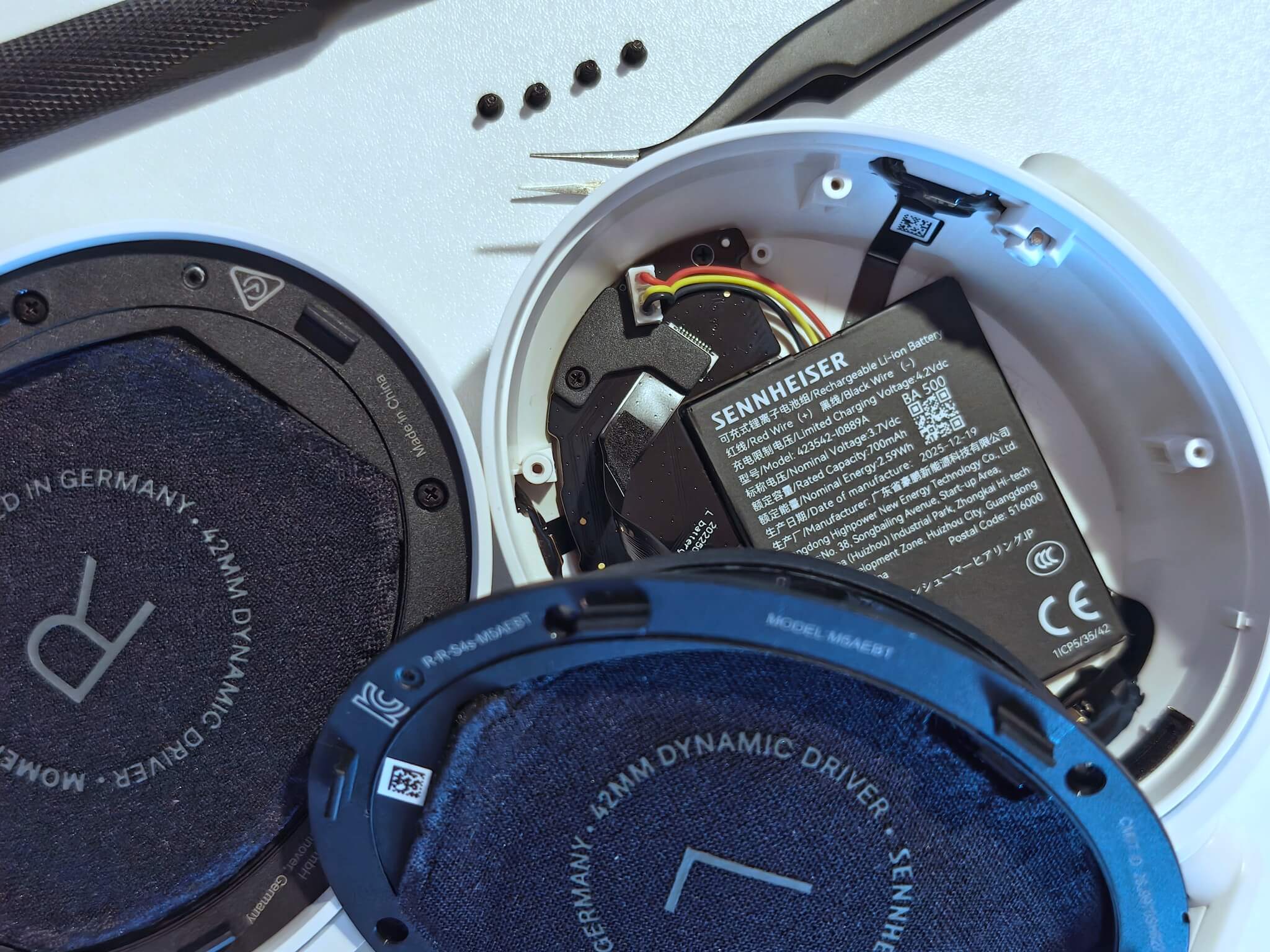
Notable for this class as well: the 700 mAh lithium-ion battery can be replaced by the user. With this, Sennheiser gets ahead of what the EU Battery Regulation will mandate as of February 2027 anyway (see introduction). In a headphone that, with proper care, can last a decade, this is a substantial argument for long-term investment. Sony, Bose, and Apple don’t offer this option in their current flagship models.
We tried the battery swap ourselves in practice: loosen four small screws, remove the driver, and the battery sits underneath, which then simply unplugs, similar to the Marshall Milton A.N.C. It’s not quite as straightforward as the Milton, where the battery is directly accessible, but still simple enough that any end user with a standard Phillips screwdriver could manage it. A clear plus for the long-term investment case.
Verdict
With the Momentum 5 Wireless, Sennheiser has delivered a headphone that takes on the premium segment from multiple angles without fixating on any single feature. Characterful and assertive sound, ANC that’s moved noticeably closer to Sony, Bose, and Apple, aptX Lossless as a codec first, and battery life that simply outpaces the competition: this is more than just a generational update.
For the sound-conscious premium buyer, the Sennheiser Momentum 5 Wireless is currently one of the strongest recommendations on the market. The audiophile heritage of the Sennheiser line comes through clearly, without the headphone ever becoming overly analytical or fatiguing. Paired with aptX Lossless on a Snapdragon Sound-certified Android smartphone, it extracts everything technically possible out of wireless transmission.
For anyone upgrading from the previous Momentum 4 Wireless, the switch is worthwhile primarily because of the significantly improved ANC, the codec first, and the replaceable battery. The sound signature itself hasn’t fundamentally changed (the 42mm driver remains the same), but the platform built around it has moved forward noticeably.
For the sustainability-minded, the Sennheiser Momentum 5 Wireless becomes a genuine long-term investment: a headphone whose battery the user can replace themselves doesn’t just live with its battery, it lives beyond it. Sennheiser is getting ahead of what the EU Battery Regulation will require anyway starting February 2027, giving buyers a real shot at a decade of use.
The one honest caveat remains for iPhone users: the aptX Lossless codec first doesn’t address iOS directly, only via the separately available dongle such as Sennheiser’s own BTD 700, whose real-world reliability Sennheiser itself currently describes as still needing refinement. Anyone using an iPhone who places high value on maximum codec quality should confirm the combination works for them before buying, or wait for a firmware update.
At the end of the day, the Sennheiser Momentum 5 Wireless is one of the most versatile premium headphones currently on the market. It’s neither the cheapest nor the most expensive model in its class, but it is a headphone that should have good arguments in its favor for years to come.
FAQ: Frequently Asked Questions About the Sennheiser Momentum 5 Wireless
What’s new on the Momentum 5 Wireless compared to its predecessor?
Eight ANC microphones instead of four for significantly improved noise cancellation, aptX Lossless as a codec first for lossless transmission via Snapdragon Sound, Bluetooth 5.4 with a promised update to 6.0, a user-replaceable battery, and upgraded design details such as the metal logo and framed microphone openings. The proven 42mm driver remains unchanged.
How long does the battery last?
Up to 57 hours of music playback with active ANC, measured under Sennheiser’s test conditions using an iPhone at moderate volume. This significantly outpaces the Sony WH-1000XM6 and Bose QuietComfort Ultra (around 30 hours) as well as the Apple AirPods Max 2 (around 20 hours). A ten-minute quick charge is said to provide up to seven hours of playback.
Can I replace the battery myself?
Yes. The 700 mAh lithium-ion battery can be replaced using a standard Phillips screwdriver. Loosen four screws, remove the driver, unplug the battery. Sennheiser is getting ahead of the EU Battery Regulation, which will make replaceable batteries in headphones mandatory starting February 2027 anyway.
Does aptX Lossless work with the iPhone?
Not directly. Apple’s iOS doesn’t support aptX in any form. Sennheiser does offer the USB-C dongle BTD 700 (€49.90 RRP), which is said to enable aptX Lossless in combination with iPhones and iPads with a USB-C port. Sennheiser notes, however, that occasional audio distortion can still occur with this combination.
How good is the ANC compared to the premium competition?
Active noise cancellation works significantly more effectively than on the predecessor Momentum 4 Wireless. The Sennheiser Momentum 5 Wireless doesn’t quite reach the class leaders, the Sony WH-1000XM6 and Apple AirPods Max, but comes noticeably closer. These are high-level complaints; at no point during testing did we feel the need for more silence in everyday use.
Is upgrading from the Momentum 4 Wireless worth it?
Primarily because of the significantly improved ANC, the aptX Lossless codec first, and the replaceable battery. The sound signature itself hasn’t fundamentally changed, since the 42mm driver remains the same. The platform around it, microphones, codecs, battery design, and the app, has moved forward noticeably, though.
Technical Specifications (Manufacturer Data)
| Type | Over-ear, closed-back, circumaural |
| Driver | 42mm dynamic |
| Frequency response | 6 Hz to 40 kHz (USB and Bluetooth), 6 Hz to 22 kHz (analog line-in) |
| Sensitivity | 108 dB SPL (1 kHz / 0 dB FS) |
| THD | Less than 0.2 percent (1 kHz / 100 dB SPL) |
| Impedance | 520 ohms (active) |
| Bluetooth | 5.4, Class 1 (10 mW), promised update to 6.0 including Auracast |
| Bluetooth profiles | A2DP, AVRCP, HFP, HSP, GATT |
| Codecs | SBC, AAC, aptX, aptX HD, aptX Lossless, aptX Adaptive, Snapdragon Sound |
| Active noise cancellation | Hybrid adaptive ANC |
| Microphones | 8 MEMS microphones (4 per side), beamforming |
| Battery | 700 mAh lithium-ion, user-replaceable |
| Battery life | Up to 57 hours with ANC (Bluetooth, iPhone, moderate volume) |
| Charging time | ~2 hours for full charge; 10 minutes for up to 7 hours of playback |
| Power input | 5V, max 800mA, charging via USB-C |
| Weight | ~290 g (manufacturer), 292 g (on our scale) |
| Dimensions (folded flat) | 180 x 197 x 47 mm |
| App support | Smart Control Plus for iOS and Android |
| Origin | Designed in Germany, manufactured in China |
Conclusion
Advantages / Disadvantages:
Advantages:
-
Balanced, punchy sound
-
Significantly improved adaptive ANC with eight microphones
-
aptX Lossless
-
Bluetooth 6.0, including Auracast announced via firmware update, plus LE Audio
-
Very long battery life (up to 57 hours with ANC)
-
User-replaceable 700 mAh battery
-
High-quality build
-
USB-C audio with added sound value
-
Very good call quality, even in wind
Disadvantages:
-
No folding mechanism — the headphones don't fold into a more compact travel format
-
Head tracking takes noticeably long to refocus after turning your head
Share Post:


About the author:

From
Peter Schloßnagel
Chefredakteur
He started out with music as a child and never really stopped. Except that at some point, it turned into kopfhoerer.de. Peter had worked in radio, as an entertainer, in the record industry, in print media and in marketing before co-founding kopfhoerer.de: because no one could give him the answers he was looking for himself. When he’s not writing, he’s making music, cooking or out and about on an old bike somewhere in the Upper Palatinate.